Posts Tagged ‘cat’

How do I pick the best food for my cat’s health?

Saturday, January 30th, 2010

So what do I feed my cat? And how do I change their food?

Anyone who has been owned by a cat knows that changing their food can be one of the hardest projects to undertake. Of course there are those cats who will eat anything but they are rare.

So how do you choose what to feed your cat and how do you find something they will eat?

Many of these rules you will recognize from my dog food article but cats are still cats and there are differences.

Here are some rules of thumb to follow with the kitties:

  • 1. Always feed high quality food - So how do I tell what is high quality you ask
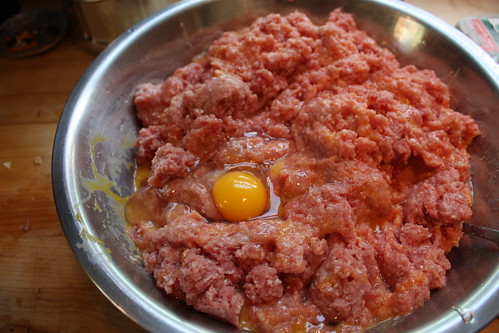
    • Ideally cats should be on a raw diet but if not…
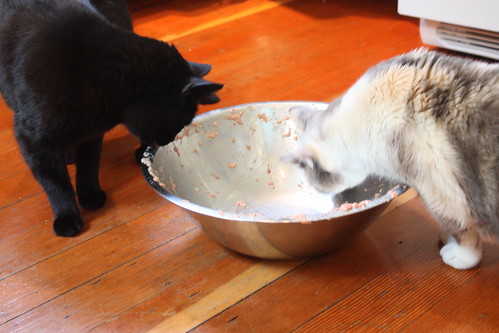
    • Make sure meat is the first ingredient and that it is real meat. It should be chicken or turkey or some other recognizable meat or fish(not animal which can be euthanized cats and dogs- yuck!). There should be no by products which can be diseased meat, feathers, blood, pus, etc.

      In cats this is especially important. Cats are true carnivores meaning they will die without meat. Because of this meat should be most of their diet. They absolutely should not be on a grain heavy diet. And cats should never be on a vegetarian diet.

    • Stay away from corn and wheat. Many animals are allergic to these and usually only low quality foods have corn. The one exception I can think of to this is that Weruva has a couple foods that have chunks of corn in them. I still think this is a high quality food.
    • Learn how to read labels. You want to see a list of foods you recognize at the top (in cats this should be mostly meat), and then a list of vitamin and minerals you may not, closer to the bottom. Avoid dyes, preservatives like BHA, BHT, and erythoxyquin, food stabilizers like propylene glycol, and sugars and salt. For more information on how to read a label see the article What is really in pet food? from Born Free USA.
  • 2. Here is a list of my favorite brands There are other good foods out there to but these are the ones I recommend most often.

    • Weruva This is the only cat food that looks good enough that I would eat it! Made with whole foods and there is no question when you open the can. There fish favorites are very yummy and a good starting food to switch over the picky cats.
    • Wellness is a good solid food with good ingredients.
    • Homestyle by Prairie, Instinct, Nature’s Variety raw foods are all made by Nature’s Variety. Prairie is their main line, Instinct is grain free and they also make a great raw line I recommend under the Nature’s Variety name. I have been happy with all their foods.
    • Merrick makes a great line of canned and dry foods. Their foods are yummy to many cats and they have a very cute marketing campaign.
    • Innova, Evo, and California Natural are all from Naturapet. Evo was one of the first grain free foods and is one of the top grain free foods I recommend. For cats that are on a dry food, Evo is my first choice.
    • Avoderm and Pinnacle are both solid good natural foods. Avoderm is marketed for animals with itchy skin and can make a difference in cats with environmental allergies.
    • Orijen has been my top recommended dry dog food for years. However I just found out they have a cat food. I don’t know if I overlooked that before or if it is new. Anyway looks like a great diet and I would highly recommend it as a grain free dry but have not had much experience with it personally.
    • Felidae is a good and solid food with some added cranberry for urinary health. Many cats really love it.
    • Evanger’s makes a mackerel and gravy that many sick cats will eat when they will not eat anything else.
    • Darwin’s Pet is a great northwest company which makes raw diets. If you live in the Seattle area they will deliver to your doorstep. They have a very good quality product and because they are a small company a lot of control on what goes into their food. For raw diets in the Seattle area they are number one
    • Paw’s Cafe is another great local company in the Seattle area which makes homemade food, raw diets and custom diets. Great folks and very high quality diets. So far they only deliver to the Eastside but there is talk they may come over to Seattle soon. If they do they will be up there with Darwin’s.

    I feed multiple brands of food to my own cats and switch flavors and brands daily. If your cat’s stomach allows it I recommend switching brands and varieties of food. This also helps if you do need to switch their food for some health reason later in life.

    If I have missed the food you feed your cat add a comment and I will give you my opinion on it.

  • 3. Cats should not be on exclusively dry food ever and any cat over eight years of age (or a younger geriatric animal) should get no or very little dry food.

    Cats have a funny relationship with water. They don’t drink much of it. In fact cats on dry food only are always in a slightly dehydrated state. This can lead to kidney failure, urinary tract problems and other health issues.

    Dry food is cheapest and some people can not afford to feed anything but it. If dry food is all you can afford, adding a little water, chicken broth, wet food or good quality table scraps will help. There are also some animals that simply do not do well on anything but a dry food or will not eat anything but a dry food. If you feed only a dry diet make sure it is high quality and grain free.

    High quality dry food with water or broth is better than low quality wet food.

  • 4. Grain free foods vs foods with grain

    Our cats should be on a diet with a high protein content and should be eating almost all meat. If they are feed a food with grain, meat should be at least 2/3 of the food.

    Animals with allergies, cancer, or epilepsy should be on a grain free diet. Many animals with chronic vomiting also do better on a grain free diet or low grain diet.

    Some animals prone to diarrhea do better with a food with some grain.

    If you feed a food with grain, oats, barley, quinoa, and brown rice are ideal grain sources. Corn, wheat and white rice are not as good

    Healthy animals can be on a high quality diet with a little grain or without grain but I recommend dry food be grain free in cats.

  • 5. Senior diets, weight loss diets and overweight cats

    Just say no to senior diets! Senior diets usually reduce the amount of protein and add more grain. Older cats do not need this! Avoid anything labeled a senior diet unless it is grain free.

    Weight loss diets also reduce the protein and add more bulk in grain. This is not how you get a cat to loss weight. The best way to reduce weight on your overweight cat is to feed a high protein, no grain, raw, cooked or canned food only diet! Also know as the Catkins diet.

    Evo and some of the other good quality foods now have weight loss, grain free diets with reduced fat, high protein and no grain. These are ok but avoid any weight loss diet with grain.

  • 5. The least processed the food the better (also known as dry vs canned vs raw vs cooked)

    In the ideal world we would all have time to come home each day and cook for ourselves and our pets. However many people don’t have time to cook for themselves or their cats.

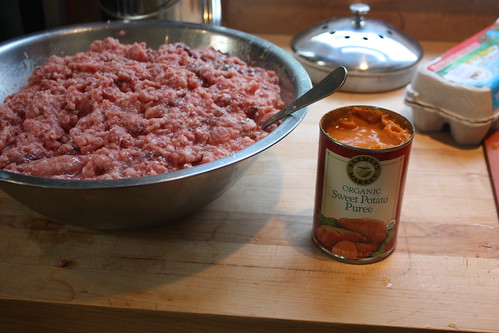
    If you can, start your cat on a raw diet or cook for them at home. There are also companies like Paw’s Cafe which make homemade dog food. If you are against feeding raw food or your cat doesn’t tolerate it, raw foods can also be cooked. Crock pots and steamers are ideal for this. Although you can always throw it in a frying pan.

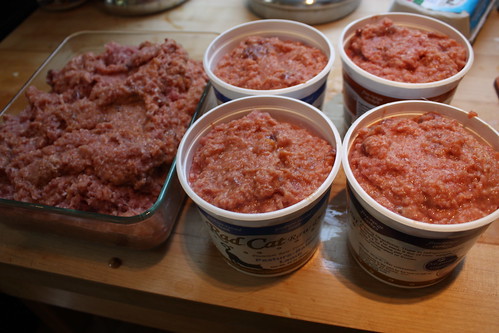
    If you feed a raw diet make sure you use a commercial product that is frozen or if you make your own freeze it before using it to kill of any potential parasites.

    In cats if you make a cooked food, you must add a supplement with taurine to it. Cats will die without taurine and while they get enough on raw food there is a debate on if they get enough from cooked. To be safe always add some to homemade cooked food. Commercial foods already add it.

    In general the less proceeded the food the better. With raw being on the top, followed by cooked, canned and finally dry. But do what works for your household.

    There are almost no overweight cats on raw diets. If your cat is overweight get them off the dry food.

    Any cat who has had urinary tract problems should be on a diet without dry food and the best way to prevent urinary problems is to avoid dry food.

    My own cats eat high quality canned food with a little dry Evo overnight. I only added the dry after I discovered that my older cat needed a little at night or he would vomit up bile.

    While I have a number of animals on homemade or raw diets, many of my clients feed their cats a mixture of high quality dry and wet because of convenience and cost.

  • 6. Pick the meat which is best for your cat. If possible rotate meat sources.

    If your animal has obvious allergies then this choice is made for you. If not, I am highly in favor of switching protein sources routinely. This reduces your animals chance of developing allergies and adds some variety to your their diet. Imagine if you had to eat the same thing over and over again. Boring!

    Chinese medicine also has an energetic system for working with food. See my article The dance of life and the energetics of food for more information.

    I do not recommend feeding pork to cats because of the way pigs are raised and the energetics that go along with that. Pork must never be eaten raw because of the diseases that pigs carry.

    Tuna should be limited to one can a week. For foods with just a little tuna for favor use your own judgement. Tuna is high in heavy metals and can also lead to problems with vitamin B deficiency. The exception to this is when you are working with a picky cat who doesn’t like canned food. Many times starting with the tuna flavors will help switch them over and then you can add in other canned foods. Never feed straight human tuna because without the added vitamins you end up with vitamin B and E deficiencies.

  • 7. Table scraps are ok

    No really, I know we as a veterinary community have told you they aren’t. But if you eat healthy food it is fine for your cat to have some. Just remember - no onions or chocolate.

  • 8. For animals in kidney failure, the quality of the protein is much more important than the amount of protein.

    For years the veterinary community has recommended low protein for cats in kidney failure. The new studies out however show that diets moderate in very high quality protein are best for these animals.

    The best thing you can do for your cat in kidney failure is to keep them off the dry food. Feed high quality canned or home cooked with moderate protein. I do not recommend switching a cat with kidney failure to a raw diet if they are not already on one.

    Avoid the low quality, low protein prescription kidney diets.

  • 9. Avoid the addictive grocery store brands like Friskies and Fancy Freast

    These foods are highly addictive to cats and it is very hard to get your cat off of them once they are on them.

    High in wheat, corn, soy, and salt and with animal by-product (euthanized cats and dogs with a little euthanasia solution in it) this is the last thing you want to feed your cat. Yuck!

    However many cats love these foods. The high salt and artificial flavors make them highly addictive. Stay away from these at all costs!

    Not only are they not good for your cat’s health but there also seems to be a higher rate of urinary tract disease in cats on these foods.

  • 10. How do I switch over my picky cat to a new food?

    Cats can be hard to switch over to a new food. Sometimes nothing can seem more impossible. Here is a few things that can help.

    • If you are switching to raw, cook it and salt it first. And then mix a little in with their normal food.
    • Get free samples at the pet store or buy many small cans of food to try. There may be one magic flavor that does it for your cat’s pallet.
    • If your cat likes fish and you are switching to a canned food try Weruva’s fish flavors, California Natural’s deep sea fish or Evanger’s mackerel with gravy. If your cat is into poultry try Weruva’s chicken and gravy.
    • If your cat will not eat canned food, add a little salt. You can take it away slowly after they are eating the wet food.
    • Mix the new food in with their old food. Just add a little at first and then increase it
    • If they are not sick, give them three days not to eat. Most cats will eat what you offer on the third day. If your cat is overweight absolutely do not fast them for more than three days. If overweight cats do not eat for more than three days they are at risk of a disease called hepatic lipidosis which can be deadly!
    • If you are switching their dry, try Evo - most cats like it’s flavor and will eat it, even the picky ones
    • Some cats get soft stools when being switched over to a new food. This should improve in a week. If it doesn’t try another food.
  • I hope this information helps. Do the best you can with it and try to have fun! After all, you know your cat better than anyone else!

    Helpful links
    Dog Aware’s dog food page More information than you could ever use about dog food!. While this is a dog site much of the information on it is also relative to cats.
    Born Free’s What’s Really In Pet Food A great article about pet food companies and processing.

    Books about cat food and diet
    Dr. Pitcairn’s New Complete Guide to Natural Health for Dogs and Cats
    The Whole Pet Diet: Eight Weeks to Great Health for Dogs and Cats
    The Natural Cat: The Comprehensive Guide to Optimum Care
    Natural Nutrition for Cats: The Path to Purr-fect Health
    Food Pets Die For: Shocking Facts About Pet Food
    Not Fit for a Dog!: The Truth About Manufactured Dog and Cat Food
    Home-Prepared Dog & Cat Diets: the Healthful Alternative

    Update - Since writing this article I’ve gotten to participate in a great thread of questions about it on the West Seattle Blog. Please check out the post How to pick a good cat food where I also explain how to figure out the exact amount of food your cat needs.

    Also see How do I pick the best food for my dog’s health?.

    Christmas is coming!

    Saturday, December 19th, 2009

    Send me your favorite animal photos and I will post them here. lena@pathwithpaws.com


    My animal companion has to go under anesthesia - what can I do to help?

    Tuesday, November 24th, 2009

    If we are lucky our animal friends only have to go through surgery once, when they are spayed or neutered. However many animals do need to be under anethesia other times either for a dental cleaning, to get sutures, or to have surgery. Whatever the reason, surgery and anethesia are hard on our animal friends. But there are things you can do to help them recover faster and more comfortably.

    As always, check with your veterinarian on any supplements you use.

  • 1. Arnica
    Arnica is a homeopathic remedy which helps with bruising and trauma. Over the years I have been amazed and impressed at how much difference this very safe remedy can make in healing. I have seen incisions heal in half the time and dogs have very little bruising and swelling in situations you would normally expect to see it.

    I always recommend Arnica for all my animal patients who have to undergo surgery or any other procedure that there will be tissue or bone trauma. Because it is a homeopathic remedy it is very safe ever for old and debilitated animals.

    I use the Arnica 30c pellets and dose them at 2-3 pellets (usually 2 for cats/small dogs and 3 for dogs) the morning of surgery, the evening after surgery, and then three times a day for three days. Because the pellets are so small they can safely be given the morning of surgery.

    Arnica can be bought at most health and supplement stores or by clicking on Arnica.

  • 2. Acupuncture
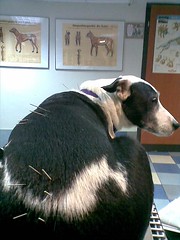
    I highly recommend an acupuncture treatment right after surgery or anesthesia. Acupuncture can help with clearing anesthesia from an animal’s system and decrease the chance of them having a hard recovery. Acupuncture can also help ease pain and speed healing.

    If possible acupuncture can be performed the day of surgery after an animal has woken up. Many times this is not possible because of the hours acupuncturists work and I end up treating most animals the day after surgery.

    Acupuncture can also help dogs who have had bad recoveries to anesthesia in the past and and make it possible to perform dentals or surgeries on these sensitive animals.

  • 3.Yunnan Baiyao
    While I don’t recommend Yunnan Baiyao (also called Yunnan Paiyao) for all animals undergoing surgery or anethesia, it is still one of my most important herbal formulas. I mainly use it in any procedure or surgery where there is a concern about bleeding. This includes many tumor removal and abdominal surgeries. I have seen this wonderful herbal formula save animal’s lives before.

    Please see my article, A Magic Vial of Yunnan Baiyao and the wikipedia article.

    I usually dose Yunnan Baiyao at one capsule twice a day for a few days before and after surgery for your average sized dog. Cats and small dogs, I use the powder and put about a 1/8 of a teaspoon in their food twice a day.

    Yunnan Baiyao can be bought in most international districts and by clicking on Yunnan Baiyao above.

  • 4.Reiki
    If one of my animals need to undergo surgery I always give them a reiki session before to get them into a good place for surgery. I usually work with a local practitioner, Rose DeDan, who also does animal communication. She is able to help explain what is going to happen and put their body in the best possible place for surgery and/or anesthesia.
  • 5.Pain medication
    Enough can not be said about pain medication. Make sure your veterinarian gives your animal pain medication before surgery and sends you home with something you can give at home. Nothing is worse then seeing our animals in pain and not being able to do anything about it. Routine dentals do not usually need pain meds.
  • 6. Companionship and love!
    You are the safest person to your animal. They want to be with you after surgery and they want to feel loved and cared for. If possible consider taking a day off work after their surgery or plan your animal’s surgery or procedure on a Friday.
  • 7. Somewhere healing to recover
    It is so important to have somewhere safe, quiet, warm and soft to recover after surgery. Anesthesia can make the senses more sensitive and many animals get headaches coming out of surgery. Often times the drugs used also make our animal friends disoriented. Make sure that there is no access to stairs and nothing to fall off of. Keeping lights dim and sound to a minimum also helps. Sometimes classical music played softly will help relax our friends.
  • I hope these simple suggestions are helpful! I know they have helped many of the animals I work with and my own beloved animal companions.

    The Dance of Life and the Energetics of Food

    Monday, November 23rd, 2009

    Rose DeDan, a local shaman and healer, wrote a wonderful article today on her blog, The Dance of Life, The endless cycle of birth, death and our relationship to the food we consume. It give new meaning to the saying “you are what you eat.” She talks about the energetics of our food and how the way animals are raised can affect our health. We are all energetic beings and just as we take on the energy of those around us, we can also take on the energy of the animals we consume. If they have been treated well and fairly we end up with nutritious food, if they have not been it can lead to many health problems for us.

    The Chinese take this one step further. They also look at the normal energetic characteristics of the animals we eat in determining a proper diet. Many of my clients who have asked about diet for their animals have seen this in action. For example for a flighty nervous dog I would never suggest rabbit or deer because both are nervous animals. An anxious dog would do best on beef or bison which are both large and grounded creatures. On the flip side a very sluggish dog may do better on something light and energetic like a deer or rabbit.

    Food also has a temperature and other characteristics in Chinese Medicine. Trout is the hottest meat and a dog who is always cold would do well on it. Seaweed and Cucumber are considered cold and can cool a dog with excess heat. Sweet potato and pumpkin are sweet and help with digestion. Beef is good at tonifying the blood and helping with weakness. Carrots and other root vegetables are very grounding and help an animal be more connected to the earth.

    There are many great books on this subject!

    For further reading

    My favorite book on this subject (although written for people) Prince Wen Hui’s Cook: Chinese Dietary Therapy

    Another good book although with more information then the average person needs Healing with Whole Foods: Asian Traditions and Modern Nutrition

    One of my favorite books on Chinese Medicine with a great food section in back Between Heaven and Earth: A Guide to Chinese Medicine

    Introduction to Tellington TTouch Class offered in West Seattle

    Thursday, November 19th, 2009

    From Rose DeDan -

    I became interested in Tellington TTouch, a long time ago, but that interest kind of got sidelined while focusing on my shamanic training.

    Recently I read some very impressive stories by a long-time animal communicator that fanned that interest back into action, especially since I have wanted some additional assistance for Puma, my wonderful dog companion, as he enters his senior years. And lo, and behold, Shannon Finch’s name crossed my path. So, Wild Reiki and Shamanic Healing is now hosting a TTouch class in Seattle for the very first time! (And I believe there will be a live demo with said dog, and perhaps one of my cats who is shy of being handled – I may borrow a video camera for that!)

    • Do you have a shy or aggressive dog?
    • A cat who is getting along in years?
    • A bird who squawks incessently?
    • Are you interested in enhancing the bond with your animals?

    Then this hands-on workshop is for you.

    For more information on TTouch see What is TTouch?

    When: Saturday, December 5, 2009, 9:30am-12:30pm
    Where: Wild Reiki and Shamanic Healing Office, Alki (directions sent at time of registration)

    You’ll learn how to improve your animal’s health and wellbeing with several TTouch techniques
    that release the tension, fear and anxiety that lead to behavior problems.

    You’ll learn how to ease the ailments associated with aging as well as first aid measures that can
    save your animal’s life.

    And while TTouch can assist the healing of injuries and illness, and help change undesirable behaviors, it also builds a deeper rapport between humans and animals, so your critter doesn’t have to have a problem in order to benefit from this class.

    Please do not bring your animal to the workshop, we’ll be practicing on willing stuffies (stuffed animals) this time around!

    Registration: Fee $95/person. Class size is limited to a small number of participants. Call Rose De Dan at 206-933-7877 or email her at wildkingdomreiki (at) earthlink (dot) net for more information or to register.

    TEACHER BIO
    Shannon Finch is owner of The AnimalKind Company in Stanwood, focusing on positive training for all species. She is a certified Tellington Touch practitioner for both companion animals and horses. She has worked with of animals of many species, from dogs, cats, and horses, to birds, reptiles, rabbits and pocket pets, and even farm critters such as cows, goats, and chickens.

    Shannon has taught TTouch all over the west, including Best Friends Animal Sanctuary and the Hawaii Humane Society, has given presentations for numerous local animal welfare groups, including PAWS, the Alternative Humane Society of Bellingham, Hooterville, (now Homeward Bound), Canines for Citizens’ Independence, Pasado’s Safe Haven, Purrfect Pals, Skagit Humane Society, and the Monroe Pet Expo. She’s also taught animal behavior and TTouch classes for Everett Community College. She is currently working on her thesis for a Master’s Degree in Humane Education.

    AVMA puts out FAQ page for pet owners on H1N1

    Friday, November 6th, 2009

    Frequently Asked Questions about the 2009 H1N1 Flu Virus and Pets

    Updated November 6, 2009

    These questions and answers are based on what is currently known about the virus, and will be updated as we get new information.

    Q: Can my pet get the 2009 H1N1 virus?
    A:Until recently, we had no reason to believe pets could be infected with the 2009 H1N1 virus because it is very uncommon for flu viruses to jump between species. However, on October 9, 2009, a USDA laboratory confirmed 2009/H1N1 infection in a ferret. The ferret’s owner had recently been ill with the flu. Ferrets are more susceptible to infection with influenza viruses, so this was not altogether surprising. At this time, there are no reports of the 2009 H1N1 flu virus being transmitted from a ferret to a person.

    On November 4, the Iowa State Veterinarian and the Iowa Department of Public Health announced that a pet cat was confirmed infected with the 2009 H1N1 flu virus. The cat’s owners were ill and the cat developed respiratory symptoms shortly afterward. The cat has recovered and there is no evidence at this time that the cat passed the virus to any people.

    Pets that live indoors, especially cats, tend to have close contact with their owners - after all, that’s why we have pets - and that increases their chances of being exposed to diseases. The best advice is to always follow common sense guidelines when dealing with animals (for example, washing your hands). In addition, it’s more important than ever that pet owners keep a good eye on their pet’s health and consult a veterinarian if their pet is showing any signs of illness. Keeping your pets healthy reduces their risk of becoming ill.

    Q: I’ve heard about ferrets and a cat getting the 2009 H1N1 virus. Should I get rid of my ferret or cat so my family is protected?
    A:Certainly not. This is not cause for panic and extreme measures. You are much more likely to catch the flu (any type of flu, including the 2009 H1N1 flu) from an infected person than you are from an animal. So far, all of the pets infected with the 2009 H1N1 virus became infected from being around their ill owners. The main lesson here is that if you’re feeling ill and have flu-like symptoms, you should probably limit your contact with your pets (and other people, for that matter) until you are feeling better. As always, if your pet is showing signs of illness, it should be examined by a veterinarian.

    Q: The 2009 H1N1 virus has infected poultry. What about my pet bird? Can it be infected?
    A:We know it can infect poultry, but we don’t know if it can affect other birds (including pet birds).

    Q: What symptoms would I see in my dog or cat if it developed H1N1?
    A:So far, there haven’t been any reports of dogs infected with the 2009 H1N1 flu virus. Based on what’s been reported, ferrets and one cat – and probably dogs, if they can become infected with the virus – have shown signs of respiratory illness. These signs can include lethargy, loss of appetite, fever, runny nose and/or eyes, sneezing, coughing, or changes in breathing (including difficulty breathing).

    Keep in mind that dogs currently have their own flu virus, the H3N8 influenza (canine influenza) virus, going around. So far, this flu virus has only been spread from dog to dog. Dogs infected with the canine influenza virus show the same symptoms as dogs with kennel cough – fever, lethargy, loss of appetite, coughing, and maybe a runny nose. For more in-depth information on canine influenza, view our canine influenza backgrounder.

    Q: How serious is this disease in dogs or cats?
    A:We don’t yet know. There haven’t been any reports of dogs infected with the 2009 H1N1 flu virus, and there has only been one cat confirmed to be infected. The infected cat recovered from its illness.

    Q:Should I keep the people in the house who have respiratory disease away from the pet and vice-versa?
    A:Until we know more about the risks of spreading the virus from person to pet, pet to pet, or pet to person, it’s a good idea to limit contact between an ill family member and other family members and pets. If your pet is ill, contact your veterinarian.

    Q: Is there a vaccine that can be used for pets? Can the human H1N1 vaccine be used for pets? What about the canine influenza vaccine?
    A: There is not a licensed and approved 2009 H1N1 vaccine for pets. The human H1N1 vaccine should not be used for pets. The canine influenza vaccine, which protects dogs from the H3N8 flu virus, will not protect pets against the 2009 H1N1 virus and should not be used in any species other than dogs.

    Q: Someone in my home is ill and may have the 2009 H1N1 virus. Should we board our pet(s) until this person has recovered?
    A: That decision is really up to you. Your pet may have already been exposed to the virus by the time the family member starts showing symptoms, so it might not be best to uproot your pet, possibly stressing them, and put them in another environment. If you’re worried your pet may become infected with the influenza virus, treat your pet like you would any other family member – follow good hygiene when you come in contact with them, and limit their exposure to ill family members.

    Q: Can my pot-bellied pig get the 2009 H1N1 virus and give it to me?
    A: To date, the 2009 H1N1 virus has not been reported in pot-bellied pigs. However, the possibility of human-to-pig transmission of the virus warrants extra caution by pig owners. After all, pot-bellied pigs are considered swine, and therefore may be susceptible to the virus. For the time being, a cautious approach would include all contact between your pig and anyone who is ill or has recently been exposed to an ill person. Remember that pot-bellied pigs can become ill from a number of causes, and keeping your pig healthy and free of disease helps protect your pig as well as you. If you have a pet pig and it appears ill, consult a veterinarian immediately.

    Here is the direct link to the page.

    funny pictures of cats with captions
    see more Lolcats and funny pictures

    H1N1 Swine flu confirmed in a cat (and a couple ferrets)

    Thursday, November 5th, 2009

    Yesterday the veterinary community got the first confirmation that a cat had been officially diagnosed with H1N1 (aka swine flu) . So far this is the only case and the cat caught it from its people, not from other cats. The cat has recovered from its illness and has no permanent problems from being sick.

    Here is the official release and the link to the American Veterinary Medical Association website for new releases on H1N1

    At this point we do not know if this will continue to be an issue in cats or how sick cats will get with H1N1 . In fact we have very little information to go on. There is no vaccine for cats and I do not believe there will be.

    H1N1 has not been documented in dogs although has been isolated in one ferret and possibly in another. One of these ferrets has died, the other one is recovering.

    The vaccine for H1N1 in people does not prevent infection or transmission of H1N1, it just reduces severity, so getting vaccinated for H1N1 does not protect your cats from exposure.

    My best advise at this time is to be extra careful with hand washing if you have the flu and keep stress to your cat as low as possible.

    I will update you as more information becomes available.

    2pm update - just found out that the ferret with confirmed H1N1 is recovering. There is another ferret who died but it is not confirmed that it is from H1N1 yet although suspected.

    11/19/09 update - more cats and ferrets have come down with H1N1. There are still very few cases and most animals are recovering well. One cat has however died of suspected H1N1 infection although it has yet to be confirmed. Please follow the AVMA page linked above for further updates.

    And baby and kitty make three. The truth about toxoplasmosis in cats and pregnancy.

    Tuesday, September 22nd, 2009

    Today I read another story about a women thinking of giving up her cat because she was pregnant. It makes me so sad then our loyal companions are thrown away especially when there are many ways to have a safe pregnancy and keep the cat.

    Please read this before considering giving up your furry friend just because you are pregnant and worried about toxoplasmosis.

    We have all hear about the risk from toxoplasmosis to unborn fetuses and that pregnant woman should not get near cat boxes. But from there the facts often morph into fiction until suddenly pet cats are praying on your unborn baby’s soul and women are running to the shelter to turn in their fuzzy friends.

    So here are the facts! I am not a MD so please bring this sheet to your doctor to discuss.

  • 1. The number one way to catch toxoplasmosis is from eating undercooked meat (beef, lamb or pork). That’s right, if you eat your steak cooked anyway other then well done, that is the most common way of getting toxoplasmosis. It’s the cows, not the cats really! At least 60% of toxoplasmosis infections occur this way.
  • 2. Up to 70% of adults in the United States are seropositive for toxoplasmosis. In other words, they have already had it. In immunocompetant folks once you get it that’s it. You can’t get it twice. In other words 70% of the US population does not have to worry about catching toxoplasmosis. As a pregnant woman you can have a blood titer for toxoplasmosis run and interpreted by your doctor. If it shows you have been infected you do not have to worry about catching toxoplasmosis while you are pregnant.
  • 3. 40% of AIDS patients have what is called cerebral toxoplasmosis (toxoplasmosis of the brain). But guess what, those HIV positive people with cats do not have a higher rate of toxoplasmosis. In fact, overall HIV positive people with animals have a lower overall rate of zoonotic disease (diseases that can be caught from animals). People living with cats do not have a higher rate of toxoplasmosis.
  • 4. Cats get toxoplasmosis from eating rodents or rabbits. Once they have it they can pass it to people for 2-3 weeks. After they have it once that’s it, they do not get it again. So your cat can only potentially be contagious to you for 2-3 weeks out of his/her life.
  • 5. Toxoplasmosis cysts are passed in the feces of cats. The feces need to be outside of the cat for 24 hours because the cysts are infectious. Only after that can they be passed to a person and only if feces is eaten or put in the mouth.
  • 6. Toxoplasmosis can also be caught while gardening because cats poop in gardens. Use caution if you are pregnant and gardening just like you would around the cat box.
  • So what should you do if you are pregnant? Because toxoplasmosis is a very serious problem to fetal babies, this is a very important concern. There are many ways to be protected and keep your cat.

  • 1. Consider getting a titer done for toxoplasmosis through your doctor especially if you have cats or work with animals. If your titer is positive then you don’t have to worry. I got in trouble for pointing this out in my childbirth classes as most of the women in the class with cats had already convinced their husbands to take over cat box duty.
  • 2. Consider keeping your cat inside to reduce their exposure to rabbits and rodents they can catch.
  • 3. Do not eat meat unless it is well cooked!!! Use caution in handling raw meat.
  • 4. Do not garden without gloves and make sure to wash your hands well afterwards. Do not touch your mouth or face while gardening.
  • 5. Unless you have a positive titer for toxoplasmosis, have someone else clean the litter box if possible. If you have to clean the litter box make sure you wash your hands well afterward and do not touch your face while cleaning it. Clean the litter box at least every 24 hours to avoid having the cysts become infectious.
  • Here is another good article on toxoplasmosis transmission, Take These Precautions to Prevent Toxoplasmosis During Pregnancy.

    Please pass this on to your friends and family and as always I am happy to answer any questions.

    Simon’s cat

    Sunday, September 20th, 2009

    If you have ever been owned by a cat before, you have to check out Simon’s cat. This little guy makes me laugh and Simon Tofield who writes these videos has an amazing knowledge of cat behavior and sounds. Below is one of Simon’s videos.

    Here is a link to the other Simon’s cat videos. And Simon’s Cat, the book also comes out in a few days.

    Angels of Autumn

    Saturday, September 19th, 2009

    Death is difficult…….

    for those who are left behind. It is amazing to me how the passing of one small creature can make the world seem so empty.

    This is a time of year I love. The way the light filters through the trees. The magnificent beauty of the colors and the crunch of the leaves under my feet. Fall is a time of transition and change. A reminder that nothing stays the same, and although quantum physics can’t explain it, that time moves in only one direction. To me fall also means losing many of the older animals I work with. Each life gone, a small hole in my universe.

    I have an amazing job. How else to describe getting to work with these beautiful, kind and fuzzy beings. I am invited into people’s families and into their animal’s circle of care, to comfort and help. Many of these animals I work with for years. Seeing them age, seeing their people grow and change, seeing children grow up around them. It warms my heart to be part of this. And then seeing them die from this life.

    In animals we get the opportunity to see all of life. When we first meet our animals they are like our young children and by the time they leave us, like our grandparents. This is a hard, we are not used to our children aging before us, and most of the animals I care for are like children. My clients carry few photos of people but they can pull out their phone or wallet and show you all their animals in a second.

    I so appreciate the amazing being I have known and gotten to work with and while each passing is very sad I know that my life has been made fuller by being touched by all of them. The gentle noses, the wagging tails, the kind eyes and the gentle purrs. None are forgotten.

    Sometimes I think I must have more guardian angels than the average person, however I think mine are mostly fuzzy. Thank you for touching my life.