Posts Tagged ‘cat’

Seeing spots

Friday, March 20th, 2009

Why do some many of our domesticated animals have floppy ears and spots? Have you ever stopped to wonder why you almost never see these traits in wild animals yet if you look at domesticated cats, dogs, rabbits, guinea pigs, horses, cows, and pigs they are very common?

It turns out that these are some of the physical changes that are brought out when animals are selected for domestication in any species. Not only that, but in two or three generations animals can radically change their physical traits and appearance when humans select in this way.

Here is a fascinating article, Clever as a fox, on the domestication of animals and the Dmitri Belyaev fox experiments on domestication.

Stop the pain! Arthritis and your animal friend – holistic medicine options

Wednesday, March 18th, 2009

It’s sad to see our animal companions no longer be able to do the things they once could do as they age and grow older. All older animals have some amount of arthritis, although some have many more problems with it.

Unfortunately, Western medicine has very few options for treating arthritis and uses mostly drugs, to treat the pain. This is starting to change with some veterinarians doing stem cell and plasma rich platelet injections. However these treatments can still be expensive. Ask your vet about if these treatments are right for your dog. Some animals are not able to tolerate these drugs and many times animals are on three different drugs and it still isn’t enough.

In some animals arthritis manifests as weakness caused by the inflammation pushes on the nerves. Many dogs walk around like their feet are asleep, tripping over things, stumbling and no longer having the strength to jump into the car or onto the bed. Unfortunately because they can no longer walk as far or do as much as they used to, their muscles start to atrophy or waste away, causing a vicious cycle. As the weakness increased, they do less, which causes more atrophy from disuse, leading to more weakness and more atrophy and less activity. In the end many of these animals can no longer get up on their own or even take a short walk.

In other animals arthritis will manifest as pain, which can also prevent movement and cause the weakness/atrophy cycle. Many of these animals will become moody and withdrawn and may even snap and bite at their people out of fear of pain. It is so hard to see our friends have so much pain that they no longer want our affection.

In most animals there is a combination of pain and weakness.

Usually dogs suffer more than cats because they carry more weight and are used to daily activity. Also people often don’t notice that their cats are painful because they spend so much time sitting and sleeping

So what do we do for our friends to help them live out their old years happy and pain free?

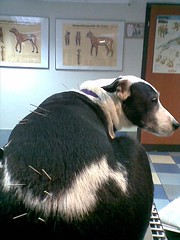
  • Acupuncture Being an acupuncturist, I always recommend acupuncture first. Of course, this is also because I have seen how well it works in the animals I treat. I often find that if I can work with animals when they first have problems, they do so well, I only need to treat them every one to three months. Unfortunately most of the animals I see have had problems for a while and their people only learned about acupuncture when they had tried everything that western medicine had to offer. In these animals, acupuncture can still work and work well but usually treatments need to be closer together.

    It is so nice to see these animals happy and able to enjoy life again!

  • Hydrotherapy is a great option especially in dogs who have muscle atrophy. Unfortunately it cannot be done with cats, although Sheila Wells at Wellspings has told me they have worked with rabbits before. Hydrotherapy is done in a small swimming pool and involves massage and physical therapy in the water. I have seen excellent results with hydrotherapy especially combined with acupuncture. Hydrotherapy helps to rebuild muscles, increase range of motion and work out sore and sensitive areas of the body without the impact on the body of exercise on land. My favorite pool is Wellsprings in Seattle Washington. They have a great website with lots of information and photos that I love to refer people to. Click on the link to check it out!
  • herbs5

  • Herbs
    I have worked with Chinese herbs with many of these arthritic dogs and some cats. The combination of acupuncture and herbs usually helps with pain and movement and helps animals maintain between treatments. I rarely use Chinese herbs in cats because they are very sensitive to them and it is hard to medicate cats. I sell an senior dog herbal formula called Senior Dog Support, through my etsy shop, that helps with arthritis pain and improves blood circulation into the joints. Your holistic veterinarian may have something else they recommend.
  • Fish oil/ Omega oils
    The Omega 3 Fatty Acids in fish and cod liver oil actually helps decrease arthritic inflammation in dogs (not true for cats although it helps with other things). Adding a little fish oil to the diet can help many animals.My favorite brand is Nordic Naturals – Pet Cod Liver Oil . Nordic Naturals is one of the best brands for quality and they test for heavy metals and contaminants.
  • Glucosamine/MSM/chondroitin
    These supplements help to decrease inflammation and rebuild damaged cartilage. They are often sold in combination. The nice thing about these supplements is that they have few side effects and are very safe. Some animals have a wonderful response to them and some have almost no response. It usually takes a month to six weeks to see if your animal will have a positive response. Adequan, similar to glucosamine is also available in an injectable form and works better in some animals. It is also a lot easier to give to cats who are hard to medicate daily. After the initial series of injections it usually only needs to be given once a month. Adequan can only be purchased through your veterinarian. My favorite glucosamine product is Sea Mobility Beef Joint Rescue jerk treats, they work well and are very tasty. There are other good ones out there.
  • Infra-red light therapy – Infrared light helps ease the pain of arthritis in joints and increase blood circulation to the area. It is very cheap to do and can be done at home. See my article Infrared Light Therapy for kidney failure, incontinence and arthritis.
  • Chiropractics
    Many animals have subluxations of their spine especially as they age. A good chiropractor can often help with mobility and pain. I have found that chiropractic adjustments work best in animals with a very tight back and more pain then weakness. For my own cat, chiropractic adjustments have worked better than anything else we have tried and have made his life much better. Make sure you find a chiropractor who is used to working with animals and knows animal anatomy.
  • Massage/Acupressure
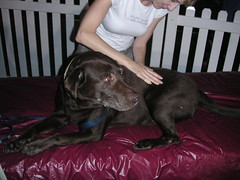
    Massage can help to loosen tight muscles and increase blood circulation. It also can help with pain.We know it works for us, why not for our animal friends. Once again make sure you find a massage practitioner who is certified to work with animals. I have two amazing massage therapists I work with in Seattle, Kim Rogers and Jen Streit. Kim also does humans!

    Acupressure works with the acupuncture points and helps decrease pain and relax muscles.

    There are many great books on acupressure and massage for animals. Here are a few
    The Well-Connected Dog: A Guide to Canine Acupressure
    Acu-Cat: A Guide to Feline Acupressure
    The Healing Touch for Dogs: The Proven Massage Program for Dogs, Revised Edition
    The Healing Touch for Cats: The Proven Massage Program for Cats, Revised Edition
    Four Paws Five Directions: A Guide to Chinese Medicine for Cats and Dogs

  • Reiki/Bowen/Polarity/Craniosacral and other energy therapies These therapies help stimulate the body to heal and can decrease pain and improve quality of life. Since there is little regulation of these therapies it is important to get a referral before seeing someone. This is especially true of Reiki since there are so many people who practice it. A good practitioner can make a huge difference in an animal’s quality of life.

It is better to do one thing and stick with it than to jump around between therapies. Often times animals will began with me doing acupuncture and herbs and then we will add in other therapies as needed. If I can’t help an animal with acupuncture I will refer them to another practitioner to try something else. Don’t make too many changes all at once in an old animal’s life. Go slowly instead.

Happy St. Patrick’s Day

Tuesday, March 17th, 2009

funny pictures of cats with captions
see more Lolcats and funny pictures

Feral rescue

Saturday, March 14th, 2009

My friend Pamela who traps feral cats in the Seattle area sent me this story. She was contacted by a woman in New York who manages a small feral colony that she was having to move. There was one cat left who she just could not trap. The poor kitty, Patches, was also very sick and suffering. Pamela suggested bringing Patches’ buddy, Checkers, back to the site so she would come to him. Through Pamela’s advise, she was able to catch her and humanely end her suffering. Checkers and the other cat from the feral site are happily in a new home.

Many people like Pamela have dedicated their lives to helping feral cats with TNR (trap/neuter/release) and food. TNR is the best method of reducing the number of unwanted kittens that end up in the shelters each year and it works! Here is some good information on feral cats and TNR from the ASPCA, Feral Cat FAQ. Also check out Ally Cat Allies’s informative website on feral cats.

Below is the letter Marilyn, the feral trapper from New York, wrote to Pamela:

Thank you so very much for the suggestion about taking Checkers back to Patches in a carrier. I was so upset thinking about it – woke up in middle of night with an asthma attack, but by this morning, just tried to function on “auto pilot”. It looked like rain too, and I had to hurry…. just asked for and starting feeling the guidance from God….what i usually do, but lost sight of it for awhile lately.
I went in pen this morning… they are so happy in there—Checkers can’t stop head-butting Softy…she must have a headache by now. Checkers was Patches (the one left behind with bad eyes) mate. He’s pretty mellow, so i was able to entice him in the big carrier with a small dish of his favorite can food in the back of carrier pretty easily and close the door quick…. He wasn’t happy about it. I enclosed the carrier in a HUGE heavy-duty black plastic bag I use from Home Depot. they’re excellent for cat rescue – 3 ML strong. and huge. I had about 12” extra bagging left in front of carrier.

threw him the back seat, he’s screaming….had to go feed other colony first…make it real quick. Drove the colony where now, my Patches is the only one left. I think that’s what was breaking my heart the most…. there used to be 4 of them (1 died x-mas wk.) Killed me to see her waiting alone. I took Checkers out in the covered carrier — set it down by the feeding station behind the dumpster. she heard him meowing and crying…. she was running around… i did what you said, butted FRONT door of carrier up to BACK of trap with her favorite canned food in back of trap, the extra plastic bagging covering the back and trap and front of carrier (like a tunnel) which you said.

at first she was running all around…. i drove off for 5 min. because she doesn’t like me around. i know she had no interest in the food, it was CHECKERS that made her go in….THANK GOD i drove back to check in less then 5 min. because an auto body guy was over there DISTURBING THE PROCESS LOOKING….. i asked nicely to please step away from the area, i was trying to get a sick cat. he did

within 2 min. of him leaving, i thought i heard the trap door close….YES, patches went in, God bless her soul.

of course i was hysterical all the way to the ER vet, who said they help since she was a stray. naturally , the nice woman i was speaking to for days about this, wasn’t in today. the woman at the desk almost gave me a hard time—but backed off. i was hysterically crying. she said an “exam” would cost $95! at one point she got nasty and said IS THIS YOUR PET??? i felt like saying, yeah right lady! my pet in THIS SHAPE IN A TRAP???FOR CRYING OUT LOUD??? because this place WILL take care of very sick and dying strays for low cost of nothing.

i asked if a vet tech could maybe assess her eyes thru the trap…. a nice tech came out and looked at Patches eyes….she did say she lost most her vision was very poor, waving her hands in front of her eyes…. PLUS, no way i cold medicate her, can’t handle her. I said she needed to be at rest. then i went nuts when they took her in the back…. this tech was very sympathetic – very nice… she came back 3 min. later and said she was sleeping nice under sedation, and she was able to look in her mouth and said her mouth was bleeding and she lost most of her teeth. My Patches was suffering more than I realized. I’m relieved her suffering is over and she’s at peace, but still very in shock and upset. i took Checkers back to the pen, he was so happy to be back…..
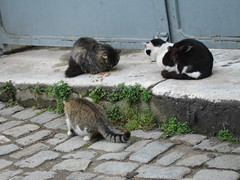
i just want to thank you so very much for all your advice with this…. If not for YOU telling me about taking checkers there in the carrier, although me and him didn’t want to….. i NEVER would’ve gotten Patches…. I KNOW Checkers was the only reason she went in the trap…. she’s at peace now with God…no more horrific suffering for my precious angel. This will hit me later…. I feel wheezing coming on now…. asthma attack from my nerves.

Thank you very much again dear friend from the other side of the country…..for being such a very, very awesome person, and helping me so very much to help these cats to stop their horrific suffering, when no one here would help! It was only because of what you told me to do, that ended my baby’s suffering today.

Love and Hugs, Marilyn
A little break from posting

Wednesday, March 11th, 2009


This week will be light on the postings. I should be back to full posting speed soon!

FIP is not a contagious disease!

Friday, March 6th, 2009

If your family includes cats or you know someone who lives with cats, please read this. I’m wandering back to the side of western medicine but this is a topic dear to my heart.

When I was working at the shelter I once got a voice mail from a client who had adopted a cat from us who came down with FIP and died. She was calling because she was angry that we had not tested for it and mentioned that her vet was recommending she euthanize her other two cats because they had been exposed and would most certainly come down with it and die. Of course I couldn’t get a hold of her and two of us spent the rest of the day frantically trying to reach her before she killed her two other cats. Luckily we did reach her in time.

FIP or Feline Infectious Peritonitis is one of the most misunderstood diseases in veterinary medicine. It is not contagious but it is a mutation of a contagious disease. It can not be diagnosed in a living cat yet there is a “FIP test”. There is a vaccine but it doesn’t work in most cats and there is some thought that it can actually help to induce FIP.

So let’s start at the beginning.

There is a virus in cats called Feline Coronavirus. This virus usually doesn’t cause illness or if it does just a little diarrhea or intestinal inflammation. It targets only gut cells. It is very common. Up to 80% of cats have been exposed to it and show an antibody titer. In multiple cat households and shelters and catteries up to 100% of cats have been exposed to it.

Sometimes for reasons that we do not know this virus mutates or changes into FIP, kind of like what happened to the Gremlins when they got wet. We think it is related to a weak immune system but we aren’t sure. FIP can attack any cells in the body by working through the white blood cells and it does, causing many symptoms such as a bloated and fluid filled abdomen, diarrhea, vomiting, a fever, lethargy, poor appetite, problems breathing and sometimes brain inflammation. Almost all cats with FIP die.

Occasionally two cats from the same household die of FIP. We used to think one had caught FIP from the other. However recently when researchers have studied where the mutation is in the virus they have found that the mutation will be different in each cat.

What does this mean?

It means that each mutation happened independently within that cat’s body. If they were passing the mutated FIP virus the mutation would be the same in each animal. This means that the FIP virus is not being passed once it mutates and is not contagious.

Why are cats is multiple cat households more likely to get FIP then?

Multiple cat households have a higher rate of coronavirus in them. The more coronavirus shed in a cat’s feces and picked up by other cats, the greater the chance there is for a mutation to FIP.

So how does a vet test for FIP?

There is a titer test called the FIP test. The only problem is that it tests for coronavirus not for FIP. Usually cats with FIP will have a high coronavirus titer but not always. And many cats without FIP will have a high titer. So a positive “FIP test” may point towards a diagnosis of FIP but also may not.

If a cat comes in with fluid in its abdomen which is common in FIP cats, the best test is a protein ratio run on the abdominal fluid. Most vets will also run bloodwork to test protein levels.

A high protein level in abdominal fluid with a low albumin/globulin (two proteins we look at) ratio with a high globulin level on bloodwork, and a high FIP/corona titer (positive FIP test) usually point towards FIP. That is the closest we can come. And many cats with FIP do not have all the above.

So why is there a vaccine if this is not a contagious disease?

The short answer is because we used to think it was. The FIP vaccine will work to prevent coronavirus in about 60-80% of the 20% of cats that have not been exposed to coronavirus ever. Or about 12-16% of cats. It will not work if cats have been exposed to coronavirus. In addition there is some thought that if the cat has coronavirus in its body the vaccine could induce that coronavirus to mutate to FIP. So the vaccine works in 12-16% of cats but may actually induce disease in the ones it doesn’t work for. Hmmm. Not very good odds if you ask me.

There is no good treatment for FIP beyond supportive care and most cats with it will die within a year or often times much less. In multiple cat households cleanliness, especially of litter boxes, can help cut down on the level of coronavirus, which helps prevent FIP.

Here’s some interesting resources on FIP
Wikipedia article on Feline Infectious Peritonitis
FAB on FIP
Cornell Feline Health Center FIP

Comments are closed on this article. There are only so many ways I can say that FIP is not contagious. It is not.

Basil gets his acupuncture among friends

Friday, March 6th, 2009

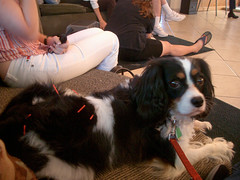
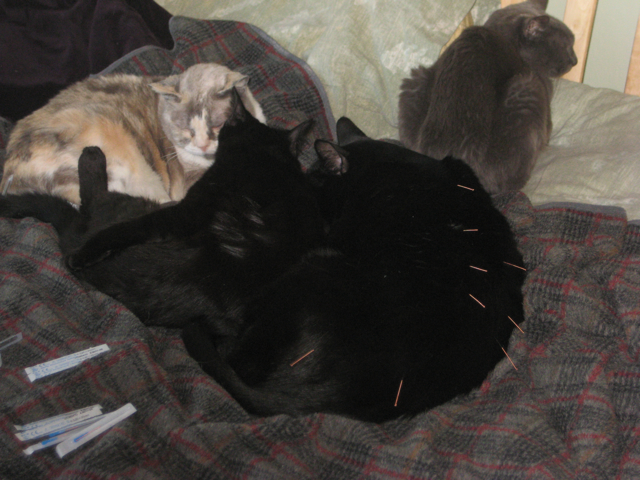
acubasil1

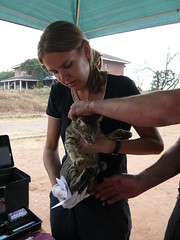
For anyone who ever asked,” how do you do acupuncture on a cat?”

Here is a good book on Chinese Medicine and acupuncture/acupressure for cats and dogs
Four Paws Five Directions: A Guide to Chinese Medicine for Cats and Dogs

My vet can no longer help! Who do I turn to now?

Wednesday, March 4th, 2009

How do you decide where to turn when western medicine has run out of options? Almost everything available for humans is now available for animals but how do you decide between all the options. There are chiropractors, acupuncturists, reiki practitioners, homeopathic veterinarians, nutritional consultants, hydrotherapy specialists, massage practitioners, and many other options. If you read the internet there are hundreds of supplements made especially for animals and many sound like they work miracles.

Here are a few tips –

  • 1. Get a referral from someone you trust if you can. Many veterinarians will now refer to alternative practitioners. We don’t take their business and we send back happy clients. If your veterinarian cannot offer a referral check with your local pet food store, especially the neighborhood ones, they often have a list of referrals. They also work with animal people all day long so they know the word on the street on who and what has helped. There are also online referral sites such as IVAS and Animal Wellness Network and many sites with reviews of clinics, such as Yelp.
  • 2. If you are exploring the internet for products online check out the forums, such as Handicappedpets.com, catster, and dogster, for suggestions. The companies selling the products will always give you glowing reviews. It is safer to listen to people who have actually used the product. A good veterinarian will also be able to help you determine if a product will help and if it is dangerous for your animal. Always check the safety of a product, especially if your animal is old, sick, or on other medication before using it.
  • 3. Only try one thing at a time and stick with it for at least a month. It is better to do one thing consistently then to jump around. Most natural therapies take time to work. Sometimes If your animal is extremely sick or has cancer you will need to make many changes at once. If you need to do this then working with a veterinary practitioner is highly recommended.
  • Because I practice acupuncture I often recommend it to start because I have seen how well it can work. Often times people start with a therapy for their animal that they have tried themselves and know to work. This is a good place to start. If something works for you, it probably will for your animal also.

    A good practitioner of any sort will be able to tell you how long to try something and when to decide if it is working or not. Most practitioners don’t want to go on treating with a method which is not working. With acupuncture I usually recommend three treatments to see if there is any improvement before recommending animals continue. Some therapies such as hydrotherapy will take a little longer. Always get this information before starting a therapy. And just because you try one thing and it doesn’t work, don’t give up. There are many incredible options out there for helping our animal friends.

    Peace before differences-a dog, a rat and a cat

    Sunday, March 1st, 2009

    For a couple years I have seen the photos floating around on the internet of a rat sitting on a cat sitting on a dog. I never knew the story however until seeing this video. Thanks Diane for passing it along!

    Anytime you great stuck in the impossible, think of these guys who have ended up as friends. Perhaps the true meaning of peace comes from not seeing our differences but seeing that in the end we are all the same.

    In honor of spay day

    Tuesday, February 24th, 2009

    Today is spay day and in honor of this very important day my friend Rose DeDan wrote a beautiful and very moving article on her blog, Dare to Care, the Life You Save May Be Someone’s Future Pet. If you get the time please take a moment to read it.

    Many of you know that I spent my first three years as a veterinarian working at the Seattle Humane Society. While I consider it some of the most rewarding work I have done, I am still haunted by nightmares from the euthanasias I performed. It is never easy to take an animal’s life and although I think my work there saved far more animals then I had to kill it is still difficult for me. Many times I would end up curling up on the floor at home sobbing after having a particularly hard day.

    I remember in particular a litter of five beautiful orange tabby kittens who came in with their mother and father, also very striking orange tabbies. The whole family of cats had been surrendered. We always tested every cat who came in for FeLV and the dad of this family came up positive. Because FeLV can be spread through drinking water and this whole family had been together they all had to be euthanized. My staff and I were heartbroken but there wasn’t anything we could do. It would take six months to know for sure if mom and the kittens were infected or not and we did not have the resources to keep them that long.

    I swallowed by emotion the best I could and euthanized dad and then took one kitten at a time away from mom and euthanized them. At the end I went back to get mom and couldn’t do it. I looked her in the eyes and realized that I had just killed her whole family and for the first time in my shelter career I just couldn’t. I ran back in tears and quickly explained that I needed to leave for a while, retreating to the bathroom to cry. Someone else took over and I didn’t have to face mom but I will always remember that day.

    Please, please spay or neuter your animals. I hope for a day when shelters will no longer have to euthanize animals and those who work there will be able to help without killing.

    I have many tales I could tell about the animals on death row who passed through my bathroom as foster cats and went on to live and the two who never left and are still living with me. My very precious Melody and Rudy, both with chronic upper respiratory infections. But today I want to share my sadness in the hope that it helps prevent more unwanted animals from entering this world