To vaccinate or not to vaccinate – that is the question. Part 1 cats
Tuesday, January 27th, 2009< People often ask, “Should I vaccinate my animal friend? And if so, how often?”
Many holistic veterinarians will tell you not to vaccinate. I disagree, after all vaccination can be a very good thing. After spending many years working and volunteering for shelters and rescue groups I know first hand how devastating some of these diseases can be. We have vaccines which work really well, but we give them way too often and we also vaccinate for things we don’t need to. Vaccines are not benign and not without risks.
Here is my vaccine protocol for cats who are not in kennel or shelter environments
- FVRCP (modified live without chlamydia) one vaccine at 16 weeks of age, booster at 1 year of age
- FeLV only if they go outside, use the same schedule as FVRCP. Use the vectored (recombinant) vaccine if possible. Hopefully there will be more information on how long the recombinant FeLV vaccine lasts soon. Until then, I do not offer an alternative recommendation for the recombinant form of this vaccine.
- Rabies as required by law
In this article I would like to share my thoughts on vaccination and provide some information on the different vaccines we have available for cats. I promise to share some dog vaccination information soon!
In cats we vaccinate mainly for viruses. There are three main types of virus vaccines we use
- The first is a modified live vaccine, which is made from a living virus that has been modified so it cannot cause disease. These modified vaccine viruses replicate in the body just like a normal virus does and have the advantage of creating a very strong immune response and very good protection against the virus. However because they can replicate these vaccines can induce a mild disease in normal animals and occasionally can make a debilitated animal very sick or even cause death. Because of this modified live vaccines should never be given to very sick animals or animals with severely suppressed immune systems. One interesting note on modified live vaccines is that since the vaccine virus replicates in the body it can be shed and passed on to other animals. Many times these vaccinated animals can spread immunity. However on the flip side of this, recently vaccinated animals should not be around very sick animals or animals without intact immune systems.
- The second type is a killed vaccine, which is made from real viruses that have been killed. They stimulate an immune response in the body but not as strong or long lasting a response as a modified live vaccine. The big advantage is that this type of vaccine virus cannot replicate in the body and will not make an animal sick from the killed virus itself. However this type of vaccine usually need to be given in series of two or more shots and killed vaccines are almost always adjuvanted or modified with an agent that causes a stronger immune reaction. These adjuvents can lead to strong vaccine reactions, can cause cancer and can induce autoimmune diseases. So while the virus cannot make your animal sick the adjuvant can. Many times the side effects of the vaccine adjuvant will take years to emerge.
- There is also a third type of vaccine called a vectored vaccine. This uses a virus, that we know is harmless, which has been genetically modified to have the proteins on the surface that are the same as a harmful virus. The animal is given this virus vaccine and gains immunity to the virulent virus that it is being vaccinated against. These vaccines are mainly in the development phase and we know much less about if there are any longterm side effects.
Here is a little information about the different feline vaccines out there.
- FVRCP should be given to every cat, but only once or twice. This is usually a modified live combination vaccine against Feline Panleukopenia (also called Feline Distemper), Calici Virus, and Rhinotracheitis. This combination vaccine sometimes also vaccinates against other diseases such as Chlamydia. Make sure it is just the three above. Chlamydia is something we almost never see in cats and the vaccine for Chlamydia which is added to the FVRCP has a lot of side effects.
Panleukopenia can be a very deadly disease and cats should be vaccinated against it. It causes severe diarrhea, vomiting and death especially in young cats and brain damage to kittens in utero.
Calicivirus and Rhinotracheitis are both upper respiratory viruses and are usually not deadly.
This vaccine has a very high protection rate against panleukopenia approaching 100%, however recently a major problem has emerged with the vaccine. The vaccine virus is made by growing virus on feline kidney cells. The problem with this is that small amounts of kidney cells get in the vaccine and can cause not just an immune response to the vaccine but also to the cat’s own kidneys. In other words it can cause the cat’s immune system to fight against and destroy it’s own kidneys. Many of us believe that the overuse of this vaccine has created the epidemic of kidney disease that we see in cats eight year of age and older. And recent studies have shown that cats do develop antibodies against their kidney cells.
Here are some good resources for more information on kidney disease and the link to FVRCP vaccination.
Colorado State University Insight
Parenteral Administration of FVRCP Vaccines Induces Antibodies Against Feline Renal TissuesGiven correctly, I believe this vaccine is a very good vaccine. However most cats are over vaccinated, increasing their chances of having kidney related problems. One dose of FVRCP given to a cat over 16 weeks of age will usually last for the cat’s lifetime, yet it is routinely given every one to three years. Why? Because the vaccine companies have not done studies past three years. They would prefer that you buy their vaccines every one to three years and have no incentive to do these studies. Luckily some universities are doing them and so far the results are showing that FVRCP has lifetime immunity.
I recommend people vaccinate their cats at 16 weeks of age and booster at a year to cover any chance of vaccine failure. This vaccine does not have to be given again. In shelters younger kittens should be vaccinated every couple weeks until 16 weeks of age but ideally an intra-nasal vaccine would be used. This is because of the high risk of deadly panleukopenia in this environment.
- FeLV should never be given to indoor only cats.It is an adjuvanted vaccine and has been linked to deadly fibrosarcomas in cats. FeLV is a real and deadly virus which usually causes death within 2-4 years of catching it. Something to remember however is that it is not a virus we can bring into the house. It is spread through direct contact or sharing drinking water. This virus can not live on dry surfaces. Indoor only cats not only don’t need to be vaccinated for FeLV but they shouldn’t be because the risk of them getting cancer from the vaccine is highly than the risk of them getting outside and catching FeLV. Outdoor cats should probably be vaccinated and given one booster three weeks later for this virus.
There is a new vectored vaccine for FeLV, which should be a lot safer, however it hasn’t been out long enough for us to know for sure. We also have very little information on how long this vaccine will last.
- Rabies is required by law in most states. Because of this it is the hardest vaccine to make recommendations on because of the public health issue. The vaccine can induce fibrosarcomas like the FeLV vaccine. It also has many side effects especially in older animals and animals prone to seizures. However in many places it is required by law for animals to be vaccinated every one to three years. If your animal is not vaccinated and they bite someone and the person who was bit presses it, in most states they can have your animal killed and tested for rabies. Because of this I usually recommend that people follow the requirements of the law when it comes to this vaccine
The rabies vaccine used to be a modified live but it was occasionally causing real rabies so now it is a killed vaccine. For some strange reason it is still given like a modified live vaccine without a booster. The recent thought and studies have shown that because of this many animals are never getting full immunity even though it is given every year. It should really be given once and then boostered three weeks later. Currently titers are not accepted as proof of immunity in the continential united states. They should be! Hopefully the laws will change to accept titers soon. This vaccine probably only needs to be given two or three times on a correct booster schedule to induce lifetime immunity.
- The FIP vaccine should never be given. Luckily it is rarely given these days. Please, please never give this vaccine and if your veterinarian recommends it, think about getting a new veterinarian. This vaccine does not protect against FIP and may actually induce it. FIP is a mutation of a corona virus that almost all cats carry. This vaccine only works if the cat has never been exposed to corona virus, which is less than 5% of the feline population. FIP is not a contagious disease. A cat with FIP can not pass FIP to another cat. In addition this vaccine can cause a higher rate of mutation to the deadly FIP in cats who have corona virus in their system. Please see FIP is not a contagious disease
- If you vaccinate your cat for FIV they may be euthanized if they end up in a shelter. I do not recommend this vaccine. FIV is not a highly contagious disease and the vaccine is a killed adjuvented vaccine which holds a risk of fibrosarcoma. Fibrosarcoma is deadly, FIV is usually not. Currently there is no test that can distinguish between a vaccinated cat and a FIV positive cat .Once you vaccine your cat with this vaccine they will always test positive for the FIV virus and if they end up in a shelter will probably be euthanized. Their offspring will also probably test positive for FIV if the mother is vaccinated. If for some reason you give this vaccine always microchip your cat so they will not be euthanized if they get lost and test positive.
Here is a informative article on FIV written by the American Association of Feline Practitioners.


Here are a couple important last thoughts
- Never vaccinate your animal if they are sick or going under anesthesia. This makes their immune system have to do two things at once, get better from their illness or clear anesthesia and build immunity from the vaccine. It also can lead to a vaccine failure if their immune system can not mount a proper immune response against the vaccine because it is busy with other things. It is better to make a second visit in to the vet for the vaccine when your animal is well.
- Also avoid giving more then two vaccines at a time. Ideally each vaccine would be given separately but with cats because of the stress of the trip to the vet (to both them and their humans:-), sometimes it makes sense to give two and avoid trips. I highly recommend not giving more than two at once because I have seen many animals become extremely ill after getting three vaccines.
Please send me your questions on this subject!
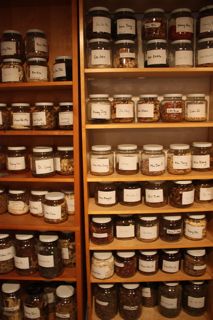
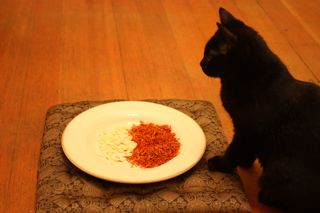 On Mondays, I descend down into the basement to disappear into my world of herbs. Once there I spend a couple hours smelling, touching and tasting, to create formulas to help the animals I work with. As I work I can hear the ancient wisdom of the past herbal masters whispering to me and feel the vibrations of these plants, many which were on this planet before us. To me working with these herbs is like cooking, only I am making up a recipe for healing by harnessing the amazing powers of these living things.
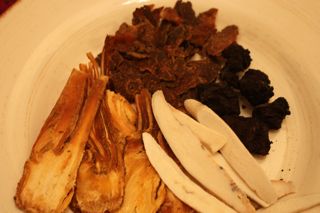 One of my clients is a paralyzed dachshund. Making up a formula for him, I call upon four of my favorite herbs to form a blood tonic. The four are all roots – foxglove, peony, Chinese angelica, and lovage – and are earthy and strong. I love to tea these in the winter and sit on my window seat sipping the strong rich tea they make. I can feel how these herbs work to strengthen me from the inside so that I have the energy to heal. This is what I want for this little dog.
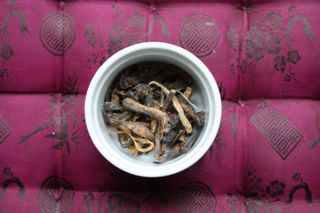 Most of these dachshunds have closed channels because of traumatic disc injury. I can tonify the blood all I want but it is like trying to send water down a plugged hose. I add a handful of earthworms into this formula, which the Chinese say get into the blood channels and wiggle them open like a roto rooter opening a clogged drain.





 I came across this great story,
 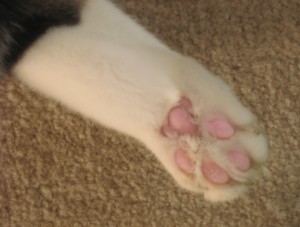 Nick has the most beautiful toes. They are white as snow and super fuzzy and every time I see them I just want to touch them. Of course he hates that. Part of the reason that his toes are so beautiful is that he doesn’t walk on them. Five years ago a car hit Nick and his pelvis was badly broken. After consulting with a surgeon, who was quite certain that there was no permanent nerve damage, his family decided to do the difficult surgery to put his bones back together. As he healed it became apparent that there was something wrong with Nick’s nerves and he was not able to control his legs or support his weight below the knees.
 While most people who don’t know Nick would see him as disabled, in Nick’s mind he sees himself as perfect and whole. He doesn’t dwell on the past when he could use his legs normally and jumps into life with excitement and attitude. Sometimes I wonder if Nick is here to teach us all that being whole has nothing to do with the physical body and all about the way we see life.