Posts Tagged ‘dog’

How to have fun with sheep and avoid fluorescent lighting! Sheep in LED clothing.

Wednesday, March 18th, 2009

This is truly one of the most amazing things I have seen. It is well worth the view. And if you were wondering about the light quality of LED lighting, here’s an example. I have always been impressed with the ability of herding dogs. This takes it to a new level! Enjoy!

Stop the pain! Arthritis and your animal friend – holistic medicine options

Wednesday, March 18th, 2009

It’s sad to see our animal companions no longer be able to do the things they once could do as they age and grow older. All older animals have some amount of arthritis, although some have many more problems with it.

Unfortunately, Western medicine has very few options for treating arthritis and uses mostly drugs, to treat the pain. This is starting to change with some veterinarians doing stem cell and plasma rich platelet injections. However these treatments can still be expensive. Ask your vet about if these treatments are right for your dog. Some animals are not able to tolerate these drugs and many times animals are on three different drugs and it still isn’t enough.

In some animals arthritis manifests as weakness caused by the inflammation pushes on the nerves. Many dogs walk around like their feet are asleep, tripping over things, stumbling and no longer having the strength to jump into the car or onto the bed. Unfortunately because they can no longer walk as far or do as much as they used to, their muscles start to atrophy or waste away, causing a vicious cycle. As the weakness increased, they do less, which causes more atrophy from disuse, leading to more weakness and more atrophy and less activity. In the end many of these animals can no longer get up on their own or even take a short walk.

In other animals arthritis will manifest as pain, which can also prevent movement and cause the weakness/atrophy cycle. Many of these animals will become moody and withdrawn and may even snap and bite at their people out of fear of pain. It is so hard to see our friends have so much pain that they no longer want our affection.

In most animals there is a combination of pain and weakness.

Usually dogs suffer more than cats because they carry more weight and are used to daily activity. Also people often don’t notice that their cats are painful because they spend so much time sitting and sleeping

So what do we do for our friends to help them live out their old years happy and pain free?

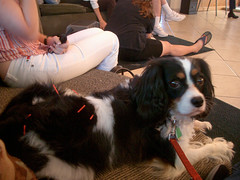
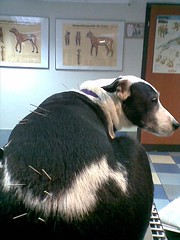
  • Acupuncture Being an acupuncturist, I always recommend acupuncture first. Of course, this is also because I have seen how well it works in the animals I treat. I often find that if I can work with animals when they first have problems, they do so well, I only need to treat them every one to three months. Unfortunately most of the animals I see have had problems for a while and their people only learned about acupuncture when they had tried everything that western medicine had to offer. In these animals, acupuncture can still work and work well but usually treatments need to be closer together.

    It is so nice to see these animals happy and able to enjoy life again!

  • Hydrotherapy is a great option especially in dogs who have muscle atrophy. Unfortunately it cannot be done with cats, although Sheila Wells at Wellspings has told me they have worked with rabbits before. Hydrotherapy is done in a small swimming pool and involves massage and physical therapy in the water. I have seen excellent results with hydrotherapy especially combined with acupuncture. Hydrotherapy helps to rebuild muscles, increase range of motion and work out sore and sensitive areas of the body without the impact on the body of exercise on land. My favorite pool is Wellsprings in Seattle Washington. They have a great website with lots of information and photos that I love to refer people to. Click on the link to check it out!
  • herbs5

  • Herbs
    I have worked with Chinese herbs with many of these arthritic dogs and some cats. The combination of acupuncture and herbs usually helps with pain and movement and helps animals maintain between treatments. I rarely use Chinese herbs in cats because they are very sensitive to them and it is hard to medicate cats. I sell an senior dog herbal formula called Senior Dog Support, through my etsy shop, that helps with arthritis pain and improves blood circulation into the joints. Your holistic veterinarian may have something else they recommend.
  • Fish oil/ Omega oils
    The Omega 3 Fatty Acids in fish and cod liver oil actually helps decrease arthritic inflammation in dogs (not true for cats although it helps with other things). Adding a little fish oil to the diet can help many animals.My favorite brand is Nordic Naturals – Pet Cod Liver Oil . Nordic Naturals is one of the best brands for quality and they test for heavy metals and contaminants.
  • Glucosamine/MSM/chondroitin
    These supplements help to decrease inflammation and rebuild damaged cartilage. They are often sold in combination. The nice thing about these supplements is that they have few side effects and are very safe. Some animals have a wonderful response to them and some have almost no response. It usually takes a month to six weeks to see if your animal will have a positive response. Adequan, similar to glucosamine is also available in an injectable form and works better in some animals. It is also a lot easier to give to cats who are hard to medicate daily. After the initial series of injections it usually only needs to be given once a month. Adequan can only be purchased through your veterinarian. My favorite glucosamine product is Sea Mobility Beef Joint Rescue jerk treats, they work well and are very tasty. There are other good ones out there.
  • Infra-red light therapy – Infrared light helps ease the pain of arthritis in joints and increase blood circulation to the area. It is very cheap to do and can be done at home. See my article Infrared Light Therapy for kidney failure, incontinence and arthritis.
  • Chiropractics
    Many animals have subluxations of their spine especially as they age. A good chiropractor can often help with mobility and pain. I have found that chiropractic adjustments work best in animals with a very tight back and more pain then weakness. For my own cat, chiropractic adjustments have worked better than anything else we have tried and have made his life much better. Make sure you find a chiropractor who is used to working with animals and knows animal anatomy.
  • Massage/Acupressure
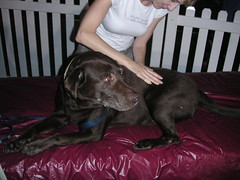
    Massage can help to loosen tight muscles and increase blood circulation. It also can help with pain.We know it works for us, why not for our animal friends. Once again make sure you find a massage practitioner who is certified to work with animals. I have two amazing massage therapists I work with in Seattle, Kim Rogers and Jen Streit. Kim also does humans!

    Acupressure works with the acupuncture points and helps decrease pain and relax muscles.

    There are many great books on acupressure and massage for animals. Here are a few
    The Well-Connected Dog: A Guide to Canine Acupressure
    Acu-Cat: A Guide to Feline Acupressure
    The Healing Touch for Dogs: The Proven Massage Program for Dogs, Revised Edition
    The Healing Touch for Cats: The Proven Massage Program for Cats, Revised Edition
    Four Paws Five Directions: A Guide to Chinese Medicine for Cats and Dogs

  • Reiki/Bowen/Polarity/Craniosacral and other energy therapies These therapies help stimulate the body to heal and can decrease pain and improve quality of life. Since there is little regulation of these therapies it is important to get a referral before seeing someone. This is especially true of Reiki since there are so many people who practice it. A good practitioner can make a huge difference in an animal’s quality of life.

It is better to do one thing and stick with it than to jump around between therapies. Often times animals will began with me doing acupuncture and herbs and then we will add in other therapies as needed. If I can’t help an animal with acupuncture I will refer them to another practitioner to try something else. Don’t make too many changes all at once in an old animal’s life. Go slowly instead.

My vet can no longer help! Who do I turn to now?

Wednesday, March 4th, 2009

How do you decide where to turn when western medicine has run out of options? Almost everything available for humans is now available for animals but how do you decide between all the options. There are chiropractors, acupuncturists, reiki practitioners, homeopathic veterinarians, nutritional consultants, hydrotherapy specialists, massage practitioners, and many other options. If you read the internet there are hundreds of supplements made especially for animals and many sound like they work miracles.

Here are a few tips –

  • 1. Get a referral from someone you trust if you can. Many veterinarians will now refer to alternative practitioners. We don’t take their business and we send back happy clients. If your veterinarian cannot offer a referral check with your local pet food store, especially the neighborhood ones, they often have a list of referrals. They also work with animal people all day long so they know the word on the street on who and what has helped. There are also online referral sites such as IVAS and Animal Wellness Network and many sites with reviews of clinics, such as Yelp.
  • 2. If you are exploring the internet for products online check out the forums, such as Handicappedpets.com, catster, and dogster, for suggestions. The companies selling the products will always give you glowing reviews. It is safer to listen to people who have actually used the product. A good veterinarian will also be able to help you determine if a product will help and if it is dangerous for your animal. Always check the safety of a product, especially if your animal is old, sick, or on other medication before using it.
  • 3. Only try one thing at a time and stick with it for at least a month. It is better to do one thing consistently then to jump around. Most natural therapies take time to work. Sometimes If your animal is extremely sick or has cancer you will need to make many changes at once. If you need to do this then working with a veterinary practitioner is highly recommended.
  • Because I practice acupuncture I often recommend it to start because I have seen how well it can work. Often times people start with a therapy for their animal that they have tried themselves and know to work. This is a good place to start. If something works for you, it probably will for your animal also.

    A good practitioner of any sort will be able to tell you how long to try something and when to decide if it is working or not. Most practitioners don’t want to go on treating with a method which is not working. With acupuncture I usually recommend three treatments to see if there is any improvement before recommending animals continue. Some therapies such as hydrotherapy will take a little longer. Always get this information before starting a therapy. And just because you try one thing and it doesn’t work, don’t give up. There are many incredible options out there for helping our animal friends.

    Peace before differences-a dog, a rat and a cat

    Sunday, March 1st, 2009

    For a couple years I have seen the photos floating around on the internet of a rat sitting on a cat sitting on a dog. I never knew the story however until seeing this video. Thanks Diane for passing it along!

    Anytime you great stuck in the impossible, think of these guys who have ended up as friends. Perhaps the true meaning of peace comes from not seeing our differences but seeing that in the end we are all the same.

    Give me your tired, your poor, your hungry – Why tethered dogs need your help.

    Friday, February 27th, 2009

    Sometimes I get so caught up in my little world of very well treated dogs that I tend to forget about all the ones out there suffering. In the Seattle area we are being given an opportunity to make a difference for those who don’t have the wonderful lives of the animals I know.

    Thank you Margo for bringing this to my attention!

    King County is considering an ordinance which would make it illegal to leave your dog chained outside continually. Here is a detailed article from the Seattle P-I, Law would prohibit pet owners from continuously confining dogs. Right now there is nothing within the law to help these poor animals which are left on the end of a chain for their whole lives being denied the love and family they long for. Not only is this a sad and horrible life for these dogs but chained dogs tend to have more issues with aggression and are more likely to bite and harm children and other people. In fact there is a group called Mothers against dog chaining dedicated to this issue.
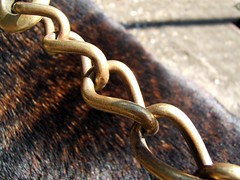
    Here is a wonderful explanation by Cesar Milan on why dogs should not be tethered.

    If you are in the King County area please take a moment to contact your council member. For a list of the names and contact information of these folks, please visit The King County Council Directory. If you are not in the Seattle area consider contacting your local council folk to see if they will address this issue in your area.

    Here is a copy of the letter Margo wrote addressing some of the horrible situations she has seen in her work with animals.

    Dear Councilmember,

    First, I would like to thank you for taking the time to consider this
    important issue.

    Chaining a dog as a way of life is both cruel to the animal and dangerous to
    humans, especially children. The dog most likely to attack and seriously
    injure or kill a child is a chained, un-neutered male. For more on this,
    please go to Mothers against dog chaining .

    As someone who has observed and tried to help a number of chained dogs over
    the years, I can say I have yet to see a chained dog that has adequate food,
    water, shelter or a remotely clean living area, let alone socialization,
    exercise or vet care. Many dogs suffer profound neck injuries and even death
    when embedded chains finally sever their windpipe. Most people seem to think
    their dogs are somehow weatherproof as well.

    Just a few examples of what I’ve seen personally:

    A young boxer who was chained because the owner said she jumped on his two
    year old son. Inadequate food, water, shelter and feces everywhere. She was
    kept out in sub-freezing weather, and you could see her visibly shivering.

    A pitbull chained to a tree with no food, no water and no shelter. The chain
    was so heavy she could only move her eyes.

    Two pitbulls at another house, one chained to the front step, and another
    chained to a doghouse in the backyard. There was so much mud, the dog
    refused to leave the doghouse. Both were on extremely heavy chains.

    A husky-cattle dog who was chained to a tree, and wrapped himself up so
    tight he couldn’t move. The owner said “Yeah, he does that”. Dirty water, no
    food, and he couldn’t even get to his doghouse.

    The German Shepherd whose owner would walk out the back porch and throw raw
    hamburger into the dirt. The police ended up shooting and killing the dog.

    The Saint Bernard who simply laid on his side in the dirt, never moving, the
    picture of utter hopelessness and defeat.

    The people in the P-I article never cease to amaze me, either.

    The woman in Snoqualmie who got herself a young, high energy spaniel-lab,
    which she sentenced to living on a chain because “he’s hyperactive”.

    The couple in Maple Valley whose yellow lab is chained because “he’s not
    housebroken and he sheds”.

    The dog in Rainier Valley who is occasionally fed rice and has been chained
    the last five years.

    The fourteen year old husky mix who has probably been chained to that fence
    in Enumclaw his entire life. His crime? “He runs away”.

    All these people have abdicated their responsibility to exercise and train
    their animals. It is simply easier to chain them and forget about them,
    while blaming the animal for the problem the human has created.

    The man and his son in Maple Valley who are training attack dogs. The photo
    showed a young pitbull in a plywood shack of a doghouse. They did have
    enough money to crop the dog’s ears, however.

    The breeders and others who will yell and scream at you that it’s their
    right to chain their dogs are merely keeping them as cheaply as possible
    until they sell them and make a quick buck. They are no better than puppy
    millers in the sense that they don’t care one iota about the well being of
    the dogs, nor do they consider the possible damage the animal could do
    if/when the dog becomes aggressive due to being kept chained and
    unsocialized.

    I hope you will pass a real anti-chaining ordinance that has, pardon the
    pun, teeth.

    Sincerely,
    Margo W.
    West Seattle
    Cappy’s story

    Sunday, February 22nd, 2009

    cappy2
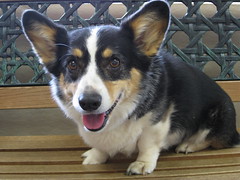
    I came upon Cappy’s story recently and his human mom, Lindsey gave me permission to share his story and the new blog she set up to help with his care.

    From Cappy’s blog
    Cappy is about 1 year and 6 months old. He is a beagle, possibly pure bred, but we are not sure. Cappy came to us from D.A.W.S. in Connecticut, USA. D.A.W.S. obtained him from a rescue organization in Ohio that had raided a puppy mill and saved many dog’s lives in that raid, not to mention the future puppies that could have been tortured. D.A.W.S specializes in taking animals out of the mid west where there is an overwhelming amount of puppies due to these puppy mills. They found a family of Beagles, a mom and her 3 girls and 3 boys, that they wanted to get a home for out here in Connecticut.

    My husband and I are big time animal lovers and activists in animal rights and especially pet’s rights. We had just purchased our first home and already had 6 cats, but I knew it was time to get a dog. I had always had dogs growing up, and my husband NEVER had a dog. We searched and petfinder.com ads for weeks debating over whether or not it was the right time for us. I finally, on a whim, put in an application for “beagle puppies.” There was no picture or anything, but I knew about beagles and their personalities, and I knew that a beagle was the perfect size dog for us. Not too big, but not a yippee small dog. Big enough to scare away an intruder, but small enough to lay on the couch and take everywhere.

    So my husband and I anxiously waited to hear from D.A.W.S. and over the weeks, we were hearing from out friends, family, and our vet that they were calling for a reference. Of coarse they all gave us a good reference, WE LOVE OUR ANIMALS!

    We finally got the call that we were approved for a beagle puppy and we were SUPER excited! We had to wait till Friday (we got the call on a Monday) to go meet out little puppy, but in the mean time, they asked us which one we would prefer. We told them that we didn’t really care, but I would like to have a tri-color. They had 2 boy black and white beagles, 1 boy tri-color, and 3 girl tri-color beagles. When I told them that I wanted a tri-color, they said “Perfect, because that is who we have left.”

    We arrived at the animal shelter on that Friday excited to meet out new little guy. It was the LONGEST 1.5 hour drive ever. When we arrived, we told the lady at the window that we were here to meet the beagle puppy. The lady looked and us and said:

    “Well, I have something to tell you before you meet this little puppy………”

    A million things ran through my head – “was he psycho, food aggressive, did he hate other dogs?” Just about EVERYTHING except what was actually wrong with him.

    “………….. He is missing his front right foot.”

    cappy1My husband and I both at the exact same time, in the exact same way said “We’ll take him!” without even ever seeing him! The lady was relieved that we didn’t care about his little missing foot. So we went into the back where they took him out and let us play with him.

    He was the best puppy I have ever met. He was only 4 months old and he was so well behaved. He wasn’t all nippy like most puppies and he wasn’t all that excitable even though he was locked in a kennel for most of the day. He also came when we called him. Oh, by the way, his name was Skittles when we met him, but over the long run, it did not suit him well.

    We fell in love instantly, but had to leave him. They told us that we had to come back next weekend because he still needed to get neutered. It was a LONG week. I had to have surgery just a few days before we went to pick him up, and I was worried about having a puppy in the house while I was recovering.

    So 3 days after my surgery, we went to pick him up. We were so excited that week that we went out and spent $500 on crap. We had every type of puppy toy, collar, leash, bed, bowls, food, blah blah blah.. We were going to be new parents!!
    We arrived to get him and it all happened so fast that before I could realize what was going on, we were in the car on our ride home…

    That was ONE YEAR AGO TODAY!!!!

    So THAT, my friends, is the story of how we got Cappy!! I will be posting another post SOON to tell you about his first day home!

    We created this blog because Cappy’s peg leg is getting the best of him. We were told by the vet that we were going to have to do something eventually to absorb the impact on his bone in his right front leg. Since there is not ankle there to absorb the shock of running (and Cappy LOVES to run) we need to have a custom fitted silicon sleeve made for him.

    Lindsay is working to get a hosted blog up for Cappy where they can have a store to help support the care he needs. If you want to contact Lindsay, she is at lindsay (at) webdesignforidiots (dot) net . And please visit Cappy’s blog.

    The danger of compact fluorescent lighting

    Saturday, February 21st, 2009

    When I travel these days I always pack a four pack of incandescent light bulbs with me. Occasionally I will forget and then my first stop is always to the nearest Safeway or drug store to buy a pack. The more I hear about the possibility of a ban on these types of bulbs the more I worry. Should I start a stockpile of them in my basement now? Or have faith that LEDs will become more widespread before the ban or perhaps some new alternative will be developed.

    So why does this worry me?

    Yes there is the concern about the mercury in CFLs, a known toxic substance. But what concerns me the most is that CFLs or compact fluorescent lighting makes me sick. I can be under it for a short period of time, say an hour or two, but that’s it. If I spend a day under CFLs (or in my case also the classic tube fluorescence lights), it usually takes me a day to get back to normal. My head hurts, I feel dizzy, I can’t hold thoughts, I feel drained yet I can’t sleep that evening, and I feel irritated and depressed.

    I know I’m not the only one. I’ve talked to others who have similar problems and there have been some reports about CFLs increasing migrants, depression, and worsening symptoms in diseases such as Lupus. Traditionally healers, such as Barbara Ann Brennan, have long advised to never do healing work under fluorescence lighting of any kind to avoid making yourself ill. These lights drain our energy and especially for us in a healing profession this can be very dangerous.

    Studies have also show that children do much better under normal lighting. From Earthwatch – Compact Fluorescents vs. Full Spectrum Bulbs

    Elementary school Principal William Titoff, in his Ph.D. dissertation, found that “there was a statistically significant difference between students who worked under old-style fluorescent lights and those who worked under full-spectrum, visually-efficient lighting.” His study also found that depression was reduced among those students who studied under full spectrum lights and that it increased among fourth graders who sat under fluorescents.

    A similar study, conducted in Florida in 1973 by light pioneer Dr. John Ott, found that students under fluorescents were more likely to be irritable, hyperactive, fatigued and have trouble paying attention. The students under full spectrum lights were better behaved and performed better academically within one month of the lights’ installation.

    Here is another interesting letter to the editor about CFLs from Dr. Magda Havas, B.Sc. Ph.D a researcher in electromagnetic pollution from Trent University which explains part of the problem.

    As Dr. Havas states –
    Compact fluorescent lights (CFL) produce radio wave frequencies. These frequencies radiate directly from the bulbs and go on the electrical wiring in the home or school causing poor power quality or dirty electricity. The closer you sit to the bulb the greater your exposure. Because the high frequencies travel along the wire you can be exposed in other rooms of your home as well as the room that contains the CFL.

    So why do I bring this up on an animal site?

    I worry as more and more people replace their traditional bulbs with CFLs that these new bulbs will affect the health of not just the people in the house, but also the animals. I am lucky enough to be able to tell that CFLs make me sick and do something about it, but how will you be able to tell if CFLs are making your animal sick? They cannot tell us if they are having headaches or just feeling bad.

    Also new research has come to light that indicates that CFLs emit a high humming sound that is not in our range of hearing but is in the range of hearing of cats and dogs. Can you image hearing a high pitched humming sound all day long. It would be enough to drive you nuts! Many pet owners report that their cats or dogs do not want to be in rooms with CFL bulbs on and will become anxious if they are forced to be.

    See the articles Don’t like CFLs? Ask your pet and CFL Bulbs: Save the Plant Make Your Pets Insane.

    I ask you to consider alternatives to CFLs. In a few years the technology for LED lighting should be better and LEDs should be available for about the price of a normal bulb. LED bulbs last possibly forever (at least ten years or more) and use much less energy than CFLs. Most importantly they are safe! In the mean time keep your normal incandescent light bulbs. Even without taking the health effects of CFLs into consideration, we are going to have an environmental nightmare from the mercury in these light bulbs in a few years.

    Also remember that if you break these light bulbs you need to be very cautious about how you go about cleaning up. You don’t need a full haz-mat team but some precautions are needed and make sure to get your animals and children out of the room immediately. Here’s the snopes.com article on what you do and don’t need to do.

    1/30/12 I have now began replacing some of my bulbs with LEDs. The prices are starting to come down and the quality is getting better. The light quality is still not what it is with the incandescent light bulbs but much better than the CFLs in my opinion. Spending $80 on three light bulbs today I felt a little silly but they are supposed to last over twenty years and use about $1.00 of electricity a year, so overall I think it is a win. Plus since there are many places in our home that require ladders to reach I am excited that this may be the last time up on a ladder for a long time. Happy light bulb hunting!

    11/16/13 LEDs have now come down in price and there are even better options like this $10 light bulb Lighting EVER 7W A19 LED Bulb. They even now make LEDs that can replace traditional fluorescent tubes like this one, LEDwholesalers Brightest LED Tube Fluorescent Tube Replacement. I hope that we reach a day when CFLs are no longer made.
    You are what you think

    Wednesday, February 18th, 2009

    We have all heard the saying , “you are what you eat”, but most people haven’t heard, “you are what you think.”

    Intention has an amazing role in healing and medicine. Even in Western medicine the power of intention and the placebo effect has been scientifically proven to exist.

    Because of the placebo effect drug trials in people have to be double blinded, meaning that both the patient and the doctor administering the drug are not told if they have the real drug or the placebo.

    Did you know that drug trials in animals also have to be double blinded? Obviously the animal doesn’t know if they are being given the real drug or not but the doctor or researcher also needs to have no knowledge of this. They have found that if the person administering the drug knows if it is the real drug or the placebo, then the results will be influenced by this knowledge.

    Yes there is a placebo effect in healing for animals but it is created through us! That’s pretty amazing when you think about it.

    So how can can we use this power of intention in helping our animal friends heal?

    Primarily we can believe that they can heal. If we have confidence that our animal companion can heal they can sense this and it will help them also believe in their own healing. When we think positive thoughts we release certain chemicals in our body which affect our nervous system in a positive way. This enhances our immune system and helps direct our body back to homeostasis.

    Because our animals are deeply connected to us they are also calmer when we are positive and get the same positive immune and nervous system response. While we can often share disease with our animal friends, we can also share health.

    Many studies have been done on the power of intention. One of the most well know was a study done on reducing crime by meditation and positive thought in Washington DC in the summer of 1993. Though meditation alone the rate of crime was dropped by almost 25%. A National Demonstration Project of Transcendental Meditation. Other studies have also been performed with similar results.

    Here’s some simple exercises you can do to help your animal if they are sick

  • 1. Take five minutes each evening and morning to picture your animal in health. Picture their body healing and imagine them happy and pain free. Sometimes it helps to visualize them in an activity that makes them happy such as running through a field, playing at the beach, or chasing butterflies.
  • 2. Take some time to calm yourself either through meditation or some other activity that relaxes you. Meditation is a simple practice that can be done for as little as five minutes a day. Most cities have groups which ofter free meditation classes and there are many CDs and books available which will guild you through how to practice. Other activities that can help are things such as running, yoga, tai chi, qi gong, or just taking a few moments to stop and breath deeply. Do whatever is right for you! By taking care of yourself you are helping your animal friend.
  • 3. If you find yourself starting to worry about your animal’s health, acknowledge it, and then try to think positive. Don’t push your worries away or try to suppress them. Often times just saying the words, “I’m worrying, ” will help. “I’m worrying but now I am going to think about what it would feel like to have my friend feel better and how that would make me feel.”
  • It is amazing to see how the little things we do can help our animal companions!

    Here are links to three very good books and audio tracks on meditation
    A Path with Heart: A Guide Through the Perils and Promises of Spiritual Life
    Meditation for Beginners
    How to Meditate with Pema Chodron: A Practical Guide to Making Friends with Your Mind

    Pending Washington State Spay/neuter Legislation Could Save Thousands of Dogs’ and Cats’ Lives

    Tuesday, February 17th, 2009

    Thanks to Pamela for forwarding me this important legislation pending in Washington State.

    If you are in Washington State please check out Save Washington Pets for information on how to contact your lawmakers and support these bills.

    Pawsitive Alliance, a volunteer organization devoted to ending the killing of adoptable dogs and cats in Washington state, is proud to support two bills currently in the Washington State Legislature: Senate Bill 5329 and House Bill 1406.

    If passed, these bills would enable low-income owners to spay or neuter pets for a co-payment of only $10 for cats and $20 for dogs, likely resulting in a drastic reduction in the number of homeless dogs and cats living in Washington state shelters. Presently, shelters report that because of overcrowding, over 1,000 dogs and cats are euthanized every week in Washington.

    The bills do not make spay/neuter surgery mandatory. Instead, they encourage people to spay/neuter their pets by making surgery affordable and accessible.

    This aggressive statewide spay/neuter program would be funded by a fee paid by distributors who ship more than one ton of pet food in a six-month period. On the consumer end, the direct financial impact would
    amount to less than a penny per meal for most pets. To put this in perspective, the fee’s direct cost would typically be less than $10 per year for a family with one dog and one cat.

    Members of the community can easily and effortlessly support Pawsitive Alliance and 50 other animal welfare advocate groups in their efforts to make this crucial legislation happen by going to Save Washington Pets

    For anyone who was outraged by the recent puppy mill seizure, cares about animals, believes that they should not be killed because of a problem with our system, or simply wants to save taxpayer money, now is the time to help in this small way!

    “Apart from the humane aspects, which should bother anyone, the cost of handling and euthanizing unwanted animals from litters is staggering—and less affordable than ever for many people in these difficult economic times,” said Washington Senator Craig Pridemore, the prime sponsor of SB 5329.

    Pridemore points out several problems that could be solved by the legislation, “First, it reduces the number of unwanted animals that are needlessly killed each year. Second, at a time when many people are struggling to make ends meet, it helps those least able to afford to spay or neuter their pets. Third, it reduces shelter costs and frees up money to house strays until they can find homes, instead of destroying them.”

    Eight other states have adopted similar spay/neuter programs for pets of low-income residents. After New Hampshire founded a comparable program in 1994, the state saw a 75-percent decrease in euthanasia and a 34-percent decrease in shelter admissions in its first few years. This is in addition to significant taxpayer savings from reduced animal impoundment costs due to the program.

    “We’ve all seen the pictures of lonely pets in cages and without owners, and we know the only fate waiting for most of them is to be put down,” Pridemore said. “It doesn’t have to be that way. This is a problem we can solve for pennies.”

    Cat scan for cancer

    Tuesday, February 17th, 2009

    I found this amazing story today, Cat nips owner’s lung cancer, about a cat named Tiger who diagnosed lung cancer in his person. He would not stop pawing the left side of this man’s chest which he mentioned to his doctor. They found a lung tumor right under where Tiger had been pawing! Because of Tiger’s quick action they were able to remove the tumor and it sounds like his person has a good chance of full recovery.

    It is amazing to me how acute animals’ sense of smell is and how they are willing to help us. There have been a number of accounts of dogs diagnosing cancer by smell although this is the first one I have seen involving a cat. Service dogs can detect when people are about to have seizures by smell making it so that people with epilepsy can live normal lives. We all know the tales of the search and rescue dogs who find people buried under buildings or in the snow. And of course there are also the drug and explosive sniffing dogs at the airports and ferry docks.

    I have had clients mention that sometimes it is another animal in the house that detects illness in their animal companion long before that animal shows any signs we can see. I know if I wound myself, my dogs will usually find where and want to check it out.

    Here is another interesting story about cancer sniffing dogs, Can Dogs Sniff Out Cancer?. Puts a whole new meaning to getting a cat scan (or in a dog scan)!