Archive for the ‘health’ Category

A magic vial of Yunnan Paiyao

Saturday, June 11th, 2011

As gunshots rang out, he fell from his horse bleeding from where the bullet had entered his chest. As blood ran from the wound, he could feel his life slowly slipping away. Images of his small daughter and wife, who were both far away, ran through his mind.

Quickly he reached for the vial, opening it to swallow the small red pill within and then taking the powder beneath it he quickly poured it in to the fresh wound. His breathing started to return to normal and he felt like he would be able to make it off the battlefield to find help. There was still some bleeding from the wound but no longer enough to take his life.

Sound like something from a fantasy movie? Surprisingly it isn’t.

Yunnan Baiyao, also known as Yunnan Paiyao, is a special formula know to every Chinese herbalist. It was developed in 1902 in China and has been an important remedy ever since. The formula is owned by the Chinese government and the secret of what exactly is in the magic red pill is highly guarded. It is rumored that it is made from gallstones cultivated in very special cows among other things but even the workers in the factories do not know exactly what is in it.

I have used Yunnan Paiyao a number of times and been highly impressed with how well it works.

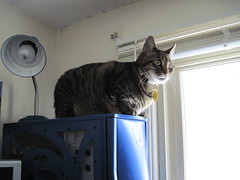
When my husband first moved in with me his cat, Sabutai, was suffering from horrible mouth cancer. One day which he was eating, the tumor in his mouth began to hemorrhage. In a matter of seconds there was blood all over the bathroom and he was just a small cat. Not knowing exactly what to do, I rushed to the medicine cabinet and grabbed one of the little red pills and pushed it down his throat. Within 60 seconds the bleeding had almost completely stopped and he did not hemorrhage again for the rest of his illness.

Another time I was at the vet clinic I used to work at and saw one of my old clients in the waiting room with their older dog, Alki. They quickly explained that they had just found out that Alki had a large tumor on her spleen that was bleeding into her abdomen and that she needed emergency surgery and most likely a blood transfusion. I quickly ran home and grabbed a vial of Yunnan Baiyao and brought it back. We administered the small red pill before she went into surgery and not only did she get through the surgery well and not need a blood transfusion but the surgeon was surprised at how little bleeding there was considering what was happening.

So why don’t we all have a vial of Yunnan Paiyao sitting around for emergencies? I’m not sure. I know I do!

In our family we often use the powder for any kind of cut or wound. It is not only good at stopping the bleeding but helps keep wounds from getting infected and is not painful to apply like many of the wound cleaning agents. It is safe and can be licked and eaten by cats and dogs without worry.

But isn’t it expensive you ask? Guarded by the Chinese government and that effective!

No! Usually you can buy Yunnan Baiyao for about $6-10 for a vial or a package of 16 pills of powder. The Yunnan Paiyao in the tan box with orange lettering contains the red pill. The Yunnan Baiyao in the white box with blue lettering does not contain the red pill. You can even buy this on Amazon.com
Yunnan Paiyao capsules with red pill (five pack)
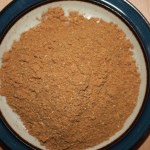
Yunnan Paiyao powder

When are the best times to use it?

If an animal is going into surgery, especially if there is concern about excessive bleeding, I recommend giving the powder or capsules of powder for three days before and after the surgery. The little red pill can be given right before surgery but while the animal is still awake. Dosage depends on the size of your animal (except the red pill). Cats usually do better with the powder mixed with a little water in a syringe because the capsules are too larger for them to swallow where dogs usually do better with the capsules unless they are very small.

Nasal bleeding can be a very hard problem to control especially if there is a tumor or chronic condition which causes it. Yunnan Paiyao can be used to control nasal bleeding.

Yunnan Baiyao can also be used in many of the end stage diseases where surgery is not an option but there is bleeding in the body which can not be controlled. This is a great herbal to use with hemangiosarcoma and any other bleeding cancer or tumor. The powder capsules can be used daily for this and the red pill once again only for emergency.

There are also many reports of it clearing up existing infections and can be safely poured directly into wounds. Although if a wound is infected I usually reach for the antibiotics.

Yunnan Paiyao can safely be used in any cut or wound although deep wounds should be evaluated to see if sutures are needed. Yunnan Paiyao will actually promote healing and help a wound to close faster.

With Yunnan Bai Yao in most dogs I dose this at one pill twice a day unless they are very large and then I double that. In cats and very small dogs the pills can be opened and half the powder can be used. In hard to medicate animals the powder can also be mixed with water and syringed into the mouth.

Return to Integrative and Holistic Methods for Treating Cancer in Cats and Dogs

Lymphoma in dogs and cats – integrative medicine – chemotherapy and herbs with a side of acupuncture

Tuesday, June 7th, 2011

Lymphoma is one of the fastest moving cancers out there. Because it is so fast moving, it is also the most responsive cancer to chemotherapy.

The prognosis with this disease can be very bad, especially if no treatment is used.

However the good news is, with chemotherapy and holistic medicine we can often get 18-24 months and occasionally ongoing remission. Integrative medicine clearly is the best way to go with this disease.

With no treatment I have seen animals die within one week of diagnosis. The average is 4 weeks with no treatment. With using natural medicine, I have found usually I can move that out to 2-4 months. Chemotherapy alone pushes that even further with average survival at around a year.

When a dog or cat comes to me with lymphoma, I highly recommend they consult with an oncologist or a vet who does a lot of chemotherapy work. If you want remission with this cancer you need to do chemotherapy.

The most widely used chemotherapy protocol for this cancer consisted of a multiple drug approach and is given over approximately six months for dogs. In cats the protocol is shorter and the main vet I work with believes that one to three chemo treatments can significantly slow down this disease in felines.

Full chemotherapy for dogs can also be quite expensive, around $4000. Shorter durations can be given for this cancer as well if cost or tolerance of chemotherapy is a concern.

Because so many people choice to do chemotherapy for this cancer I divided this article into four sections.

  • Treatments I recommend regardless of western treatment
  • Treatments I use with chemo
  • Treatments to give if no chemotherapy is used
  • Cats

So first what do I recommend for all cats and dogs with lymphoma? (Follow the links for more information on the supplements and dosing information.)

  1. Weekly or every other week acupuncture. I have seen this make a large difference in survival times and in keeping white blood cell levels within normal range during chemotherapy. Usually just with acupuncture alone I can double any prognosis. Please see Acupuncture for animals with cancer – stoking the healing power within
  2. SanSheDan ChuanBeiYe is great at slowing this cancer down and keeping it out of the lungs.
  3. Artemisinin can reduce node size and make animals feel better.
  4. A good cancer diet without grains. If you are using chemo do not feed raw food, make sure it is cooked. For more information on the diets I recommend seeDiets for cancer in cats and dogs.

In addition to this protocol if no chemo is used I recommend -

  1. Prednisone. Yes it is a western drug, but it will work as a chemotherapy drug and shrink the nodes. Every animal I have treated for lymphoma has been on prednisone and I highly recommend it. If you are considering chemo do not start the prednisone before consulting with an oncologist or vet who knows chemo. If given before chemo the prednisone can significantly reduce the outcome of the chemo.
  2. Hoxsey-like formula If this formula causes vomiting I skip it.
  3. Si Miao San if the lymphoma is mostly in the nodes or gastrointestinal system.
  4. Xiao Chai Hu Tang – if there is cancer in the spleen, liver, or intestines

If chemotherapy is given I add to my main protocol:

  1. Mushrooms – I give a mushroom combo with shiitake, maitaki, reishi and cordyceps There are many of these products. Mushrooms not only have effects directly against cancer but stimulate the immune system and help keep white blood cell counts up.
  2. Milk thistle – improves the outcome of chemotherapy and decreases side effects
  3. Bu Zhong Yi Qi Tang – there is a great study out there at shows this herbal improves outcomes and reduces side effects during chemotherapy.

In cats

Cats have a hard time with multiple drugs and supplements. With cats I start them on my main protocol and then wait a week. If they are still eating well I will then add in one Chinese herbal formula in addition to my main protocol.

How do I decide which one?

The best I can tell you is usually this will either be Xiao Chai Hu Tang if this cancer is intestinal or centered in the spleen or liver, Hoxsey-like formula if the cancer is in the nodes, or Bu Zhong Yi Qi Tang if they are getting chemotherapy.

If at all possible find a good holistic practitioner to work with your cat. Cats generally do really well with acupuncture so if at all possible find someone who also does acupuncture.

Cats can get a disease called small cell lymphoma which is very slow moving. I treat this differently and will try to put up another article on it.

This article is still in development. Over the next few weeks I will clean it up and write individual articles about the herbals and supplements I mention which do not currently have a link.

As with all advice offered on this website please check in with your animal’s primary veterinarian before using any of these herbals and supplements.

Return to Integrative and Holistic Methods for Treating Cancer in Cats and Dogs

Feline Stomatitis – how to stop the pain

Saturday, May 28th, 2011

As I write this, my cat Raven is zipping around the living room playing and talking to himself. I know cats often do that, but Raven hasn’t been lately. This is made even more remarkable when you consider that he had a major surgery to remove all his molars and premolars and the connecting periodontal ligaments a little over a week ago. Raven feels good, better than he has felt in over a year. It warms my heart to see him happy again.

Feline stomatitis is the most painful disease in cats. Cats with stomatitis have severe inflammation in their mouths and sometimes back into their throats, far beyond normal dental disease. What makes it even worse is that because it effects the mouth, many cats with stomatitis don’t want to eat.

There are three main types of stomatitis.

  1. Juvenile stomatitis effects kittens and very young (less than a year and a half) cats. It is usually inflammation around the molars and premolars. This form of stomatitis can usually be cleared up by daily brushing and care of your cat’s teeth. It often times can be resolved by the time they are two years old with good care and never come back again.
  2. Rostral stomatitis effects mostly the front of the mouth and teeth. There is severe inflammation in this form of the disease, which seems to be more of a reaction to the bacteria and plaque on the teeth. This form of disease can be quite painful and lead to secondary infections as well. Rostral stomatitis can be completely cleared up if all the teeth are pulled. I have another cat, Melody, who had this form of disease. I had all her teeth pulled ten years ago when she was two and she has done great. She has no pain or inflammation. Rostral stomatitis can also be managed with very good dental care and antibiotics. This usually involves professional dental cleanings every six months, daily brushing and occasional antibiotics. In many of these cats it makes more sense to pull the teeth.
  3. Caudal stomatitis is the last type of this disease and the most severe. This is the form Raven has. It involves severe inflammation and ulceration around the molars, premolars and usually the oropharynx and throat behind the teeth. This form of stomatitis is chronic and usually impossible to completely resolve. With no treatment many cats will stop eating and die from the severe pain and inflammation.

Here is a link to an article with some great photos of stomatitis (warning – somewhat graphic)
Feline Stomatitis

So how do you treat caudal feline stomatitis?

I tried to treat this disease just holistically in Raven and while I feel like I bought some time I do believe that this disease needs to be treated with extraction. By the time I scheduled Raven to have his teeth pulled, he would often scream while eating if he was not on pain meds. He did better once I started making my own cat food for him but clearly he needed something that would permanently remove the pain. The best prognosis is in pulling the teeth early in the disease process.

  1. The best thing you can do is to see a veterinary dentist. These professionals really know what they are doing. The procedure being done by most of these dentists is to remove all the premolars and molars and the periodontal ligaments. I know it sounds like a big surgery but these poor cats are in so much pain and they immediately feel better. Raven went home the day of surgery on pain meds and was already playing again. It is very important to make sure that no roots are left when the teeth are pulled. If you go to a dentist they will make sure that no roots are left and remove the ligaments as well. This gives the best prognosis for a pain free life. Raven’s dentist, Dr. DuPont, gave a 80% chance that once Raven recovered he would be able to live a normal life with no medication even though he would still have some inflammation in the mouth. This can vary on the severity of disease, how long it has been going on and if steroids have been given or not.
  2. Get the teeth pulled as soon as possible. The sooner the teeth are removed, the better the prognosis. Really! They do so much better without the teeth.
  3. Avoid giving steroids. Many vets recommend steroid injections for this disease and the steroid will clear up the symptoms for awhile. However Dr. DuPont told me he has found that the prognosis gets worse for every steroid injection that is given. It may be that cats with more severe disease get more steroid injections so it is hard to put a direct cause and effect on this. The cats with the best prognosis have not had steroids. Raven had only had one steroid injection so his prognosis was still pretty good but it would have been even better without that one shot.
  4. Follow the protocol given by the dentist after the teeth are removed. This often is a few weeks of antibiotics. I know it is hard to get drugs down a cat but it is important to get proper healing and clear up any infection
  5. Get your cat on a grain free canned food diet. This helps to decrease the inflammation in their body and can help to reduce the inflammation in the mouth. I have Raven on a mix of mostly my homemade cat food – see Making Crazy Awesome Homemade Cat Food, and occasional Instinct canned cat food, and Rad Cat raw food. Avoid anything with bone bits as they can irritate the tissue in the mouth of these cats.
  6. Consider herbal treatments if there is still severe inflammation after the teeth are pulled. I was able to control the inflammation in Raven’s mouth successfully with Hoxsey like formula with Agrimony and Yellow Dock Root for about six months. This formula helps to pull blood away from inflammation, decreasing the inflammation, and heal mouth ulcerations. I hope I do not need to use it now that Raven’s teeth are gone but I am hopeful that if he has any flare ups I can get it under control with these herbs.
  7. Use pain medication if needed. The most common pain medication given is buprenorphine. Some vets use Metacam but usually given long term it will start to destroy the kidneys and is not a good choice for long term use.

Why does this disease occur?

We don’t know. It is more common in certain breeds of cats like the Siamese and Abbyssinians. It is more common in cats who had rough starts to life as kittens.

There may be viral factors involved but we don’t know for sure. Cats with FIV and FeLV have more problems with it. Cats with stomatitis are more likely to test positive to herpes and calici viruses then normal cats.

It does seem to have an autoimmune component. The immune system is overreacting to the plaque and bacteria or fighting against the teeth or ligaments holding the teeth themselves. Is there an allergy component to it? Maybe. I found Raven’s inflammation would flare up with any grain in his diet.

Someday we may have the answers and in finding them a better way to treat this disease. In the meantime, pulling the teeth is the best we have and well worth it for our cat companions’ comfort.

Pascal’s feeding box and night time yowling

Thursday, May 26th, 2011

My friends Jenn and Jeff made this awesome feeding box for their new cat Pascal. He is 15 years old and needs to eat in the middle of the night but they have another cat who would eat all the food if they left it out.

Jeff bought a large rubbermaid box and a cat door with a magnetic collar and put them together. I think this is genius and I wish he would start marketing these. I know so many households with one very large hungry cat and one very small cat. Jeff has some great photos on his blog of the resulting box and more about Pascal. Here is Pascal’s story.

Pascal also recently became a patient of mine and gets acupuncture and herbs for his recently diagnosed renal failure and for night time yowling. Jenn and Jeff have reported back that Pascal’s yowling is much less and he is playing more and seems happier.

Yowling can be a problem in older cats. In Chinese medicine we say it is often from the water of the kidneys being deficient and not controlling the fire of the heart. Because of this, yowling is common in cats with renal disease. Acupuncture and herbs can be a great tool for treating this in many cats. Although unfortunately I had another cat I treated recently where the acupuncture did not help.

Night time yowling can also be a sign of thyroid issues which needs to be treated with western medicine. So if your cat is yowling at night the first step is to get blood work run to rule out a thyroid issue. There is a great western treatment for thyroid disorder which involves injecting radioactive iodine which destroys the benign thyroid tumor that causes this disorder. Sounds strange but it is a safe and effective treatment. I have been through it with two of my cats and a number of the animals I work with have had this treatment including Pascal.

Three legged and happy – how to holistically treat osteosarcoma (bone cancer) in dogs

Sunday, May 8th, 2011

When I was studying with my acupuncture teacher, Richard Panzer, I met an incredible great dane with osteosarcoma. She was fairly young and her prognosis was not good. However she would bounce into the clinic twice a week for acupuncture treatments, full of life. Her tumor slowly became larger but the cancer did not spread to her lungs, which is typical of this disease. Eventually when she became extremely painful they made the decision to amputate her effected leg. I heard that she later died of a disease unrelated to her bone cancer.

The first dog I treated with osteosarcoma, Maggie, had a similar story. She went a year before her bone was so weakened from the cancer that it broke and her leg had to be amputated in an emergency surgery. She is still alive over five years later. Here is her full story, Maggie’s story – Sometimes three legs are better than four.

Osteosarcoma or bone cancer is one of the most painful cancers out there but it is also the one I have had the most success with using integrative and alternative treatments.

In all the dogs I have treated, I have never lost a dog directly to this cancer if there is not detectable lung metastasis at diagnosis. Most dogs die of something else. However, if amputation is not an option, pain becomes the factor that causes their human companions to put them to sleep. Even the strongest pain medications can not control the pain of osteosarcoma.

With no treatment, most dogs with osteosarcoma will live three months after diagnosis and die from lung metastases, the cancer spreading to the lungs. However herbal medicine has some amazing tools to keep cancer out of the lungs and make it so dogs can live with osteosarcoma and sometimes go into complete remissions if we can amputate the primary tumor.

So what is my protocol for osteosarcoma?

  1. Amputation – Above all I recommend amputation if it is at all possible. This is a very painful cancer. The only way to get rid of the pain is to amputate. There is no way to get rid of the primary tumor without amputation even with chemo and radiation therapy. This is the most important treatment, in my opinion. I know it seems like a major and harsh option, but most of these dogs immediately feel better from amputation. I think we do not realize how much pain they have been in before we amputate. Pain medication can not adequately control the pain of osteosarcoma.
  2. A cancer diet – this means a high protein diet with no grains. Ideally it should be cooked or canned. Raw is also ok if your dog will tolerate it and is not getting chemo. Don’t give this cancer the fuel it needs. Please see the article Diets for cancer in cats and dogs.
  3. Artemisinin. – Follow this link for more information about the supplement and how it is given. Artemisinin is under study at the University of Washington for its effect against bone cancer in people. Do not use artemisinin if your animal is getting radiation.
  4. Sanshedan Chuanbeiye – This is my number one herbal for keeping cancer out of the lungs. Follow this link for more information about this herbal.
  5. Acupuncture – I recommend weekly or every other week acupuncture depending on the stage of illness. Acupuncture can slow down this disease, boost the immune system and help with pain. To find a veterinary acupuncturist in your area use this tool IVAS find an acupuncturist.

In addition I sometimes use the following

  1. Hoxsey like formula – if your dog is very hot with a lot of panting and heat intolerance or if amputation is not possible I recommend adding in this formula. If the primary tumor remains then boneset should be added to this formula to treat bone pain.
  2. Mushrooms can help to boost your dog’s immune system and support them during treatment.
  3. Pain medication, if amputation is not possible. This is a very painful cancer. If the primary tumor remains western pain medication is a must. Most dogs should be on a NSAID such as Rimadyl, Tramadol and possibly Gabapentin.
  4. Radiation treatments, if amputation is not possible. Radiation treatments can help with the pain of osteosarcoma. I highly recommend talking to an oncologist about this option if amputation is not possible. If your animal is getting radiation do not give artemisinin. Milk thistle can help to enhance the effects of radiation and decrease the side effects.

If there is radiographic evidence of lung metastasis please also see the article Breathing through cancer – holistic therapies to control lung metastasis in cancer

I have known quite a few very happy three legged dogs. Dogs are great at just taking life one day at a time. I believe that this is a treatable cancer. Every dog will follow their own path, however I have been amazed at how well this herbal and acupuncture protocol can work.

Even though I have had a lot of success in treating this cancer, I recommend that you consult with an oncologist to make sure you know all your options. If possible find a good holistic vet in your area to help create a herbal program for your dog and do acupuncture treatments. If they are trained in acupuncture but not herbal medicine bring them this article.

As with all articles on this blog, please consult with your animal’s primary veterinarian about coming up with a protocol for your dog or cat and before using these products. Every dog is individual and there may be a better protocol for your dog then what I suggest based on their personal medical history and constitution.

Some cancers are more aggressive than others and even though I have had a lot of success with treating osteosarcoma, this protocol may not work for everyone.

Very rarely this cancer occurs in cats. While this article is written for dogs everything in it can also be used for cats.

Return to Integrative and Holistic Methods for Treating Cancer in Cats and Dogs

Diets for cancer in cats and dogs – you are what you eat, a fighting cancer machine

Sunday, May 1st, 2011

Good nutrition is very important in any animal fighting cancer. You are what you eat and with cancer we need a diet that feeds and supports the body but starves the cancer. In fighting cancer with herbs and holistic medicine, we are relying on the body to do the fighting. This takes a strong immune system and a lot of energy. You need good food for this.

Cancer cannot utilize fats but loves to use carbohydrates, especially processed ones. Protein is somewhere in between.

A diet high in protein, moderate in fat and with no grain or very low grain is ideal. Home-made cooked or raw diets are best. If that is not possible then a good quality high protein, canned commercial diet can be substituted.

I hate to see dogs with cancer on dry food but if that is the only option then a no grain high quality diet such as Orijen can be used.

I do not recommend uncooked raw diets for animals with active cancer, if they are undergoing chemotherapy or radiation. However for these animals a great option is a cooked diet. After they are done with these treatments the food can slowly be transitioned to raw if desired.

Commercial raw diets can be cooked as a more simple way to make home cooked food for your animal.

Below are a couple diets I have been using for years for my clients who have time to home cook. It is not an exact science so feel free to play around with them.

Sample cancer diets

Dog (approximately for a 40 lb dog per day)
1 1/2 cups cooked or raw meat including liver and organ meat
1 cup cooked vegetables
1/4 cup yam, sweet potato or pumpkin, cooked or canned
1/8 cup nuts such as almonds, walnuts, or cashews
2 T yogurt with live cultures
1 egg
1 teaspoon Nordic Naturals Pet Cod Liver Oil
a calcium supplement (see below)

Cat (2-3 days of cat food for the average cat)
12 ounces of meat or fish ground or chopped(about 1-1/2 cup)
1/8 cup liver and organ meat (about one chicken liver)
1 egg
2 T pumpkin, sweet potato, or yam cooked or canned
1/2 teaspoon Nordic Naturals Pet Cod Liver Oil
1 teaspoon almond butter
taurine 250-500mg (if the meat is cooked or if using fish)
calcium (see below)

  • If possible I also recommend adding reishi, shitake, and/or maitake mushrooms to the diet. Mushrooms are strong immune stimulates and have anti-cancer properties. Add them in as some of the veggies. Mushrooms should always be cooked as the cooking releases their helpful properties and when they are not cooked they are mildly toxic.
  • When picking vegetables, broccoli and other leafy dark green vegetables should be considered. Many studies have been done on broccoli’s effects against cancer. See the article Broccoli Fights Cancer.
  • The pumpkin, sweet potato, yam, and cod liver oil are high in Vitamin A. Vitamin A promotes mechanisms in the body that kill cancer cells and cause cell differentiation. Consider adding other sources of vitamin A such as liver and carrots.
  • A calcium supplement needs to be added to any diet made for cats and dogs. There are many ways to do this.
    • There are many commercial products such as Animal Essentials Natural Seaweed Calcium.
    • Bone Meal Powder can also be used. Use one teaspoon for an average sized dog.
    • Many people prefer to add a Centrum Silver a day for average to large sized dogs.
    • If you are feeding a raw diet you can feed raw chicken necks for calcium.
    • If you are using eggs in your diet consider smashing up the egg shell and adding it to the diet. One egg shell provides enough calcium for an average sized dog. 1/8-1/4 of an eggshell provides enough for a cat.
  • If you are making raw food make sure the meat is frozen for at least 48 hours to kill off any dangerous parasites.
  • Nuts such as walnuts, almonds and cashews are high in trace nutrients, minerals, vitamins and good fats. If possible include these in your diet. Cats sometimes do better with a little almond butter. Avoid macadamia nuts which are toxic to dogs.

If you are using a commercial canned food I recommend the following

  • Weruva is a great food that seems home made. They have many varieties so make sure you find a grain free one. I have found this food much cheaper on Amazon.com.
  • Taste of the Wild is all grain free.
  • Instinct is completely grain free and very high in protein.
  • There are other good ones out there but make sure they mostly contain meat and are grain free

If you are using a commercial raw diet ideally pick one local to your area. I really like Darwin’s for raw dog and cat food and Rad Cat for cats.

Remember that any food in the belly is more important then the best food sitting uneaten. Sometimes animals with cancer are so sick that they have very little appetite. In that case give them anything they will eat. When they are feeling better, focus on trying to get them to eat what is best for them.

Return to Integrative and Holistic Methods for Treating Cancer in Cats and Dogs.

The Dance of Life and the Energetics of Food

Friday, April 29th, 2011

Matching your animal to their protein can be a lot of fun! I often do this with client’s animals.

So what is the energetics of food all about?

Chinese medicine classifies foods based on temperature and other energetic characterists. In addition many holistic practitioners will look at the energetic personality traits of the animals that are used for food.

It is a way to take your animal’s personality and the food’s personality into consideration when picking a diet for your friend.

Let me give you some examples

First a little about the animals that we often eat.

Cows and Bison are large grounded animals who tend to be slow moving and calm.

Deer and rabbits are flighty, fast prey animals, quick to move and easily frightened

Birds are light and while they are prey animals they are not as flighty are rabbits and deer. Often times bird is a nice neutral meat.

Here is some examples of how to use these qualities combined with what you know about your animal.

Italian greyhounds tend to be very active and somewhat anxious. Feeding these dogs deer or rabbit could make them more anxious and jumpy. On the other hand cow and bison is so heavy that they may not be able to use and digest it properly and may have diarrhea. We don’t want to weigh them down too much. Most Italian greyhounds would do best on duck, chicken, turkey, or fish.

Border Collies are fast and have high energy. They do not need the help of deer or rabbits. Many times cow or bison is the best meat for these dogs because it helps keep them grounded as they work.

Dachshunds are medium energy little dogs but are very prone to having problems that lead to paralysis and nerve issues in their feet. They sometimes do better with bison and beef which help them to have their feet firmly planted on the ground. Birds are sometimes too light to help this little guys.

Labs are often a little overweight and can be sluggish even though they tend to have lots of energy. Bird meat can help lift some of the weight and sluggishness, especially duck.

This can be a fun thing to play around with. Some dogs can do very well on all meat sources and so don’t get too hung up on trying to pick just one right meat.

Some other things to consider

Trout is a hot meat – avoid it in all animals with inflammation issues and animals who are prone to being too hot.

Pork is made from pigs (animals smarter than dogs) who are severely mistreated. I do not recommend feeding pork because of ethical reasons and the energetics that brings into your animal’s food.

Eggs contain the beginning of life and are full of nutrients to grow a new little bird. Older dogs and cats often times do very well with eggs. They give them a little more vitality and help to keep weight on older animals who are too thin.

Sweet potato, pumpkin and yams are sweet and warm. They help with digestion and can aid in both constipation and diarrhea. They also warm the belly and help with processing nutrients. If your animal is too thin this is also a good one.

Kelp is very cooling and can help if you have an animal who eats grass and dirt. Not only is it high in nutrients, but it also helps cool any inflammation in the stomach. I think that many dogs who eat grass are deficient in certain minerals. Kelp can help with these deficiencies and stop dogs from eating dirt.

There are two excellent books on the energetics of food
Healing with Whole Foods: Asian Traditions and Modern Nutrition
Prince Wen Hui’s Cook: Chinese Dietary Therapy

Breathing Through Cancer – holistic herbal therapies to control lung metastasis in dogs and cats

Tuesday, April 26th, 2011

When I diagnosed my sixteen year old cat Basil with lung cancer last year, I had one prayer. I had already lost two cats in my life to cancer in the lungs and I could not deal with losing another one. Watching my babies suffer as they struggled for breath towards the end of their illness was unbearable. I just couldn’t go through it again.

Please, please don’t let him die struggling to breathe.

While Basil did die from his cancer spreading, I was able to keep him breathing well throughout his illness with a few herbals. I was extremely sad to see him pass, as not only had he been my companion for 16 years, but was also one of the most amazing wise sage cats I had ever met. He was clearly ready to go and even the best medicine can not keep us here when we decide it is time to move on.

While most animals with cancer do die of cancer, there is a lot we can do to keep them from suffering and help them to live a good life in the time they are here. Often times that time becomes much longer than we believed was possible. See Lou’s story – Prognoses are only as good as the paper they are printed on.

Usually if a tumor is found us veterinarians will recommend taking a Xray of the lungs to see if it has spread there.

Many cancers spread to the lungs, and often times by the time cancer has been found it is already in the lungs. Generally this gives a poor prognosis, usually somewhere around the lines of three months. However, there are ways to prevent the growth of lung nodules and even reverse the size of the ones that are already there.

One of the best ways is to use herbal formulas. Often times these are combined with drugs to help control lung disease.

From my experience there are three very important herbals that support reversing cancer in the lungs.

Click on the names of the formulas to learn more about them and how to dose them.

  1. The first and most important comes in a little vial and is called Sanshedan ChuanBeiYe. I use this formula for any cancer in the lungs or that has the potential to move to the lungs.
  2. Xhu Fu Zhu Yu Tang is good at moving blood away from cancerous tumors in the lungs and chest, leading to better lung capacity and a shrinkage of tumors. I usually make mine up with E Zhu and San Leng which are extra cancer fighting ingredients.
  3. Xiao Chai Hu Tang is another formula I often use for lung metastasis. It also helps to kill cancer cells other places in the body and can reverse symptoms that often times lead to death.

In addition some other things to consider

  • Acupuncture – I highly recommend treating these guys weekly or every other week. From my experience acupuncture can significantly slow down cancer growth.
  • Prednisone – I know, I know it’s a drug not an herb. However I need to mention that prednisone will work as a mild chemotherapeutic against many cancers. If there is any respiratory distress this may be a good drug to use. Check with your vet to see if it may help your cat or dog.
  • Please also see the sections on individual types of cancer as they are written. There are other supplements I will use for animals with lung involvement depending on the type of cancer. Especially consider Artemisinin for lymphoma, osteosarcoma, and other cancers that fall under the heading of phlegm nodule cancers.

All these herbal formulas can safely be used with chemotherapy or radiation with the exception of Artemisinin. Artemisinin can not be used for a month after radiation therapy.

Please consult with your veterinarian before using these herbal formulas

Return to Integrative and Holistic Methods for Treating Cancer in Cats and Dogs

Xue Fu Zhu Yu Tang – Supporting the lungs against cancer

Friday, April 22nd, 2011

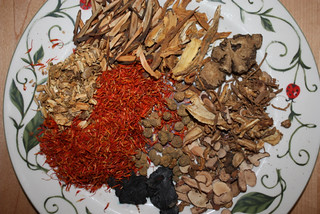
Xue Fu Zhu Yu Tang, otherwise known as Drive out Stasis in the Mansion of Blood Decoction, has a beautiful red color from the wonderful Hong Hua or safflower flowers it contains. This is the last of my top five cancer formulas and a very special one at that. Where Hoxsey is somewhat toxic and cooling, Xue Fu Zhu Yu Tang is warming and nourishing. At the same time it is quite strong against cancer.

This is a formula that I use in any of the dogs and cats I treat with lung metastasis. It has an amazing ability to move blood away from tumors in the chest and out to the periphery of the body. This starves tumor cells in the lungs.

In addition it is good against any intra-thoracic tumor, thyroid adenocarcinomas, salivary tumors and mast cell tumors, which fall into the blood stagnation category (usually the ones in the front of the body). It can also be effective against some of the blood borne cancers like leukemia and myeloma.

This formula has been shown to increase immunity, kill cancer cells and enhance the effects of radiation therapy. It has strong anti-oxidant effects and helps to support the body and immune system in its fight against cancer.

It is a combination of the following herbs

  • Tao Ren (peach seed)
  • Dang Gui (angelica root)
  • Hong Hua (safflower flowers)
  • Chuan Niu Xi (cyathula root)
  • Sheng Di Huang (Rehmannia)
  • Chi Shao (red peony root)
  • Zhi Ke (bitter orange)
  • Chuan Xiong (lovage root)
  • Jie Geng (platycodon root)
  • Chai Hu (bupleurum root)
  • Gan Cao (licorice root)

I often add San Leng (scirpus rhizome) and E Zhu (turmeric) to this formula to enhance its effect against cancer. Studies done on these two herbs show that they have a significant effect in inducing apoptosis (cell death) in cancer cells.

The main effects of this formula involves taking blood away from tumor cells and moving it to the parts of the body which need it. However Chai Hu has direct effects in killing cancer cells as discussed in the article about Xiao Chai Hu Tang. Tao Ren contains the same bound form of cyanide found in apricot seeds, which has a strong effect on cancer cells but spares normal cells.

In addition to cancer I also use this formula for many forms of heart disease, hacking coughs, bronchitis, dry skin and itching, fear, and back pain.

This formula works best for tumors that are considered blood stasis in Chinese medicine and better for tumors in the cranial third of the body. There are slight modifications made to this formula for tumors in the middle and caudal body.

If I use ground herbs, I usually dose this formula at 1/8 teaspoon twice a day for small dogs, ¼ teaspoon twice a day for dogs up to 30lb, ½ teaspoon twice a day for dogs up to 70lb and 1 teaspoon twice a day for dogs over 70 lbs. I will occasionally dose it just in the morning if I am giving Xiao Chai Hu Tang in the evening.

If using a tincture I dose it at 0.2ml per 5lb once or twice a day.

If you want to buy the base formula, the teapill form is sold on Amazon.com.
Stasis In The Mansion Of Blood Teapills (Xue Fu Zhu Yu Tang Wan) or in powder form Min Tong – Xue Fu Zhu Yu Tang 100 gms
To use tea pills I dose cats and very small dogs at two pills twice a day, medium sized dogs at 4-5 pills twice a day and large dogs at 8 pills twice a day.
You can also buy E Zhu and San Leng in powder form. I mix 9 grams of each with 82 grams of base formula.
San Leng – Sparganium Rhizoma, 100 grams,(MinTong)
E Zhu – Zedoaria Rhizoma, 100 grams,(MinTong)

Please check with you animal’s primary vet before using this formula.

Return to Integrative and Holistic Methods for Treating Cancer in Cats and Dogs

Hoxsey-like formula – for dogs and cats with cancer

Sunday, April 17th, 2011

Hoxsey-like formula is one of the only western herbal formulas I use for cancer. I love all the beautiful ingredients that go into it!

It is also an herbal formula I use with some caution as it can be toxic and make animals sick if used for the wrong conditions or in the wrong animals. Many of the ingredients given alone can cause vomiting and diarrhea.

That being said this is a very powerful formula and very strong not only against cancer but other hard to manage inflammatory conditions. This is a formula I also use for autoimmune stomatitis/gingivitis in cats, and severe inflammatory skin conditions in dogs.

Why Hoxsey-like?

The ratios of the original Hoxsey formula are controlled by the descendants of Harry Hoxsey, so there are many slightly different formulas that share the name. We have a pretty good idea of the herbs in this formula but the ratios may vary. There are also formulas which add in additional herbs yet are still called Hoxsey.

The Hoxsey-like formula I make and use continues the following herbs

Oregon Grape, Burdock Root and Red Clover root should be the three main herbs in this formula. I also often add in Boneset if I am working with an animal with bone pain.

This formula works best for what would be considered damp heat or hot phlegm nodule tumors in Chinese medicine. The tumors, which respond the best to this formula, tend to be inflamed, painful, and fast moving. My main uses of this formula are for osteosarcoma(bone cancer), fibrosarcomas, lymphoma, melanoma, and squamous cell carcinoma.

This is a very cooling formula. You do not want to use this in an animal who runs cold.

The animals who respond best to this formula are hot, inflamed and excess. Picture a panting, thirsty, hot golden retriever with a history of skin disease and an outgoing hyper personality who has just been diagnosed with lymphoma or bone cancer and you get the picture.

I also use this formula quite a bit in cats. They actually tolerate it very well. Cats who do best on Hoxsey, will usually still be slightly heat seeking, but have inflammation and pain around their cancer. Many people notice that while they still like heat they are less heat seeking then they used to be.

Hoxsey helps reduce inflammation, helps with liver function and detox, and has many anti-cancer properties.

Oregon contains berberine which increases the body’s immunity. Red clover induces cancer cell death through apoptosis and induces cell differentiation. Poke root stimulates the immune system through its effects on the lymphatic system and white blood cells. Burdock helps to detox the body so it can work better against cancer. Prickly ash bark helps stimulate blood circulation and supports digestion.

Together this formula kills cancer cells, induces apoptosis, stimulates the immune system, inhibits angiogenesis and induces cell differentiation. A pretty powerful combination!

Poke Root is toxic but used at the proper ratio amounts is safe to use. In some animals it will cause vomiting. It will sometimes lead to an increase in white blood cells on blood work, which can look like leukemia. A vet looking at blood work may be convinced that your animal has leukemia or an infection so make sure they know that your animal is on this formula and that it may increase the white cells.

While this formula is credited to Harry Hoxsey, who has quite the colorful history, there is some thought that it was originally developed by the herbalist John Christopher. As much as there is a whole history of fraudulent medicine surrounding Harry Hoxsey I believe it to be an incredible formula when used correctly.

If this formula causes vomiting, it needs to be discontinued or combined with a formula which supports the stomach and digestion. Absolutely do not continue this formula if it makes an animal sick.

With my own dried powdered herbs I dose this formula at 1/8 teaspoon twice a day for cats and very small dogs, ¼ teaspoon for dogs 15-39lb, ½ teaspoon twice a day for dogs 40lb-80lb and 1 teaspoon twice a day for dogs greater than 80lbs. There is some variation on this so if a dose is too high for an animal but they do ok on a lower dose use that amount. If I am using a tincture form I dose at .2ml per 5lb twice a day. I recommend starting with half a dose for the first week to make sure they will tolerate it. I like to take one day a week off from giving this formula. Cats sometimes tolerate it better given once a day.

This one is easy to find online or at any western herbalist. If you are working with a vet, Animal Essential‘s vet line includes this formula and is the best place to get it. You can buy Wise Women Hoxsey-Like Formulafrom Amazon.com. They use a slightly different formula than the one I make but it is very close and should work the same. If you need to add boneset there are many options also on Amazon. Here is a link to one Boneset Extract . Boneset should be 10% of the formula.

Because this formula can be toxic, I highly recommend consulting with a holistic veterinarian to find out if this formula is right for your animal.

Return to Integrative and Holistic Methods for Treating Cancer in Cats and Dogs.