Archive for the ‘cancer book’ Category

Cancer Care Ebook & FAQs

Tuesday, May 12th, 2026

In 2010 I became frustrated seeing so many animals with cancer that I couldn’t help because my practice was too full. Realizing that I had a lot of good information to share, I embarked on a three year journey to download everything cancer related from my brain. My Cancer Care eBook is the result.

While this eBook will likely always be an evolving work, its current form is available here — Integrative and Holistic Cancer Therapies for dogs and cats — for whatever you consider a fair price. If you buy it, you will receive updated versions whenever I edit it (I’m primarily working on grammar and structure).

Purple button linking to the Path with Paws Holistic Cancer Care Ebook at Gumroad

All chapters of my eBook are also listed below, much like an FAQ for cancer treatment. Bookmark this page as a reference, and please share it with your friends! Why? Read A World of Sharing and Trust. This is my vision for our world!

I am so happy to be able to share this with you!

Path With Paws Holistic Cancer Care E-book by Lena McCullough

Integrative and Holistic Methods for Treating Cancer in Dogs and Cats

Introduction
How to use the book
How to determine when to use western/holistic medicine
Questions to ask your vet when your animal companion has cancer
A little about western medicine’s treatment of cancer
How to integrate all modalities
How to find a good holistic vet to work with
Above all quality of life
Diets for cancer in cats and dogs- You are what you eat, a fighting cancer machine
Working with picky appetite in dogs with cancer
How to medicate your cat or dog
Treating weight loss in cats and dogs with cancer
Chinese medicine and cancer- phlegm nodules and blood stagnation
How to pick the right herbals without chinese theory – Whoa! Can you explain that in english?
Acupuncture for animals with cancer – stoking the healing power within
Acupressure for animals with cancer – healing touch
How to Safely Surf the Internet When Searching For Cancer Information and Products
Supplements and Single Herbals for Cancer
Herbal treatments – plants holding cancer at bay:

Where to Find Herbs
Supporting chemotherapy with antioxidants and herbs
Integrating therapy with radiation
Healing from surgery
Cats – some thoughts before you treat
Types of cancer and their treatments
A mini protocol for any cancer:

Other cancer resources
Saying goodbye to our animal friends – how to decide when it is time to help them die
How to prevent cancer in dogs and cats

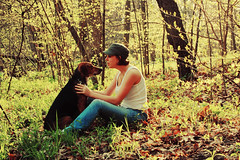
woman holding a book called Second Chances with a black and tan dog sitting next to her

Mammary cancer in dogs and cats – holistic approaches

Friday, December 8th, 2017

I’ve gotten many requests to write something about mammary cancer. I guess I’ve been hesitant both because I feel like compared to some of the other cancers, I haven’t treated a lot of it, and my first cat Millie died of it. It was a horrible death with an infected oozing tumor and her not being able to breath. When I found the tumor it was smaller than a pea but when we tried to remove it her oxygen fell and we had to quickly pull her out of anesthesia and leave the tumor. It was already in her lungs. I was just finishing vet school and elected to treat her with steroid injections and later also antibiotics. She made it for the drive back to Seattle but passed away within a month of me moving back home, just three months after the lump appeared.

This cancer is very preventable with early spaying of females. Animals spayed before their first heat have on a 0.6% chance of getting mammary cancer, after the first heat it jumps to 6%, and after the second 26% or higher as the number of heats before spay increases.

In cats, this cancer is highly aggressive, quickly spreads to the lungs, and most cats die from lung involvement within three months of diagnosis. Most tumors in cats are malignant but occasionally you get a benign one.

In dogs we see a few types of tumors. Many are benign and removal is curative. Of the cancerous ones, some are more aggressive than others with local occurrance and lung spread as issues. Some are very low grade and there is minimal chance of spread. It is not uncommon especially in unsprayed females to see multiple tumors in which case sometimes the whole mammary chain is removed.

I do have a lovely little Rottweiler patient, Ella, who had a less aggressive form of mammary cancer who has been in complete remission for over two years. The tumor was removed, a little Hoxsey, acupuncture, and a loving dog mom to take care of her and love her!

So first let’s talk about dogs. How do I approach this cancer

  1. I recommend removing the tumor if possible and the lungs are clear. These are inflammatory tumors, they ulcerate, they bleed, they spread to the lungs. Get rid of it before it does.
  2. Acupuncture – I can’t say enough about acupuncture’s ability to hold, slow, and stop cancer and help animals feel better.
  3. Hoxsey like formula – This formula is made for tumors like this, which are angry and inflammatory. These dogs often have heat signs and run hot.
  4. Lung protection – if this is a very low grade tumor with very low chance of spread I stop here. Anything else gets herbs to prevent spread to the lungs. See Breathing Through Cancer
  5. Artemisinin has a place for these tumors. It has actually been studied in humans with breast cancer and shows good results.

Cats. I’m going to be honest, I have never had a cat come to me with mammary cancer. I think so many of our cats are spayed early in Seattle, we just don’t see much of it.

However if I was treating a cat, my primary objective would be lung protection. I would also highly consider using Hoxsey like formula if the tumor could not be removed. In cats, I think an oncologist consult might be worth while especially since this cancer is so fast to spread. If the tumor can not be removed, and chemotherapy is not an option, talk to your vet about steroids and pain management.

As with all advice offered on this website please check in with your animal’s primary veterinarian before using any of these herbals and supplements.

Return to Integrative and Holistic Methods for Treating Cancer in Cats and Dogs

Izzy’s joy

Wednesday, March 19th, 2014

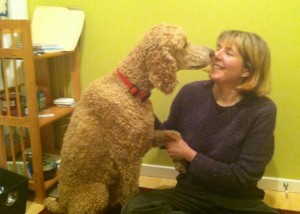
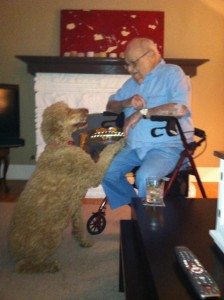
izzy1Izzy has one of the best noses of any dog I know. I usually have a treat jar in my office and when Izzy comes I have to hide it, otherwise he is obsessed with getting into it the whole appointment. I usually give one treat before an acupuncture treatment and one after and usually I can hide the treat for after on top of one of my picture frames but not from Izzy. The one time I tried he was climbing the walls, he knew it was there.

March 7th was a special day this year. It was the day that Izzy made it to two years after being diagnosed with an aggressive form of cancer called lymphoma. It is rare to get two years after lymphoma diagnosis and I always feel like if we can reach this milestone that the future ahead is much brighter.

If you want to talk about dogs with boundless energy Izzy would be up there. He often comes to see me after running or swimming at one of the local dog parks and he still has energy. A whirlwind of it all contained in a poodle body. But he is also one of the sweetest dogs out there, he can snuggle up to you with love, give you kisses and one look into his beautiful eyes and he has captured you.

I work with a lot of dogs with cancer, or in Izzy’s case who have had cancer, but Izzy is unusual in that he was only three years old when he was diagnosed with lymphoma. His wonderful people, Pete and Elise, made the decision to pursue chemotherapy for him because he was so young and lymphoma is quite an aggressive cancer.

izzy3However almost immediately after starting chemo Izzy’s energy dropped. He was no longer a happy, energetic dog but was instead lethargic and sick and his people, who loved him so much, felt like they could not continue the treatments that could help him but also were making him so sick. Luckily he was working with one of my favorite veterinarians, Dr. Tim Kraabel and he made a recommendation to try some acupuncture. I had briefly worked with Izzy’s people with another elderly dog who had since passed and they jumped right on board with that recommendation. Between Dr. Kraabel and Pete and Elise they identified that the prednisone that was part of his chemo protocol was a large part of what was making him ill. Dr. Kraabel recommended stopping it permanently and also stopping all the chemotherapy for a short time until we could get Izzy to a better place.

And so Izzy came to my practice.

From the first acupuncture treatment, Izzy was back to his normal energy. We also started him on a few different herbal formulas and supplements to both support his body and immune system and also to help fight the cancer. He did so well that we made a decision to continue his chemotherapy, although with longer intervals between the different drugs and he went through the full course without any major issues.

We have had one small setback when Izzy developed a second form of cancer in the form of a small skin tumor. Luckily it was removable and with one herbal addition it has not come back. Chemotherapy can predispose a dog to secondary cancers and while we knew there was a risk of that, you still hope that it doesn’t happen.

Izzy is such a wonderful illustration of what can happen when you get a team of people working together. Without Izzy’s people and their dedication to him and openness to explore and pursue all avenues of treatment for him he would not be here. Without the herbal and acupuncture treatments he would not have made it through chemotherapy and most likely would not have done so well after it. Without the chemotherapy he would not be here. And without Izzy’s determination to fight this fight none of this would have happened. We had a team where we could all communicate and trusted each other. We each had a part that we did well which came together in a way to give Izzy life.

I’m hoping that Izzy will have many years ahead of him to swim and run and love. To be a normal dog who can move through the world with joy and excitement. Perhaps he will finally slow down when he is in his golden years and maybe sleep a little more and run a little less and maybe come back to see me so I can treat him for arthritis.

No one knows what Izzy’s future holds but we do know that he is here now and by everyone’s prediction he shouldn’t be. But I always wonder, who are we to decide such things, especially when Izzy still has so much joy to show the world.
izzy2

Mast Cell Tumors Grade 3 and internal mast cell cancer – finding the right herbal treatments for your dog

Saturday, March 8th, 2014

I told myself I couldn’t write an article on the more aggressive mast cell tumors (grade 3) and internal mast cell cancers. Yes, but sometimes you realize that you need to try to get the information out there even if it is difficult. For lower grade 1 and 2 tumors and prevention see Mast Cell Tumors of the Skin – holistic approaches.

Why are more aggressive mast cell cancers difficult to write about? The main reason is that they present very differently dog to dog, they spread differently and the herbals I use to treat them can vary quite a bit dog to dog.

Before I start one quick comment. Grading of disease is subjective. There are certain signs that pathologist look at to grade tumors but it doesn’t always carry with it how aggressive a tumor will be. I have seen grade three mast cells where removal was cure and grade 1 mast cells that went on to spread through the body. So all is not lost if your dog is diagnosed with a more aggressive grade of this cancer. Each dog’s cancer is individual, like the herbals used.

So the must dos for these cancers

  1. I always recommend that grade three tumors be removed if possible and your dog’s health will allow. Because there tumors are usually more highly aggressive, it is better to not watch and wait. And herbals are going to work so much better if the tumor can be reduced to microscopic levels.
  2. Acupuncture – you know me, I’m the acupuncturist. However, I am the acupuncturist who has seen so many dogs with cancer live wonderful full lives in spite of diagnosis and those who only had a few months live them better and without pain.
  3. Cancer Diet – this is a must for these guys. No grain, least processed and lots of meat. See You are what you eat a fighting cancer machine.
  4. Xue Fu Zhu Yu Tang with E Zhu and San Leng – this is my main go to herbal for lower grade disease. I also use it for most of the more aggressive tumors as well (although not all). If the tumor is in the skin or may or has traveled to the lungs this is a must
  5. Artemisinin – once again a must in almost all the disease I treat. If you have read any of my other articles you will know this is one of my favorite supplements to fight cancer.

From here it gets tricky but please continue along – the following I mix and match depending on how they fit the dog and how the cancer presents.

  • Xiao Chai Hu Tang – this is a must for any dog with internal mast cell cancer in the organs. It can also be helpful for cancer which has traveled into the lymphatic system, the more aggressive grade three tumors, cancer in the lungs and/or any dog who has a disconnect between their front and back end. Click on the link for more information about this supplement
  • Si Miao San – I don’t use a lot of Si Miao San for cancer but I get animals I treat where it fits very well and then it is useful. It works best for dogs who are prone to inflammation and inflammatory diseases, sun seekers who run hot and pant a lot, dogs who are prone to itchy red bellies and dogs who carry a lot of dampness like the pits and bulldogs. This one will also help for cancer in the lymphatics.
  • Hoxsey Like Formula/Cancer Detox Support – A must if the tumor can not be removed or is highly aggressive and there are signs of spread after removal.
  • IP-6 -one of the supplements I sometimes use. This one seems to work well for mast cell cancer that is grade three, internal, or where grade 2s can not be removed completely.
  • Yunnan Baiyao A must for any internal cancer with a risk of bleeding

I highly recommend finding an herbalist to work with. I see dogs that don’t match exactly what I have written above, acupuncture is awesome and there is nothing to replace having a guide in all this.

As with all supplements and herbals, please check with your animal’s regular vet before using this herbal.

Return to Integrative and Holistic Methods for Treating Cancer in Cats and Dogs

Holistic Cancer Care for Cats and Dogs – Dr. Lena on the Tripawds radio show

Sunday, November 17th, 2013

For those of you who missed my appearance on the Tripawds radio show – here it is.

Acupressure for animals with cancer – healing touch

Monday, August 26th, 2013

I love using acupuncture to treat animals with cancer but it involves finding an acupuncturist in your area and some areas simply do not have acupuncturists for animals. It can also be expensive and while most of my clients believe it is worth every penny, it is not always an option for people on a fixed income.

A great option if you can’t find an acupuncturist is to find an acupressure practitioner or to do some acupressure on your own animal.

Here is a good guide to finding an acupressure practitioner Tallgrass acupressure practitioner search.

There are many, many ways to work with cancer through acupuncture/acupressure points. There is no one right way. Below is how I normally work with cancer. You may have found another way in another book. Do what feels right to you or use a combination of different styles.

Points can be massaged in small circles or sometimes holding light pressure on a point will work better in some animals. If you massage use clockwise circles.

I was taught visualizations to go along with the points. I find that they can help but if they don’t feel right to you just use the pressure or massage.

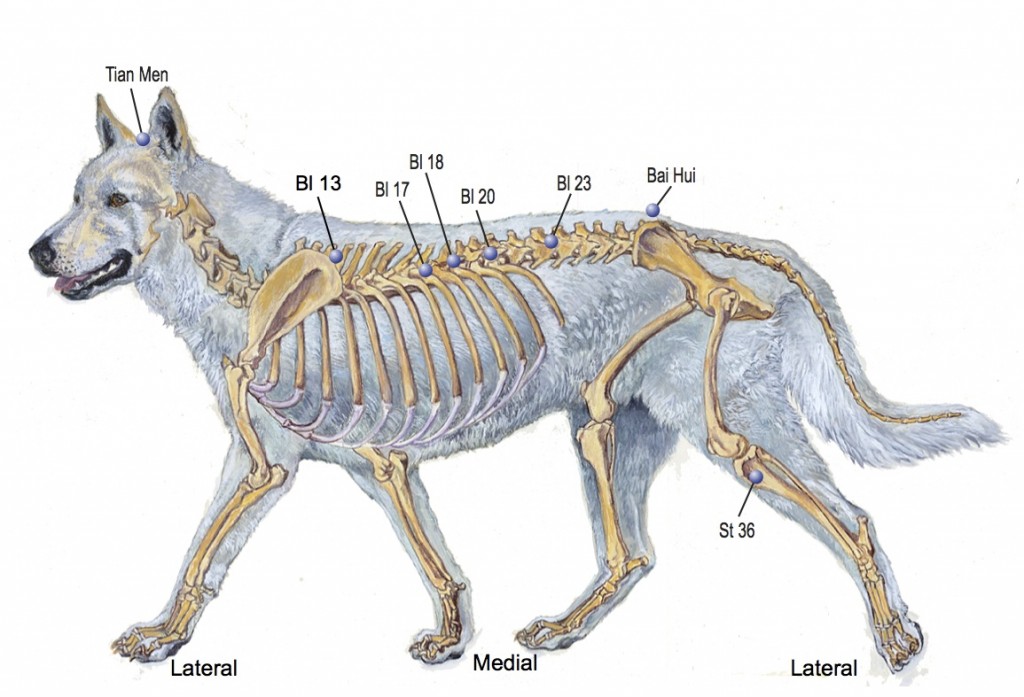
The system of acupuncture I use is based on traditional Chinese veterinary acupuncture and uses mostly shu or association points that run in the bladder meridians along the spine. There are two bladder meridians, in the dips just lateral to the spinal column that run along side it.
acupressurechartbest
© Copyright Tallgrass Publishers, LLC
All Rights Reserved 1995-current
www.animalacupressure.com

The following points lie just to the side of the spine in the bladder meridian. I have included meridian point names where there is crossover. I always start my treatments with Tian Men.

  • Fei Shu or Lung Association Points (BL13) – find the scapulas on your dog or cat. Between the scapula and the spine is a little depression on both the right and the left side. Fei shu lies in this depression towards the cranial (closer to the head) part of the scapula. Massage both fei shu points as you think about a soft white mist – like a slightly foggy day in the forest, slightly cool. Think of healthy lungs, moving air in and out with nice deep breaths.
  • Gan Shu or Liver Association points (BL17 or B18) – If you go to the last rib and count four ribs towards the head and then trace that forth rib up to the bladder meridian you will find these points. Often there is a slight change in hair color at this point along the spine. Massage these points as you think of a cool mountain stream that is brilliant green in color. There are no obstructions in this stream. Think of your animal moving and stretching and there blood flowing through the body smoothly. My acupuncture tradition puts gan shu at BL17, many others put it at BL18.
  • Pi Shu or Spleen Association Points (BL20) Count in to the second rib from last rib and trace that rib up to the bladder meridian. As you massage these points think of a hot, dry yellow clay desert with the sun shining down from above. Think of your animal eating well and there digestion moving in the body.
  • Shen Shu or kidney association points (BL23) Go to the most caudal (closest to the tail) aspect of the last rib. From there make a line perpendicular to the spine and follow that up to the bladder meridian. Kidneys in Chinese medicine have no parts, a yin and a yang component. We will focus more on the yin component with these points but visualize both. Massage these points and picture a deep black sea, out of the seas raises a bright blue fire serpent, shining against the black water. Picture you animal lying happily, content after a long day. They are strong and healthy.

The following points are not on the bladder meridian

  • Tian Men is on the midline of the body right behind the boney bump on top of the head, level with the back of the ears in most dogs. Tian Men helps to open up the channels down the spine and open up obstructions in the body, it also helps to calm and relax most animals. I always start with this point as I feel like it helps the other points to work better and relaxes the cat or dog I am working with. As you massage this point think of the love you want to share with your animal.
  • Bai Hui is along the spine at the junction between the lumbar spine and the sacrum. When your animal is standing find the front of the hips and follow them straight up to the spine. There is a small depression where bai hui is. Bai hui works with Tian Men to complete the opening down the spine and to remove obstructions. Massage this point and think of the sun shining down on this point and energy following into your animal and helping to make them healthy. Note: Human acupuncture practitioners – bai hui is in a very different spot in animals than in humans where it is located on top of the head)
  • Hou San Li (ST36)
    This point is in the fleshy area to the side of the leg bone about a 1/3 of the way between the knee and the hock, closer to the knee. It can be massaged on either side or on both sides. I recommend doing just one side at a time. As you massage this point think of your animal eating well, picture their immune system, little white blood cells fighting the cancer cells.
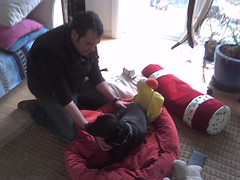
Why these points? My main goals in animals with cancer is to stimulate qi to increase the immune response in the body against cancer and to move stagnation which is often the cause of cancer. Secondary goals are to alleviate pain, promote digestion, help with detoxification in the body and stimulate appetite.

The three organs that stimulate qi production are lung, spleen and kidney. I work with the association points for these organs along the bladder meridians through the points fei shu, pi shu and shen shu.

In addition I always work with liver because it helps to move stagnation in the blood and body and helps with pain. I use the association points gan shu for this.

I often use a point called hou san li or ST36. This point helps to stimulate the immune system, promotes digestion and appetite and is a longevity point.

Bai hui and Tian Men helps to open up the meridian system and remove obstructions. Bai Hui stimulates the yang vitual energy of the body. It is also a very strong intension point. My acupuncture teacher always said that if you could just use one point you could use bai hui and send you healing intension anywhere in the body.

In addition to these points I will sometimes use other points but these are the core points that I feel like really help animals to fight off cancer and have better quality of life. If you are working with an acupuncture or acupressure practitioner ask them to show you the points they use on your animal.

There are many very good books on acupressure for cats and dogs. Here are a few of my favorites.

Acu-Dog a Guide to Canine Acupressure

Acu-Cat: A Guide to Feline Acupressure

Four Paws, Five Directions: A Guide to Chinese Medicine for Cats and Dogs

In addtion there are acupressure programs. Tallgrass Animal Acupressure Institute offers classes that can be taken online and DVDs and books. They also made the beautiful acupressure chart for this book.

Return to Integrative and Holistic Methods for Treating Cancer in Cats and Dogs.

A little about where western medicine is going with cancer treatments for dogs and cats

Saturday, August 24th, 2013

At this time, the main three western treatments for cancer are surgery, chemotherapy and radiation. However, this is starting to change. New therapies are starting to be developed in both human and veterinary medicine that show promise to both work better and have less side effects than these traditional therapies. These therapies utilize gene modification and viruses that are made to target cancer cell. They use some of the newer tools we have to identify genes and proteins. New vaccines and immunotherapies are used that target cancer tumors.

Recently there were some amazing successes with using a modified HIV virus to kill leukemia cells in people. We can now take a tumor from a dog and make immunotherapy remedies to inject back into the dog to fight cancer cells.

Researchers are working non-stop to figure out if there are proteins and processes unique to cancer cells that can be targeted with new drugs and gene therapies. Already better drugs are being tested that target cancer cells but spare healthy cells. In the future it will no longer be kill the cancer before you kill the body, but instead just kill the cancer. Or even I believe someday, convert the cancer back into healthy cells.

Doctors are starting to do tests for certain human cancers where they take cancer cells from a person’s body and expose them in the lab to different chemotherapy drugs to determine which will work the best. This avoids using a toxic drug that doesn’t work and also can make it so lower doses of drugs can sometimes be used. In dogs they can test for certain proteins in tumors to determine which chemo drugs will work best.

Metronomic chemotherapy is being used more and more. This treatment uses a small daily dose of a chemotherapeutic drug instead of larger doses less often. It has fewer side effects and in some cases is more effective than traditional chemo. It works more to target the blood supply to cancer cells and reminds me more of the herbal approaches we use, using a little bit of a toxin over a long period of time instead of blasting the body with high levels of a toxic drug.

There is a new cancer vaccine for melanoma in the dog that I have seen extend both life and quality of life and also put dogs in remission when combined with surgery, acupuncture and herbs.. This vaccine helps prevent the spread of cancer. We are now seeing vaccines that target certain sarcomas also.

Linear accelerators that deliver radiation treatments are now being made with build in CAT scan capabilities so that the tumor can be viewed while the field of radiation is measured and laid out. This makes it possible to treat tumors with radiation that are next to sensitive areas like the brain without serious damage. These new accelerators are also much more accurate in their radiation delivery.

In one of the recent lectures I attended, I learned some oncologists are now using a protein pump inhibitor drug to change the pH of cancer cells, making it so that cancers that are resistant to chemotherapy can be treated and causing cancer cells to absorb these drugs that could not cross their walls before. This could also allow us to use a much lower dose of drug, as usually a very small amount of what is administered actually makes its way into the cancer cell and these drugs would allow a lot more drug to cross into these tumor cells.

It doesn’t stop there, new studies come out every month.

I believe in 10-20 years we will look back on how we treat cancer today as barbaric, much as we view treatments of the past like blood letting. I hope that the new therapies available outdo everything on the market currently. I hope that herbs get put out of business as cancer treatments become very safe and very, very effective. I know this is still in the future but I envision a future where people and animals do not die of cancer. For now we have to take what we are given and do the best we can with it.

However, if your animal has cancer, consider making a visit to the oncologist in your area. There may be something new out there. Often we get therapies before people do because there is less testing required before something can be released and because our animal friends’ life spans are shorter. You never know what is around the corner.

Return to Integrative and Holistic Methods for Treating Cancer in Cats and Dogs.

Chai Hu Jia Long Mu Li Tang (bupleurum and dragon bone combination)

Saturday, August 24th, 2013

chjlmltChai Hu Jia Long Mu Li Tang is very similar in action to Xiao Chai Hu Tang however it is better at treating animals that have more heat and anxiety and I often use a modified version of this herbal for treating hemangiosarcoma.

Please read the section on Xiao Chai Hu Tang to learn about when to use both that formula and this one and about the signs of triple burner obstruction which is formula is also good for.

Chai Hu Jia Long Mu Li Tang contains the same ingredients as Xiao Chai Hu Tang with the addition of the following:

  • Fu Ling (poria) which helps to drain dampness and inflammation
  • Gui Zhi (cinnamon twig) which releases wind and clears obstruction in the body
  • Long Gu (dragon bone) and Mu Li (oyster shell) help to anchor the qi and help with anxiety
  • Da Huang (chinese rhubarb) – help to drain more heat and inflammation from the upper part of the body

So when do you decide to use Chai Hu Jia Long Mu Li Tang over Xiao Chai Hu Tang?

  • The number one place I use it is with hemangiosarcoma with the addition of 35g of Dang Gui and 35g of San Qi to 70g of CHJLMLT. The added San Qi is very good at helping to control bleeding in these dogs which is often what they end up dying from.
  • I also will use this formula in place of XCHT without the added herbs when a dog or cat is very anxious or has a lot of heat up in the head. Often this formula will fit for some of the very inflammatory, obstructive nasal tumors, very heat, anxious lymphoma dogs and any animal who is very hot and anxious with signs of triple burner obstruction.

Chai Hu Jia Long Mu Li Tang is available from my etsy shop Kingdom of Basil as is the modified formula for hemangiosarcoma I often use.

Return to Integrative and Holistic Methods for Treating Cancer in Cats and Dogs.
Clementine – boxer kisses fully intact

Monday, August 12th, 2013

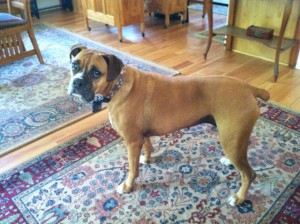
clemEvery month Clementine and her sister Maggie would come rushing into my office for their monthly acupuncture. Clem is great at wagging her whole body in excitement and giving boxer kisses and Maggie would run around looking for the treats.

After I had handed out treats and let them get some of the bounces out, I would hold my breathe as I would lift up Clementine’s upper lip and inspect the area underneath. Every month I would smile at their human Wendy and say, “looks good” and then we would move into putting the small acupuncture needles into the spots on her body that help to boost immunity and control cancer. For 12 months I did this and the finally time she came I smiled even more than normal. Clem had been in remission for twelve months – the oncologist had said that the cancer would come back in that time. It hadn’t, she had beat it with the herbal and natural treatments we had used to help her body fight back.

I had worked with Clementine or Clem as she was often called, for many years to treat a horrible skin condition that had made her hair fall out and her skin as thick as an elephants. She had responded wonderfully to herbs and a diet shift and now her skin looked almost normal. She had a small lump on her upper lip and when it suddenly grew larger we discovered it was a mast cell tumor. Boxers are pretty prone to these but it made sense to remove it and figure out how aggressive it was. Of all the cancers I treat mast cells are often the least invasive and the easiest to deal with but some can be highly aggressive so it is good to know what grade they are.

Clem came through the surgery wonderfully but when the biopsy results came back it was discovered that the cancer cells went to the edges of the tissue removed, in other words we had not gotten all the cancer. We also learned that the tumor was a grade 2 mast cell, which is not the most aggressive, but not the least either. Her veterinarian went back to do surgery a second time, taking more tissue and once again was not able to get all the cancer. Because of the location he was afraid to do a third surgery and referred her to one of the local oncologists. If we did nothing this tumor would definitely come back again but further surgery would probably involve having to reconstruct her lip area which for a boxer who likes to kiss is a big deal.

The oncologist recommended full diagnostics to make sure the cancer had not spread. After getting a clean ultrasound and lymph node aspirate we felt pretty certain we were just dealing with the one spot, good news!

The oncologist gave Clem and her family a few options

  • Do nothing and it will come back within the year, probably much sooner than that
  • Further surgery, which would involve reconstructing her lip, would be expensive and held no guarantee that we would get all the cancer.
  • A series of 15 radiation treatments that would risk burning the healthy tissue, would require anesthesia and would cost over $5000. This gave us the best chance of remission, 95% but also held the most risk especially for a cancer that was not very aggressive. It also could leave her permanently scared and there was a risk of damaging her eyes as well.
  • Chemotherapy, which only held about a 60% chance of preventing reoccurrence, would be expensive and potentially have side effects.

To her family and me none of these sounded that promising. I also felt like we had a really good chance to get remission without using anything toxic or harmful. I find that if we can get cancer down to a microscopic level that natural therapies can very often take care of the small amount of cancer cells that are remaining. Clem’s family agreed that natural options held a better chance of remission without risking hurting her body and we began treating her.

Clem was already on a raw high protein diet but her family started growing their own broccoli sprouts to add to that. Wendy did some online research and found that the broccoli sprouts were higher in the cancer fighting ingredients than mature broccoli was. In addition she was put on one of my main cancer formulas for mast cell tumors, Xue Fu Zhu Yu Tang in addition to Coenzyme Q10, IP6 and medicinal mushrooms. We also started her on monthly acupuncture treatments to booster her immune system and help her body to fight the cancer.

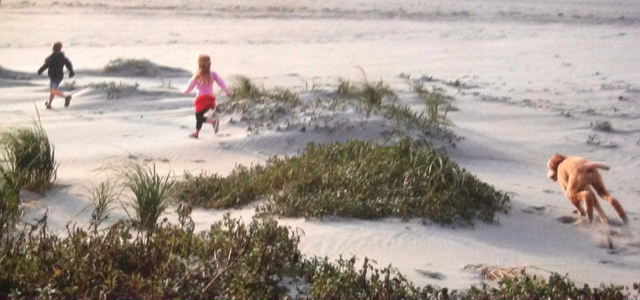
clem2It has been a few months since I have seen Clem and I miss her bouncy Boxer ways. She has that sly way of boxer kissing that would knock you over if you were not careful. And these days she looks beautiful – she has a shiny coat, an extra bounce in her step and a sparkle of mischief in her eyes. You wouldn’t believe that this is a dog who is not only a cancer survivor but also was half hairless before. As much as I miss seeing her and her sister Maggie I’m happy that we reached that point where she doesn’t need my treatments anymore. And a while back the two dog sisters got to move to one of our northwest islands where they have more space to play and run through the fields and on the beaches. I often picture her and Maggie, two happy dogs running into the wind down a long stretch of beach without a care in the world.

Return to Integrative and Holistic Methods for Treating Cancer in Cats and Dogs

Transitional Cell Carcinoma – holistic and integrative medicine to support peeing

Sunday, August 11th, 2013

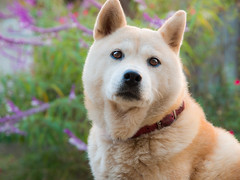
A dog named Rooney started it all. Path With Paws would not exist without Rooney, this book would not exist and I don’t know if I would have begun by quest into treating animals with cancer without Rooney. See Rooney’s wisdom.

Rooney had transitional cell carcinoma, I was new to acupuncture having just got my certification, knew a little about herbs but not much, and was excited to have a new patient to treat and of course a bit nervous about making that first house call. Rooney had been getting acupuncture for a couple months from another veterinary acupuncturist who had suddenly passed away and so I was called in to take over. I expected to meet a dog on death’s doorstep instead I meet a happy fluffy chow mix full of life. Rooney went on to live for almost three years with transitional cell carcinoma. And I realized that cancer was really not a death sentence for Rooney but just another bump along the road of life.

In Rooney’s case we combined weekly acupuncture with monthly chemotherapy. This worked well for Rooney. Since gaining the herb knowledge I now have I would have probably also done some herbal work with Rooney and I have found that usually with herbal work we do not need to do the acupuncture every week. So here are some thoughts on TCC.

Unfortunately Traditional Cell carcinoma almost always occurs at the trigone of the bladder where the urethra exits the bladder and the ureters enter the bladder. Because of this surgery to remove the tumor is almost always not an option. While it is a slower cancer to spread, the location of the tumor makes it so that it quickly obstructs the urethra making it so a dog can not pee.

  • Peeing is the most important. In Rooney’s case her people choose to put in a port to drain her urine because she could not pee when she was diagnosed. This can be a difficult decision. For most of Rooney’s illness she did not need the port and could pee on her own within a month of starting chemotherapy and acupuncture. It is a big surgery for a cancer that often takes animals within months. However the reason most dogs are euthanized is that they can’t pee. I don’t think it is the right option for every dog, especially a dog who is very sick or old but something to consider if they can’t pee. It is a lot of care on the part of the humans involved. Your dog will be dependent on you draining the port three times a day if they can not pee on their own. It is a big decision.
  • Talk to an oncologist – this disease can sometimes be successfully treated with chemotherapy. Usually there is not a cure, but chemotherapy can keep things in check in some dogs. Chemotherapy is not the right option for every dog but get all your facts and then make the decision that is right for your companion.
  • Piroxicam is a drug similar to rimadyl that can slow TCC’s progression. Usually there are few side effects and a great improvement in quality of life at least for a short time. I highly recommend talking to your vet about using this drug.
  • Acupuncture – I can not say enough about acupuncture for this form of cancer. It is a safe and effective treatment and if harsher drugs like some of the chemotherapeutics are used it can help with side effects also.

In all truth I have not had a transitional cell carcinoma to treat since Rooney. However these are some of the herbal treatments that are widely used in our community and I would reach for if I did.

  1. Shao Fu Zhu Yu Tang is one of the best herbals for both TTC, prostate and kidney tumors. It can slow the growth of tumors in the lower abdomen.
  2. Vit A/D in high doses may be a good option for this cancer if you are working with a holistic vet. These high dose therapies can hurt or destroy the kidneys so make sure you have a vet on board that can help make sure this doesn’t happen.
  3. Artemisinin can help to slow this and many other cancers down.
  4. Xiao Chai Hu Tang can also be a good herbal for slowing this type of cancer. In addition this formula can help with some of the side effects of chemotherapy and/or piroxicam.

As always please check with your animal’s regular vet before using this formula.

Return to Integrative and Holistic Methods for Treating Cancer in Cats and Dogs.