Posts Tagged ‘herbs’

Squamous cell carcinoma – holistic, herbal and integrative treatments in dogs and cats

Saturday, October 15th, 2011
The good news about squamous cell carcinoma is that it is very slow to metastasize; the bad news is that is locally very aggressive, eating through anything in its path. In addition because this cancer commonly occurs in the mouth, there isn’t a lot of space to easily remove it. While I see more squamous cell carcinoma in cats it also occurs in dogs.

White cats and black dogs

Most squamous cell carcinomas occur in the mouth. However it is also a common cancer on the ears and noses especially of white or light colored cats who go outside in the sun. Another very common spot for squamous cell is in the toes of dogs especially black toed dogs.

Squamous cell often starts with chronic irritation of infection. On the ears of cats it is often from repeated sunburn. In the mouth it is many times secondary to tooth issues and infections.

The prognosis with squamous cell carcinoma is very good if you can remove the whole tumor but unfortunately this is many times not possible. Without removal, the prognosis is pretty poor and these animals experience a lot of pain if it works it way into the bone. However there are therapies that can slow things down and significantly improve quality of life.

I am going to break this article into three sections and talk about squamous cell in toes, in the mouth and then a section on the other places squamous cell can form and a little about cats. Follow the links for more information about herbals and therapies.

Squamous cell on the toes of dogs
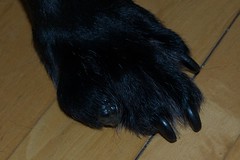
Most squamous cell carcinomas start on the toes as a broken nail or a non-healing infection in the nail bed. Often times a few rounds of antibiotics are prescribed before the cancer is diagnosed. I have only seen squamous cell carcinomas in black furred toes, however it is possible to get the disease in dogs of other colors also.

In some dogs squamous cell causes infection secondary to the cancer and is some animals it is chronic nail bed issues and infections, which cause it to develop.

The treatment of choice is to remove the toe as soon as the diagnosis is made. If the whole tumor can be removed then this is almost always curative.

Many dogs will be done at this point and can live normal lives however I have had some dogs who go on to form multiple cancers in other toes, usually this is because their immune system is not working correctly and also most likely has a genetic component.
Occasionally surgery is not an option to remove the toe because of poor health or heart conditions and then other treatments need to be used.

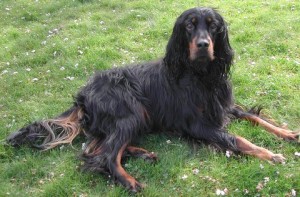
I treat a wonderful happy Gordon Setter named Hudson, known to most of those who love him as Huddie. He has lost three toes to this disease and also has Cushings disease, which makes his immune system not as strong as a normal dog.

With Hudson we have developed the following protocol, which I recommend for any dog who has had multiple squamous cell carcinomas in the toes.

  1. Remove toes as soon as diagnosis is made
  2. Artemisinin – I have found artemisinin to be very effective in slowing squamous cell down.
  3. Mushroom supplements – these help to strengthen the immune system and have anticancer properties. I recommend a supplement with a combination of Maitake, Shiitake, Reishi and Cordyceps mushrooms.
  4. Bu Zhong Yi Qi Tang – this herbal helps to move blood down into the toes and extremities and also has some strong anti-cancer herbs.
  5. In Hudson’s case we also have him on long-term antibiotics. It seems like his squamous cell started with chronic nail bed infections that could not be cleared with antibiotics once they took hold. As much as I would prefer not to use long-term antibiotics, in his case I believe they are a good precaution. This is not a recommendation I make in every dog.
  6. Acupuncture – we know Hudson has a weak immune system so we try our best to strengthen what is there with monthly acupuncture.
  7. Cancer diet – see Diets for cancer in cats and dogs

So what about the dogs where toe removal is not an option? Here are some options

  1. These guys need pain control. Squamous cell is a very painful disease once it gets in the bone. Many times a multiple drug approach is needed
  2. Artemisinin – see above and link
  3. Acupuncture – can help to slow down progression of this disease and help with pain. If there is active cancer treatment should be at least every two weeks.
  4. Xian Fang Huo Ming Yin – this can be a powerful formula for treating active squamous cell carcinoma in the toes but should be used with caution, as it is very cooling. Never use this in a very debilitated, weak or cold dog and always check with a holistic vet before using it. (no article up yet).
  5. Hoxsey like formula with boneset or its gentle cousin Cancer Detox Support – this can also be a very powerful formula against squamous cell, like XFHMY this formula is very cooling. See link for more information. Boneset should be added to this formula to control bone pain.
  6. Antibiotics – many times there are secondary infections in these dogs. Antibiotics are often needed.
  7. Prednisone – this western drug can help slow this cancer down although it also has some side effects. Talk to your vet about if it is a good option for your dog.
  8. Cancer diet – See Diets for cancer in cats and dogs
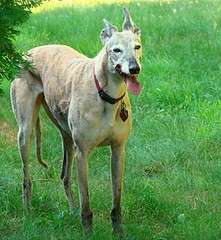
So on to Squamous cell carcinoma in the mouths of cats and dogs.

This is a horrible place to get a squamous cell carcinoma. The only way to get a cure is to remove a fourth of the jaw if it is in the lower jaw and there is no such option if it is in the upper jaw. Because this disease is so painful many animals will not eat and that is usually the factor that ends up ending their life. That being said I have seen animals do well for about a year after diagnosis, with integrative treatments. Usually dogs do a little better than cats, who usually don’t make it a year. This really varies animal to animal and involves being able to medicate an animal with a painful mouth.

How can we help these animals with squamous cell in the mouth?

First let me start off by saying in cats I often times just rely on injectable antibiotics, steroids and pain meds plus acupuncture. The amount of pain with oral administration of herbals is not worth any benefit we get from my experience. Occasionally I recommend oral pain meds as well. Below anything oral is mainly for dogs.

  1. Consider removing part of the lower jaw if it is in that area. I know it is a large and very harsh sounding surgery but these animals usually do quite well. This surgery is not for everyone so if you can’t do it there are other options below.
  2. Prednisone – I know it is a western drug and yes it has side effects but it really slows things down and also stimulates appetite in the process. This is one place I highly recommend considering it.
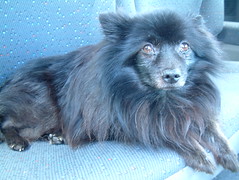
  3. Artemisinin – this herbal can really help slow things down. I treated a little Pomeranian named Panda who lived quite well for over a year on just Artemisinin, antibiotics as needed and pain meds.
  4. Acupuncture– can help with appetite, pain and slow this cancer down. Usually treatments need to be no more than two weeks apart.
  5. Hoxsey like formula with boneset – can help to slow this cancer down and help with bone pain.
  6. Pain medication – these animals need pain control!
  7. Antibiotics as needed. Having squamous cell in your mouth is like having a giant ulcerative wound open sometimes even up into the nasal passages. Antibiotics are sometimes used long-term and sometimes just as needed.
  8. Soft food and a cancer diet. These animals need to eat so give them what they will eat and use appetite stimulants if needed. Use very soft, easy to swallow foods. If they will eat a cancer fighting diet even better. See Diets for cancer in cats and dogs

Squamous cell other places in the body

Squamous cell can also arise other places in the body. The ear pinnae of white cats are a very common place and also the tip of the nose. Many people will make the decision to remove the ear pinnae and get a cure. For the nose usually a few radiation treatments is curative. Usually squamous cell on the pinnae or nose is slower moving then in the mouth and sometimes if the cat is old the decision will be made to just leave it. When squamous cell occurs other places, surgical removal is the treatment of choice if at all possible. If surgery or radiation is not an option then the treatments above can be used.
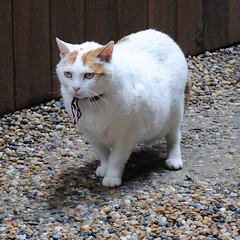
An extra note on cats

In many cats giving more than three drugs or herbs can cause side effects and reduced appetite. Depending on how many western treatments a cat is on usually I only recommend adding in two or three herbals and focusing on diet and acupuncture to supplement their effects.

Some cats cannot tolerate anything going in their mouth if they have cancer there in which case I only treat with acupuncture to try to make them have quality of life while they are here. If only one thing can be given it should be pain medication as this is a very painful disease.

As with all articles on this website please check with your animal companion’s veterinarian before starting any herbals or supplements. This disease more than any other of the cancers I have talked about really needs an integrative approach to treatment involving western drugs and interventions.

Return to Integrative and Holistic Methods for Treating Cancer in Cats and Dogs
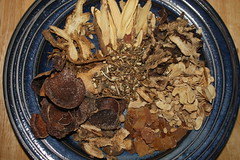
Bu Zhong Yi Qi Tang – Chemotherapy herbal support for dogs and cats

Saturday, September 24th, 2011

Bu Zhong Yi Qi Tang is one of the formulas I take myself when I’ve been under too much stress and my adrenals are a little deficient. It has a deep root flavor with just a hint of citrus – yum!

In my practice, this is the main formula I use for chemotherapy support. Bu Zhong Yi Qi Tang helps to support digestion, the immune system, blood cell counts, and adrenal function in the body and at the same time has some strong anti-cancer herbs.

So what is in Bu Zhong Yi Qi Tang?

  • Huang Qi – Astragulus
  • Bai Zhu – Atractylodes
  • Gan Cao (sometimes Zhi Gan Cao is used instead) – Licorice
  • Ren Shen – Ginseng
  • Chen Pi – Tangerine peel
  • Dang Gui – Chinese angelica root
  • Chai Hu – Bupleurum
  • Sheng Ma – Black cohosh

In 2007 a study was done out of the University of Minnesota by K. HWa Choi DVM. This study looked at dogs being treated with chemotherapy (including doxorubicin) for lymphoma and the side effects from treatment. It was found that dogs administered BZYQT had much less diarrhea and vomiting then dogs getting just chemotherapy. They also did much better than dogs getting chemotherapy and western drugs to control vomiting and diarrhea. In addition the dogs on BZYQT had better appetites. BZYQT also significantly raised white and red blood cell counts. Overall the dogs getting chemotherapy and Bu Zhong Yi Qi Tang did much better than dogs just getting chemotherapy or those being treated with western drugs for the side effects.

Not bad for an herbal therapy!

There has also been some success in the herbal veterinary community with this herbal to help manage hemangiosarcoma.

So how does it work?

Bupleurum has some amazing cancer fighting abilities. Bupleurum can induce apoptosis or cell death in cancer cells and inhibit cancer cell growth and division. Many studies have been done on this plant especially for lung cancer.

Many of the herbs in this formula work in pairs. Astragulus and ginseng strongly support the immune system and have direct anti-cancer effects. Ginseng and licorice support adrenal function. Dang Gui with Huang Qi stimulates the bone marrow to increase blood cell production. Licorice and tangerine support digestion.

This formula also works to increase peripheral circulation and can help to prevent some skin and nail inflammatory disorders. Many animals with deficient immune function also do well on this formula. I also often use it to support animals with deficient adrenal function (Addison’s disease). Some of its other uses are for incontinence and prolapse.

In Chinese medicine terms Bu Zhong Yi Qi Tang lifts up sinking qi, supports the liver and spleen and tonifies lung qi.

When do I use this formula?

Any dog or cat getting chemotherapy which includes the drug doxorubicin also known as adriamycin should be on this formula. This drug is one with the most potential for side effects and Bu Zhong Yi Qi Tang can help reduce these.

I also use it for dogs or cats on other chemotherapeutic agents who are having side effects or problems maintaining cell counts.

In addition I will sometimes use this formula in very debilitated animals to help them gain strength and balance. I currently have one dog I treat who has a weakened immune system and is prone to getting nail bed infections that turn to cancer. He had lost three toes to this process before we found a protocol which included his formula.

How is Bu Zhong Yi Qi Tang dosed?

I usually dose it twice a day and use powdered whole herbs in my patients. I use 1/8 teaspoon once or twice a day for cats and small dogs, 1/4 teaspoon twice a day for dogs up to 25 lbs, and 1/2-1 teaspoon twice day for larger dogs. For tea pills use 2,4, or 8 twice a day for the above sizes of animals.

If I am using a tincture I use 0.2ml per 5lb once a day.

Many companies will substitute Codonopsis (Dang Shen) for ginseng (Ren Shen). If at all possible use a product that has ginseng as it is a much stonger and more powerful herb than codonopsis.

You can now buy Bu Zhong Yi Qi Tang from my etsy store, Kingdom of Basil

As with all articles on this site, please check with your animal’s vet before starting any herbal treatments.

Return to Integrative and Holistic Methods for Treating Cancer in Cats and Dogs
Si Miao San – slowing down cancer and inflammation

Friday, June 17th, 2011

Si Miao San or Four Marvels Powder is truly one of the workhorses of Chinese medicine. It is probably the most common formula I use. You see, Si Miao San is very good at treating inflammation and our animal companions have a lot of inflammatory disorders. This is my top formula for inflammatory bowel disease, allergic dermatitis, Cushings disease, and diabetes.

Please follow this link to buy Si Miao San from my etsy store Kingdom of Basil Si Miao San powder.

For more information on Cushings disease see my article Managing Cushings Disease in Dogs Holistically.

In Chinese medicine it treats damp heat and is a simple yet powerful little formula of four ingredients.

  • Huang Bai (phellodendron bark)
  • Yi Yi Ren (coix seed)
  • Cang Zhu (atractylodes rhizome)
  • Huai Niu Xi (achyranthes root)

These ingredients are highly anti-inflammatory and often this formula can take the place of prednisone for inflammatory disorders but without the side effects.

So how does this formula work for cancer?

It’s two main ingredients, Huang Bai and Yi Yi Ren, both have anticancer actions. Huang Bai contains berberine, which has been shown in a number of studies to slow down tumor growth and induce apoptosis or cell death. If you search pub med you will find a large list of studies on berberine and its anti-cancer activities.
Here is a good one – Apoptosis of human leukemia cells and murine leukemia cells induced by berberine through activation of caspase

Coix seed also inhibits growth of cancer cells and can induce apoptosis. Here is a great article on coix seed and its cancer actions –
Healthy Doses Job’s tears

This formula can enhance the action of chemotherapy drugs and anti-microbials in a good way. So it can safely be used with chemotherapy. However often times I focus more on the herbals that have strong immune stimulant effects for animals who are receiving chemo.

The main cancer I use Si Miao San for is lymphoma and some of the leukemias. I also often use this formula if animals can not handle Hoxsey-like formula. Animals needing this formula will run hot and often times have a history of past inflammatory diseases.

The Cang Zhu in this formula helps to support good digestion, which can often be a large issue in animals with cancer. While most of this formula is very cold in nature, the atractylodes is warm and makes sure this formula is well tolerated by most animals. It also does not cool them down too much.

For the animals I treat I make my own Si Miao San from whole dried herbs and dose at 1/8 twice a day for cats and small dogs, ¼ teaspoon twice a day for dogs 15-25 lbs, ½ twice a day for dogs 25-50 lbs, 1 teaspoon twice a day for dogs 50-90lb and 1 ½ teaspoons twice a day for dogs greater than 90lbs.

With tinctures I use .2 ml per 5 lbs of animal twice a day. For tea pills and granules, use the human dose for dogs greater than 50lbs and dose down by weight for smaller animals.

If you are working with a holistic vet or Chinese herbalist, get this formula from them. I am now selling powdered Si Miao San out of my herbal shop Kingdom of Basil on etsy. Amazon does sell the Kan Herbs – Four Marvels pills

As with all supplements and herbals, please check with your animal’s regular vet before using this herbal.

Return to Integrative and Holistic Methods for Treating Cancer in Cats and Dogs

A magic vial of Yunnan Paiyao

Saturday, June 11th, 2011

As gunshots rang out, he fell from his horse bleeding from where the bullet had entered his chest. As blood ran from the wound, he could feel his life slowly slipping away. Images of his small daughter and wife, who were both far away, ran through his mind.

Quickly he reached for the vial, opening it to swallow the small red pill within and then taking the powder beneath it he quickly poured it in to the fresh wound. His breathing started to return to normal and he felt like he would be able to make it off the battlefield to find help. There was still some bleeding from the wound but no longer enough to take his life.

Sound like something from a fantasy movie? Surprisingly it isn’t.

Yunnan Baiyao, also known as Yunnan Paiyao, is a special formula know to every Chinese herbalist. It was developed in 1902 in China and has been an important remedy ever since. The formula is owned by the Chinese government and the secret of what exactly is in the magic red pill is highly guarded. It is rumored that it is made from gallstones cultivated in very special cows among other things but even the workers in the factories do not know exactly what is in it. We do know that pseudoginseng is probably the most important component of it. When pseudoginseng has been studied alone it has been shown to reduce bleeding times in half.

I use Yunnan Paiyao often in my patients and have been highly impressed with how well it works.

When my husband first moved in with me his cat, Sabutai, was suffering from horrible mouth cancer. One day which he was eating, the tumor in his mouth began to hemorrhage. In a matter of seconds there was blood all over the bathroom and he was just a small cat. Not knowing exactly what to do, I rushed to the medicine cabinet and grabbed one of the little red pills and pushed it down his throat. Within 60 seconds the bleeding had almost completely stopped and he did not hemorrhage again for the rest of his illness.

Another time I was at the vet clinic I used to work at and saw one of my old clients in the waiting room with their older dog, Alki. They quickly explained that they had just found out that Alki had a large tumor on her spleen that was bleeding into her abdomen and that she needed emergency surgery and most likely a blood transfusion. I quickly ran home and grabbed a vial of Yunnan Baiyao and brought it back. We administered the small red pill before she went into surgery and not only did she get through the surgery well and not need a blood transfusion but the surgeon was surprised at how little bleeding there was considering what was happening.

Also see Cosmo – star dog who was a wonderful dog I worked with who lived an extra year because of this herbal.

So why don’t we all have a vial of Yunnan Paiyao sitting around for emergencies? I’m not sure. I know I do! And the western vets I work with do as well.

In our family we often use the powder for any kind of cut or wound. It is not only good at stopping the bleeding but helps keep wounds from getting infected and is not painful to apply like many of the wound cleaning agents. It is safe and can be licked and eaten by cats and dogs without worry.

But isn’t it expensive you ask? Guarded by the Chinese government and that effective!

No! Usually you can buy Yunnan Baiyao for about $10 for a vial or a package of 16 pills of powder. You can even buy this on Amazon.com often.

Currently it has been a little harder to find Yunnan Baiyao. I recommend The Modern Herb Shop .

When are the best times to use it?

If an animal is going into surgery, especially if there is concern about excessive bleeding, I recommend giving the powder or capsules of powder for three days before and after the surgery. The little red pill can be given right before surgery but while the animal is still awake. Dosage depends on the size of your animal (except the red pill). Cats usually do better with the powder mixed with a little water in a syringe because the capsules are too larger for them to swallow where dogs usually do better with the capsules unless they are very small.

Nasal bleeding can be a very hard problem to control especially if there is a tumor or chronic condition which causes it. Yunnan Paiyao can be used to control nasal bleeding.

Yunnan Baiyao can also be used in many of the end stage diseases where surgery is not an option but there is bleeding in the body which can not be controlled. This is a great herbal to use with hemangiosarcoma and any other bleeding cancer or tumor. The powder capsules can be used daily for this and the red pill once again only for emergency.

There are also many reports of it clearing up existing infections and can be safely poured directly into wounds. Although if a wound is infected I usually reach for the antibiotics.

Yunnan Paiyao can safely be used in any cut or wound although deep wounds should be evaluated to see if sutures are needed. Yunnan Paiyao will actually promote healing and help a wound to close faster.

In addition pseudoginseng helps sensitive tumor cells to radiation treatments and can be used in animals with cancer that are undergoing radiation to make these therapies more effective.

With Yunnan Bai Yao in most dogs I dose at one pill twice a day unless they are very large and then I double that. In cats and very small dogs the pills can be opened and half the powder can be used. In hard to medicate animals the powder can also be mixed with water and syringed into the mouth.

Return to Integrative and Holistic Methods for Treating Cancer in Cats and Dogs

Lymphoma in dogs and cats – integrative medicine – chemotherapy and herbs with a side of acupuncture

Tuesday, June 7th, 2011

Lymphoma is one of the fastest moving cancers out there. Because it is so fast moving, it is also the most responsive cancer to chemotherapy.

The prognosis with this disease can be very bad, especially if no treatment is used.

However the good news is, with chemotherapy and holistic medicine we can often get 18-24 months and occasionally ongoing remission. Integrative medicine clearly is the best way to go with this disease.

With no treatment I have seen animals die within one week of diagnosis. The average is 4 weeks with no treatment. With using natural medicine, I have found usually I can move that out to 2-4 months. Chemotherapy alone pushes that even further with average survival at around a year.

When a dog or cat comes to me with lymphoma, I highly recommend they consult with an oncologist or a vet who does a lot of chemotherapy work. If you want remission with this cancer you need to do chemotherapy.

The most widely used chemotherapy protocol for this cancer consisted of a multiple drug approach and is given over approximately six months for dogs. In cats the protocol is shorter and the main vet I work with believes that one to three chemo treatments can significantly slow down this disease in felines.

Full chemotherapy for dogs can also be quite expensive, around $4000. Shorter durations can be given for this cancer as well if cost or tolerance of chemotherapy is a concern.

Because so many people choice to do chemotherapy for this cancer I divided this article into four sections.

  • Treatments I recommend regardless of western treatment
  • Treatments I use with chemo
  • Treatments to give if no chemotherapy is used
  • Cats

So first what do I recommend for all cats and dogs with lymphoma? (Follow the links for more information on the supplements and dosing information.)

  1. Weekly or every other week acupuncture. I have seen this make a large difference in survival times and in keeping white blood cell levels within normal range during chemotherapy. Usually just with acupuncture alone I can double any prognosis. Please see Acupuncture for animals with cancer – stoking the healing power within
  2. Artemisinin can reduce node size and make animals feel better.
  3. A good cancer diet without grains. If you are using chemo do not feed raw food, make sure it is cooked. For more information on the diets I recommend seeDiets for cancer in cats and dogs.
  4. Xiao Chai Hu Tang – Sometimes I add indigo and others herbs to this formula for dogs I see in person to customize it but the straight formula works well also. If you are working with a holistic vet ask them about additions.

In addition to this protocol if no chemo is used I often recommend –

  1. Prednisone. Yes it is a western drug, but it will work as a chemotherapy drug and shrink the nodes. Every animal I have treated for lymphoma has been on prednisone and I highly recommend it. If you are considering chemo do not start the prednisone before consulting with an oncologist or vet who knows chemo. If given before chemo the prednisone can significantly reduce the outcome of the chemo.
  2. SanSheDan ChuanBeiYe is great at slowing this cancer down and keeping it out of the lungs.
  3. Hoxsey-like formula or Cancer Detox Support Hoxsey can make some dogs sick, I usually only recommend using it if you are working directly with a holistic vet who thinks it is appropriate. I also use a similar formula I call cancer detox which is less toxic but still has some great anti-cancer properties.
  4. Si Miao San I use a lot less of this these days but still sometimes if the lymphoma is mostly in the nodes or gastrointestinal system.

If chemotherapy is given I add to my main protocol:

  1. Mushrooms – I give a mushroom combo with shiitake, maitaki, reishi and cordyceps There are many of these products. Mushrooms not only have effects directly against cancer but stimulate the immune system and help keep white blood cell counts up.
  2. Milk thistle – improves the outcome of chemotherapy and decreases side effects
  3. Bu Zhong Yi Qi Tang – there is a great study out there at shows this herbal improves outcomes and reduces side effects during chemotherapy.

In cats

Cats have a hard time with multiple drugs and supplements. With cats I start them on my main protocol and then wait a week. If they are still eating well I will then add in one Chinese herbal formula in addition to my main protocol.

How do I decide which one?

The best I can tell you is usually this will either be Xiao Chai Hu Tang if this cancer is intestinal or centered in the spleen or liver, Hoxsey-like formula if the cancer is in the nodes, or Bu Zhong Yi Qi Tang if they are getting chemotherapy.

If at all possible find a good holistic practitioner to work with your cat. Cats generally do really well with acupuncture so if at all possible find someone who also does acupuncture.

Cats can get a disease called small cell lymphoma which is very slow moving. I treat this differently and will try to put up another article on it.

As with all advice offered on this website please check in with your animal’s primary veterinarian before using any of these herbals and supplements.

Return to Integrative and Holistic Methods for Treating Cancer in Cats and Dogs
The mysteries of nerves – paralysis, seizures and old age neurologic conditions Part 1 paralysis

Friday, May 1st, 2009

Did you know that one out of seven dachshunds will become paralyzed in their lifetime? That many older dogs and cats suffer from strokes and vestibular disease in their old age? That seizures are so common in some breeds that they can affect 15-20% of the breed?

Neurologic problems are quite common in our companion animals and are some of the most expensive and frustrating problems to deal with. Often times the only way to diagnose these problems is with a MRI, which can cost $1000 and requires your animal to be under anesthesia. Many times in older animals the risk of anesthesia to too great and these problems go undiagnosed.

I am often surprised that veterinarians do not offer alternative options for working with these neurologic problems. Many times the only things western medicine can offer are expensive surgeries, a lifetime of drugs, or steroids with their many side effects.

For example, traditionally a course of treatment for paralysis, back pain or paresis in a dachshund would include steroids, months of cage only confinement and possibly an expensive surgery. While surgery is a good option in some cases, especially if there is no deep pain, it has it’s own set of risks including that sometimes it does not solve the problem and can actually make things worse.

But there are other options out there!

Let’s talk about the dachshunds first! I love working with dachshunds!

They are some of the best responders to acupuncture out there. In fact I have never worked with a dachshund who did not respond to acupuncture. And they really seem to understand that you are helping them. I have been able to work with dachshunds who were completely paralyzed and with acupuncture and herbs have had them back to walking in as little as three acupuncture treatments! Wow!

OK just to be realistic, most take longer than that but the majority can be gotten back on there feet as long as they still have deep pain. Meaning that if you squeeze a back toe really hard with a surgical hemostat they can feel it. On average I would say it takes four to six months of weekly treatments.

Of course it’s not all dachshunds and I have worked with other animals with paralysis including cats and all breeds of dogs. Of these others, I would say about 90% have had a positive response. That’s still pretty good!

Most of these dogs I also put on a herbal I use called Back Support Formula.

Even better is if I can get these animals with paralysis to hydrotherapy. Swimming helps keep the muscles working well while we are getting the nerves to work again and helps keep the muscle mass from wasting away. Dachshunds and other dogs can be amazing little swimmers and it gives these animals a way to move on there own if they can’t support their weight on land.

Unfortunately for cats this is not an option as you can well imagine!

I often work with Wellsprings in Seattle, Washington but there are more and more hydrotherapy clinics opening up around the world.

I can’t tell you how rewarding it is to be able to work with these amazing creatures to help their body to heal and to see them be able to walk again.

Here are some wonderful resources on disabled pets

  • Handicapped Pets is a great site for disabled pet supplies and runs the best forums for people with special needs animals. I have had some time to hang out and participate on these forums and these folks not only are super educated on the options out there for working with these animals but have amazing stories about their own very loved handicapped companions. It is a great place to go for education and for support from others going through the same thing.
  • One of the dogs I treat has his own blog. Buddy’s blog is a great place to check out the story of a very cool little dachshund and one of my favorite patients.

Soon to come neurologic problems in older animals and seizure disorder.

Stop the pain! Arthritis and your animal friend – holistic medicine options

Wednesday, March 18th, 2009

It’s sad to see our animal companions no longer be able to do the things they once could do as they age and grow older. All older animals have some amount of arthritis, although some have many more problems with it.

Unfortunately, Western medicine has very few options for treating arthritis and uses mostly drugs, to treat the pain. This is starting to change with some veterinarians doing stem cell and plasma rich platelet injections. However these treatments can still be expensive. Ask your vet about if these treatments are right for your dog. Some animals are not able to tolerate these drugs and many times animals are on three different drugs and it still isn’t enough.

In some animals arthritis manifests as weakness caused by the inflammation pushes on the nerves. Many dogs walk around like their feet are asleep, tripping over things, stumbling and no longer having the strength to jump into the car or onto the bed. Unfortunately because they can no longer walk as far or do as much as they used to, their muscles start to atrophy or waste away, causing a vicious cycle. As the weakness increased, they do less, which causes more atrophy from disuse, leading to more weakness and more atrophy and less activity. In the end many of these animals can no longer get up on their own or even take a short walk.

In other animals arthritis will manifest as pain, which can also prevent movement and cause the weakness/atrophy cycle. Many of these animals will become moody and withdrawn and may even snap and bite at their people out of fear of pain. It is so hard to see our friends have so much pain that they no longer want our affection.

In most animals there is a combination of pain and weakness.

Usually dogs suffer more than cats because they carry more weight and are used to daily activity. Also people often don’t notice that their cats are painful because they spend so much time sitting and sleeping

So what do we do for our friends to help them live out their old years happy and pain free?

  • Acupuncture Being an acupuncturist, I always recommend acupuncture first. Of course, this is also because I have seen how well it works in the animals I treat. I often find that if I can work with animals when they first have problems, they do so well, I only need to treat them every one to three months. Unfortunately most of the animals I see have had problems for a while and their people only learned about acupuncture when they had tried everything that western medicine had to offer. In these animals, acupuncture can still work and work well but usually treatments need to be closer together.

    It is so nice to see these animals happy and able to enjoy life again!

  • Hydrotherapy is a great option especially in dogs who have muscle atrophy. Unfortunately it cannot be done with cats, although Sheila Wells at Wellspings has told me they have worked with rabbits before. Hydrotherapy is done in a small swimming pool and involves massage and physical therapy in the water. I have seen excellent results with hydrotherapy especially combined with acupuncture. Hydrotherapy helps to rebuild muscles, increase range of motion and work out sore and sensitive areas of the body without the impact on the body of exercise on land. My favorite pool is Wellsprings in Seattle Washington. They have a great website with lots of information and photos that I love to refer people to. Click on the link to check it out!
  • herbs5

  • Herbs
    I have worked with Chinese herbs with many of these arthritic dogs and some cats. The combination of acupuncture and herbs usually helps with pain and movement and helps animals maintain between treatments. I rarely use Chinese herbs in cats because they are very sensitive to them and it is hard to medicate cats. I sell an senior dog herbal formula called Senior Dog Support, through my etsy shop, that helps with arthritis pain and improves blood circulation into the joints. Your holistic veterinarian may have something else they recommend.
  • Fish oil/ Omega oils
    The Omega 3 Fatty Acids in fish and cod liver oil actually helps decrease arthritic inflammation in dogs (not true for cats although it helps with other things). Adding a little fish oil to the diet can help many animals.My favorite brand is Nordic Naturals – Pet Cod Liver Oil . Nordic Naturals is one of the best brands for quality and they test for heavy metals and contaminants.
  • Glucosamine/MSM/chondroitin
    These supplements help to decrease inflammation and rebuild damaged cartilage. They are often sold in combination. The nice thing about these supplements is that they have few side effects and are very safe. Some animals have a wonderful response to them and some have almost no response. It usually takes a month to six weeks to see if your animal will have a positive response. Adequan, similar to glucosamine is also available in an injectable form and works better in some animals. It is also a lot easier to give to cats who are hard to medicate daily. After the initial series of injections it usually only needs to be given once a month. Adequan can only be purchased through your veterinarian. My favorite glucosamine product is Sea Mobility Beef Joint Rescue jerk treats, they work well and are very tasty. There are other good ones out there.
  • Infra-red light therapy – Infrared light helps ease the pain of arthritis in joints and increase blood circulation to the area. It is very cheap to do and can be done at home. See my article Infrared Light Therapy for kidney failure, incontinence and arthritis.
  • Chiropractics
    Many animals have subluxations of their spine especially as they age. A good chiropractor can often help with mobility and pain. I have found that chiropractic adjustments work best in animals with a very tight back and more pain then weakness. For my own cat, chiropractic adjustments have worked better than anything else we have tried and have made his life much better. Make sure you find a chiropractor who is used to working with animals and knows animal anatomy.
  • Massage/Acupressure
    Massage can help to loosen tight muscles and increase blood circulation. It also can help with pain.We know it works for us, why not for our animal friends. Once again make sure you find a massage practitioner who is certified to work with animals. I have two amazing massage therapists I work with in Seattle, Kim Rogers and Jen Streit. Kim also does humans!

    Acupressure works with the acupuncture points and helps decrease pain and relax muscles.

    There are many great books on acupressure and massage for animals. Here are a few
    The Well-Connected Dog: A Guide to Canine Acupressure
    Acu-Cat: A Guide to Feline Acupressure
    The Healing Touch for Dogs: The Proven Massage Program for Dogs, Revised Edition
    The Healing Touch for Cats: The Proven Massage Program for Cats, Revised Edition
    Four Paws Five Directions: A Guide to Chinese Medicine for Cats and Dogs

  • Reiki/Bowen/Polarity/Craniosacral and other energy therapies These therapies help stimulate the body to heal and can decrease pain and improve quality of life. Since there is little regulation of these therapies it is important to get a referral before seeing someone. This is especially true of Reiki since there are so many people who practice it. A good practitioner can make a huge difference in an animal’s quality of life.

It is better to do one thing and stick with it than to jump around between therapies. Often times animals will began with me doing acupuncture and herbs and then we will add in other therapies as needed. If I can’t help an animal with acupuncture I will refer them to another practitioner to try something else. Don’t make too many changes all at once in an old animal’s life. Go slowly instead.

Maggie’s protocol for osteosarcoma

Thursday, February 26th, 2009

I just saw a dog with a similar cancer to Maggie’s this morning and wanted to add one more page to Maggie’s story. I hope this is helpful to the folks out there working with the many dogs who suffer from osteosarcoma. Here is the protocol we used to treat Maggie’s cancer. I use a similar protocol for most of the dogs I treat.

Maggie’s protocol

    • Three treatment of radiation and three treatments of chemotherapy towards the beginning of her illness.
    • Amputation of her affected leg
    • A high quality, grain free homemade diet
    • A supplement called SanSheDan ChuanBei Ye, which helps to keep cancer out of the lungs. In Seattle this can be purchased at Lucky An Dong in the International District. One of my favorite supplements, it is made from apricot seed, fritillary seed, and snake bile. Often called snake oil by my clients, this supplement is very helpful for any lung condition and for keeping cancer out of the lungs.
    • Missing Link supplement to support her body and immune system.
    • After she was done with radiation, Artemisinin a powerful anti-cancer herb. This is a herbal supplement in research right now for treating osteosarcoma in people. It is absorbed by cancer cells (which have a high iron uptake) and produces free radicals which kill the cancer cells. This herb can not be given during radiation therapy or for two months afterwards.
    • Pain medications as needed
    • lots of love!

Please remember that every dog is different and that you should find a veterinarian to work with before starting any supplements.

Incontinence – stoke the blue fire serpent and add a little praying mantis

Thursday, February 12th, 2009

Incontinence may not be life threatening but it is sure hard to deal with. Dog diapers are expensive and messy and many dogs are just horrified when they accidentally pee in the house. As much as we love our animal friends it is difficult to always have to worry what they will leak on next.

The Chinese view of old dog incontinence is fascinating. They see the kidneys as a large black lake with a fiery blue sea serpent that raises out of the water. The fire of the serpent decreases as we age and when it gets low enough the kidneys can no longer hold the urine and it leaks out of the body.

Deficiency in the kidneys also cause many of the symptoms we view with old age, weaker bone, gray hair and poor hearing.

When I treat incontinence, I get to be the snake charmer, circling the burning moxa stick over the kidneys to raise the mighty fire serpent out of the lake water.

With this form of incontinence, the main herb I use is praying mantis egg casings (along with herbs which strengthen the kidneys). These little casings work wonders! I’ve often had clients ask, “can you please make up some more mantis for my dog? She’s been dry since she started them!” In addition I have found that clients like to tell their friends and family that their dog is on praying mantis.

How many of you have jobs where you get to work with praying mantises and mythical sea serpents?

So a little about incontinence: there are two main types of urinary incontinence, not related to disease or structural abnormalities, one in young female dogs and one in older dogs.

I’ve seen a great response with both these conditions to acupuncture and Chinese herbal treatments without the side effects of drugs.

Old dog incontinence occurs in older dogs of either sex and often develops when the muscles that keep the urine in start getting weaker with age or there is a lack of nerve function to these muscles.

Incontinence in young female dogs usually develops shortly after they are spayed. This is not a reason to avoid spaying a dog. Unspayed dogs have many more disease problems including mammary cancer and life threatening pyometra.

Chinese medicine views young dog incontinence as cold that has found its way into the body during the spay operation. Treatments are aimed at warming the kidneys and bladder and expelling the cold. I usually use a heated moxa stick over the kidneys, as with the sea serpent, to chase the cold away and warm this area.

Out, cold, out!

The moxa stick lets off infrared heat which penetrates down into the kidneys to warm and increase circulation to that area. In addition warming herbs are used. The goal with these dogs is to cure them so that they do not need long term treatments, herbs, or drugs.

I love when acupuncture can cure conditions that are not supposed to be curable!

Acupuncture treatment for strokes

Tuesday, February 10th, 2009

The response of stroke patients to acupuncture, both human and animal, is absolutely incredible. Most of the animals I have treated usually recover or at least significantly improve after one or two treatments. And there is almost always improvement in the half hour between when the needles go in and when they come out.

I can’t tell you how rewarding it is to see an animal recover before your eyes. And all because these little acupuncture needles are stimulating their body to heal itself!

Yet most people don’t know that there is a good option for treating strokes. Western medicine has almost no answers or treatments for improving stroke symptoms and MDs and DVMs don’t often think to suggest acupuncture. Often even if it is suggested it is not right away and with strokes the less time that has passed the better. If I can see a stroke patient within the first few days I have a much better chance of bringing them back.

Please pass on this information to anyone with an older dog or cat. And also to those older human family members. You could save a life!

baijiliJust an interesting side note. The Chinese consider stroke to be a sudden rush of wind to the head which then has a hard time escaping the body and bounces around. One of the main herbs I use for stroke is an herb called Bai Ji Li or caltrop fruit. This herb helps to open up the body so the wind can escape and the body can heal. Check out the shape of the fruit. They are pointed to open up holes for the wind to escape through. I love when you can look at an herb and see it’s function!