Managing Cushings disease in dogs holistically
Saturday, June 25th, 2011 Over the years of practicing holistic medicine I was gone from thinking I could help control the symptoms of Cushings disease in dogs to now having dogs in my care who are completely controlled with diet, herbs and acupuncture.
What do you do if your dog has Cushings disease?
- Pull all grains and most of the carbohydrates out of their diet. Feed them the least processed diet that they can tolerate. Raw high protein diets are best. If raw is not possible feed them a grain free, potato free, high protein, high quality canned food such as Instinct. Home cooked diets like the diet I use for animals with cancer are also great. See Diets for cancer in cats and dogs. The same dietary approach to cancer is also good for Cushings disease. Do not feed these dogs dry food!
I have found that changing diet alone can make a huge difference in these dogs so if you can only work with diet you can still help your animal friend.
- Treat the dampness and inflammation. This is the best way to get their endocrine system back to normal regulation. In most dogs, the best Chinese herbal formula for this is called Si Miao San. This formula helps to decrease inflammation in the body, regulates insulin, and improves digestion. I sometimes add corn silk to this formula to help with problems with insulin resistance. Not surprisingly this is also one of the main formulas I use for diabetes. Si Miao San is not always the best formula for all dogs with Cushings. Si Miao San works best for the hot, panting, overweight Cushings dog. When I work with thin, weak dogs there are other herbals that work better. If at all possible find a veterinary herbalist to help you with this.
- Acupuncture. I have so much more success in those dogs I can treat with needles. Acupuncture helps to regulate the endocrine system and reduce inflammation in the body. I have found that many dogs will only need acupuncture about every two months once we get them stable unless we are treating other health issues as well.
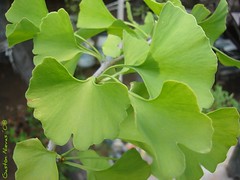
- Ginkgo biloba can be helpful in treating Cushings. Ginkgo slows the release adrenal hormone and can help to control Cushings disease. I do not use this herb with all the dogs I treat as I have found it not to be as effective as Si Miao San, acupuncture and diet change. However it does seem to be the herb that can be added to the protocol if you are not getting as much symptom control as you think you should be. It is very much my tipping point herb and sometimes it makes the difference between good control and mediocre control of this disease.
Ginkgo is also a great herb for helping with dementia, high blood pressure, and protecting against heart disease and stroke. Because of this I often recommend it in my older animals. One of my favorite ginkgo product is made my Animal Apawthecary and also contains hawthorn. It is called Animals’ Apawthecary Hawthorn Plus
. I also make a powder version of this formula called Heart and Brain Support through my etsy shop. - Be aware that a natural approach can change the amount of Trilostane and other drugs that are needed to control this disease. Work with your vet to monitor signs of drug overdose if your dog is already on Trilostane or Lysodren, when they are being treated naturally. If your dog stops eating, becomes lethargic, or has sleep disturbance or vomiting and diarrhea contact your vet immediately. This could be a sign of overdose.

I have had a number of dogs who we have gotten completely off of Trilostane (the main drug to treat Cushings disease) or significantly reduced the dosage. If I can catch it early many dogs never need to use the western drugs.
One of my favorite dogs with Cushings disease is a cute little Cairn Terrier I treat named Clancy. He’s a fun little guy with a lot of spunk. We were able to catch his Cushings disease very early about a year and a half ago, just after he was diagnosed. His main symptoms were increase in weight, panting and that he was much more jumpy when touched and startled easily. He also drunk a lot of water and was always hungry. Through acupuncture, herbs and diet we have been able to keep Clancy happy and symptom free. Occasionally he will have a little flare up of symptoms but so far we have been able to treat those flare ups with acupuncture and some herbal and dietary changes. I’m hopeful that Clancy will never need Trilostane or other western drugs.
So what is Cushings disease?
If you have found this article you may already know about Cushings. For those of you that don’t here is a short explanation.
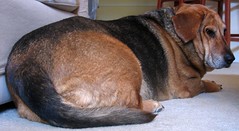 Cushings disease is caused by an overactive adrenal gland which produces too much adrenal hormone. Most of the time this is caused by a benign pituitary tumor in the brain which signals the adrenal to produce more hormone than it needs. Occasionally this is caused by an adrenal tumor in the actual gland. Usually with an adrenal tumor, removal is recommended. However with pituitary tumors removal is too difficult and the treatment of choice is to use a drug such as Lysodren or Trilostane which stop the production of adrenal hormone through destroying the cells that make it or blocking its release. This can be risky because if too much gland is destroyed or if too much hormone is blocked the animal can die, become seriously ill, or develop Addison’s disease (not enough adrenal hormone) which is much more dangerous. Both these drugs can permanently damage the adrenal glands.
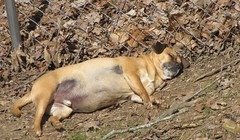
The main symptoms of Cushings disease are a pot bellied appearance, excess hunger and water consumption, and hair loss on the sides. Many dogs have a tragic look to them. In addition Cushings disease can cause weakness and panting. These dogs have a weakened immune system and are prone to infections and cancers. People will often times describe their dogs with Cushings as more agitated and some dogs will have issues with sleeping through the night.
Here are a couple other good articles about Cushings disease and it’s treatment
Cushing disease
FDA cushings disease and Trilostane
 An amazing things I recently learned about Cushings disease is that it appears to be closely related to type 2 diabetes. In fact there are those that believe that both diseases are the same syndrome, just manifesting differently. When brain scans were done of cats with insulin resistant type 2 diabetes, it was found that in those cats with insulin resistance had pituitary tumors characteristic of Cushings disease. Wow!
Prevelant of pituitary tumors among diabetic cats with insulin resistance
Both diseases seem to be induced by an overload of nutrients of the carbohydrate variety. Animals with Cushings disease and diabetes develop what is called metabolic syndrome. There body can not handle the amount of carbohydrates and high glycemic index ingredients in many of the processed diets we feed them. These high glycemic index diets cause high levels of inflammation in their bodies, which lead to problems in the endocrine system. This can lead to insulin resistance, development of pituitary tumors, or other inflammatory diseases.
You can pull up a great lecture on the subject of inflammation, diet and the endocrine system by one of my herbal teachers, Dr. Steve Marsden by following this link (brings up a PDF).
Management of inflammation using chinese herbs and diet
 While I have not been able to get all dogs controlled without western drugs, usually we are at least able to significantly reduce clinical signs and/or reduce the dose of drugs needed to regulate this illness. In a disease with not many good safe options for treatment, I love having effective natural options to offer the animals I work with.
As with all advice offered on this website please check with your animal’s veterinarian before changing your animal’s medications or adding any herbals.


 – there is a great study out there at shows this herbal improves outcomes and reduces side effects during chemotherapy.
 if they are getting chemotherapy.


 or see below
 and feel like it adds in both micronutrients and some added digestive support.
 can also be used. Use one teaspoon for an average sized dog.
 a day for average to large sized dogs.
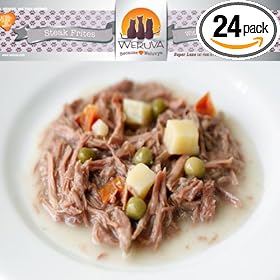
 is a great food that seems home made. They have many varieties so make sure you find a grain free one. I have found this food much cheaper on Amazon.com
 is completely grain free and very high in protein.
 is another quality food I use in a lot of the dogs I work with.
 is my favorite and even picky animals including cats seem to like it. With any of the freeze dried foods I recommend hydrating them.