Archive for March, 2013

How to integrate all modalities when treating cancer

Saturday, March 23rd, 2013
We learned in vet school that when you have more than one vet in the room and an animal comes in with life threatening injuries the most important thing is for someone to say “I’m in charge!”. Without this simple statement the chances of an animal making it is much less. Until someone takes control everyone assumes someone else is in charge.

With cancer I believe it is the same thing. Someone needs to be the main person making the decisions. That can be the oncologist, the holistic vet, the general practitioner vet, or in some cases the animal’s caregiver. It doesn’t matter who it is and it does not have to be the person with the most knowledge but it has to be someone. It does not mean that everyone doesn’t work together as a team and sometimes it can shift between people as treatment goes on. Just know who it is.

When I work with animals who are not undergoing chemotherapy this is generally me. I make the final decisions on what happens with the wishes of the animals’ caregiver in mind. We get recommendations from the regular veterinarian and sometimes me and the regular veterinarian get together on the phone and put our heads together.

Because I see my cancer animals every two weeks I have a better feel of where they are at and usually a better connection with their people.

If there is an oncologist involved usually they are in charge, although often I am given free rein to add in herbals/supplements and change diet. Most oncologists don’t have herbal training but many are very open to us who do.

If you, the animal’s person are in charge you can gather information and make educated choices based on that.

Drugs and herbals do not have to be exclusive. Even in the animals I treat completely herbally I often times recommend drugs for pain or comfort issues.
I have found that it is better to do a fewer things consistently than many treatments not consistently. Do everything you can to follow recommendations on the most important treatments.

Don’t forget the food. Good food is so important and often I find you can add in foods that help fight cancer without having to add more pills. If you can, supplement with whole foods before pills! Sardines for omega fatty oils, sweet potato and carrots for vitamin A, cooked mushrooms for your medicinal mushrooms.

The internet is great! Hey I’m the internet aren’t I? Use it to do your homework but remember that no one knows your dog as well as you do.

Don’t follow advice that doesn’t sit well with you or your gut feels is wrong. Remember that your vet actually is seeing your dog, none of us in the cyberspace are. We all have different tools to work with. Your vet may not have the tools I use but they see your dog and know them, I don’t. If at all possible talk to your vet about what you find. You would be surprised how open many vets are to herbs and supplements especially for diseases where there is not a western treatment.

If you don’t feel like you have the support of your vet, consider finding a vet who does support your choices and who you can be open with.

There is not one right choice when it comes to cancer. We don’t have a miracle cure that always works, but we have many tools that can make it so animals can live longer better lives.

Back to integrative and holistic methods for treating cancer in cats and dogs.
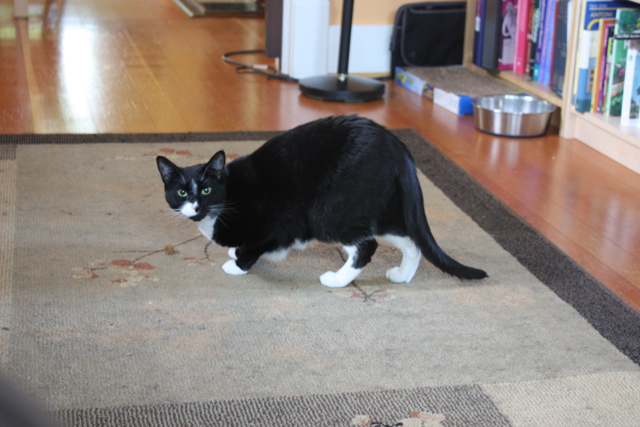
Alli and her catpuppies – getting dogs and cats to co-exist

Sunday, March 10th, 2013

When we first were fostering Alli, I soon feared that she just was not going to be able to live with cats. Alli had been a street dog in Taiwan and it just made sense, small fuzzy things equaled food, not friends. My husband Adam encouraged me to not give up on her but I was worried our cats were going to get hurt. Any movement from our cats and she would go into prey mode. One time she actually came away with a mouth full of hair, which really scared me. Luckily early on we went to a meet up with other people who had adopted Formosan Mountain dogs from Taiwan and received some great advice.

“Don’t give up! My dog was like that at first also and now the cats and dogs coexist just fine.”
“Talk to her, tell her what you want, these dogs have an amazing ability to understand.”

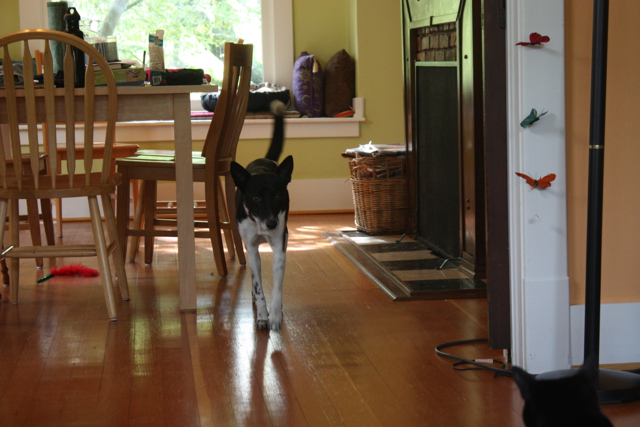
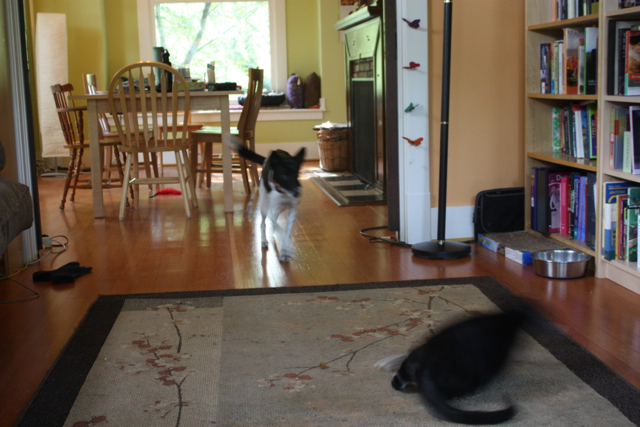
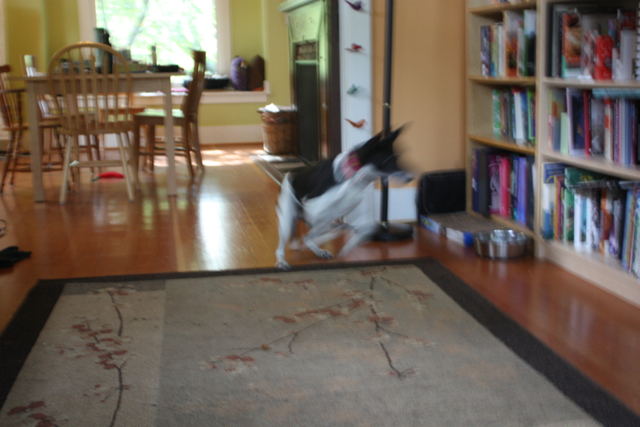
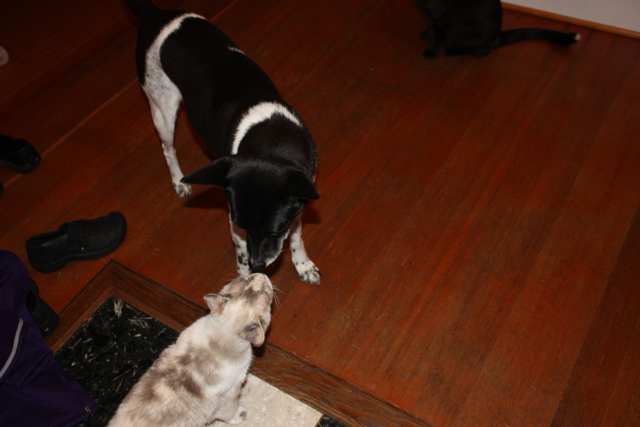
So began our journey from this –

chasetugchase1chase3chase4


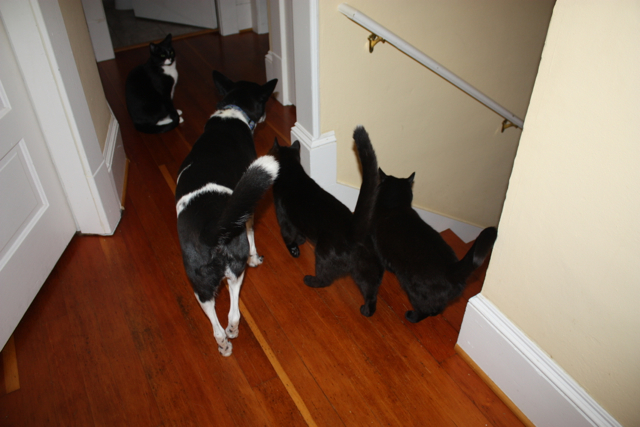
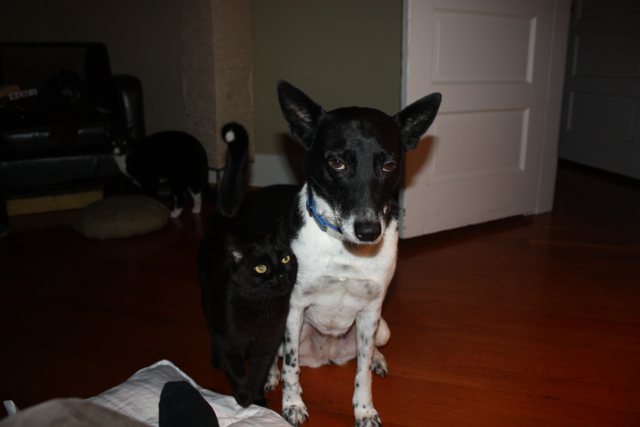
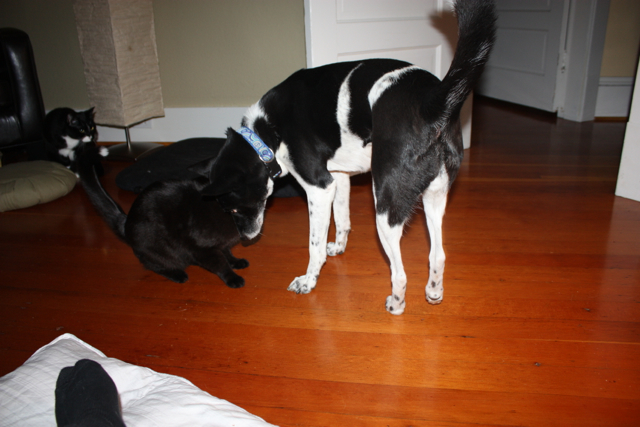
To this –


chasehappyallcatpuppieschasehappymelodyallichasehappyravenallichasehappyravenalli2

So what did we do?

  1. First and most important – make sure your cats are safe. We made sure Alli was in the bedroom when we were not home or not close by. Crating would also be a good option. We bought a bunch of baby gates and when Alli was out with us she was gated in the living room. The cats could jump in and out but she could not follow them. We always had a leash on her so that we could grab her quickly.
  2. Don’t let the chase happen – every time a cat would jump in the living room with her we would go sit with her and give her positive praise for not chasing. Some treats were used in this process also and given when she would look at a cat moving and then look back at us.
  3. Explain what you want – Formosans are smart. So are many other dogs. Alli had puppies when she came to this country – she took good care of them. We explained to her that the cats were like puppies. You didn’t want them to walk all over you but you had to take good care of them and make sure they did not get hurt. We started calling the cats “catpuppies.” This got us in the mindset of believing that she would be able to take care of the catpuppies and not hurt them. Dogs look to us for their cues and if we believed it she would to.
  4. Make sure she knows that you are in charge of the situation and house. Alli is a smart dog, if I am not in charge, she will be. Everytime Alli would look like she was about to chase a “catpuppy” or even thinking about chasing a “catpuppy” I would stand in front of her and say “Mine, leave it!” in a stern voice.
  5. Don’t give up. It was a lot of work and took about two months but we now have a dog who loves her “catpuppies.” We knew we were there when a friend brought her puppy over to our house. He gave chase after one of our cats and Alli jumped in front of him and backed him down growling, “Mine, leave it!”

Note – there are some cats and dogs that absolutely can not coexist. If you are in doubt get a behaviorist out to help you figure out if there is hope and make sure to not put your cats in danger.

Other cancer resources – in development

Saturday, March 9th, 2013

If you haven’t come from my cancer book, please check out Integrative and Holistic Approaches to Cancer in cats and dogs
Here are some other great resources –

  • Georgia’s Legacy is one of my favorite resources for any person with a dog fighting cancer. They have put a lot of time into this site and it is easy to navigate.
  • Tripawds is a wonderful online community for three legged animals. Another great site for support and information.
  • Kingdom of Basil is my etsy store where you can buy many custom ground herbal formulas.
  • Darwin’s is my favorite company for raw diets

Please let me know if you have a good resource I should add. I will only add websites that I believe to be helpful and accurate. Hopefully this page will get longer with time!

A day in pictures

Monday, March 4th, 2013

Technically Monday is my day off but always a busy day.
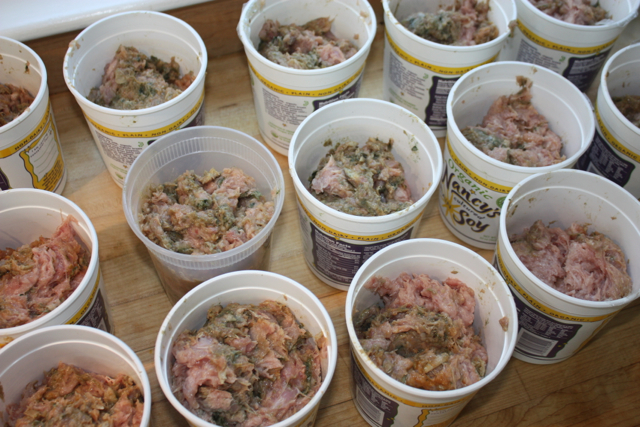
I just made two weeks of homemade cat food for our kitties. For the recipe see Making crazy awesome cat food part 2
catfood
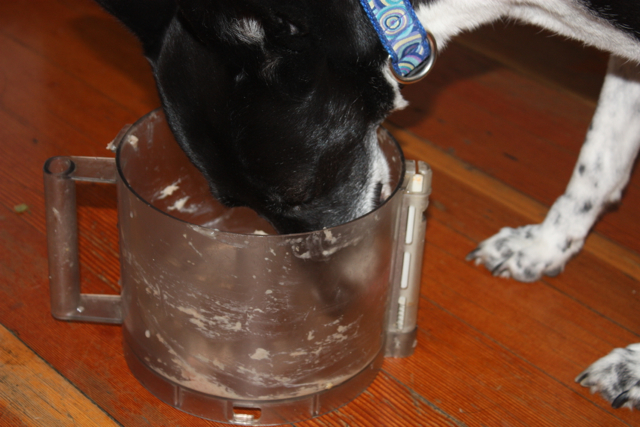
Alli enjoys helping me clean out the food processor
allifoodprocessor
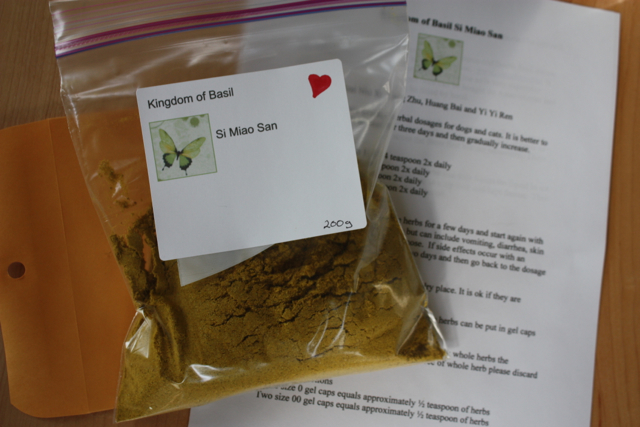
Getting herbs in the mail this morning for my etsy store Kingdom of Basil. I’ve been enjoying sending herbs all over the country and am now getting about an order a day and some lovely feedback.
kobsms
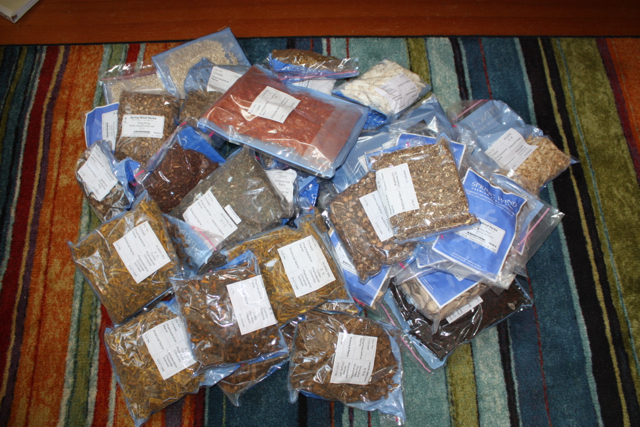
I’m experimenting with ordering more herbs less often. This is a little over $500 of herbs which will last me for the next month or two.
herborder
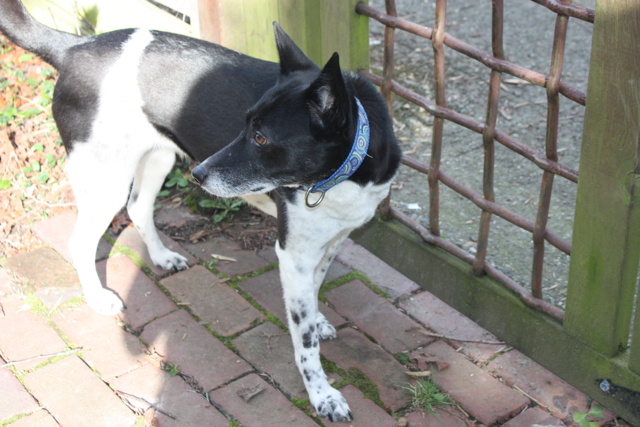
Now off to walk Alli on one of our unusual Seattle sunny winter days. Hope you are enjoying your day!

allsun

Working with picky appetite in dogs with cancer and older dogs – Help, my dog will not eat!

Saturday, March 2nd, 2013

First off let me say that like with dementia I certainly do not have all the answers to this problem. It can really vary from dog to dog. I’m hoping that the tricks I have learned over the years will help and that you the visitor will also add your own stories.

In people with cancer it is reported that the sense of taste changes. I believe this to also be true in many dogs. While many vets suggest that nausea is at the root of dogs with cancer not eating well, I tend to blame the change in taste more often. In older dogs I believe taste also can get more muted as they age.

There are a two main approaches in working with appetite, one is to make eating more interesting and the other is to use acupuncture, drugs, or herbs that stimulate appetite.

Making eating more exciting for your picky eating dog

  1. Change things up. Many dogs will do better if there food is changed around on a daily basis.
  2. Add in table scraps. It is sometimes amazing how much a little human dinner will make a dog dinner more attractive. Meat is usually the most popular. Just remember no macadamia nuts, grapes, raisins, chocolate or onions.
  3. Salt it – high quality foods are often low in salt. Add in some salt or salted meat broth to make the food more yummy.
  4. Something stinky – sometimes the addition of the stinky foods will help. Try cat food, sardines, canned salmon, bacon, or if you really want stinky — tripe. They sell tripe for dogs in a can or as a raw food.
  5. Cooked chickens and roasts. I have had many clients make roasts or buy rotisserie chickens from the store. These are often times yummy but work better if you as the human also eats meat and can share in the feast.
  6. Try dry food again – I have had dogs that will not eat anything but will suddenly eat dry again. They may turn their nose up at that prime rib and then eat kibble.
  7. Make eating a game – hide the food behind the furniture, in the closet, outside, drop it by mistake, make it a game. “Look, look what I found, yummy!” Just remember where it is so it doesn’t rot.
  8. Hand feeding – some dogs do much better if they are hand feed a bit at a time.Ok yes you may be spoiling them but its not like they need to go out and get a job someday. It’s ok to spoil your old or sick dog.
  9. Heat the food – in the microwave is fine. Sometimes warm food is more yummy.
  10. It is better to have them eat something than the right thing. If you have a dog with cancer and they will not eat a cancer diet add some carbs/grains back in. It is better than not eating.
  11. Feed them when they are hungry. Some dogs will only eat in the evening or will only eat small meals. Offer food often and if they are eating well give them a little more when they are hungry.
  12. Eat with your dog. Some dogs like to eat at the same time as their people.

Increasing appetite in the face of disease

    1. Look at how many medications/supplements you are giving your dog. I can not stress this enough. I have had dogs come in on 50, yes 50 pills a day, with no appetite. You probably would not be eating on all that either. Before adding something, cut out anything your dog does not need and see if their appetite returns or work with your vet on if some of the important medications can be stopped for awhile. If their appetite returns when you cut back on pills then gradually add things back in. Do not add in more before looking at if you are giving too much! This is especially true of cats which will get their own article on appetite someday.

  1. Acupuncture can help many dogs with appetite. Consider giving it a try as it has other wonderful benefits for older or sick dogs.
  2. There are many western drugs out there that can help. If nothing else is working talk to your vet about what is right for your animal friend.
  3. Herbals -while there are herbals that can help with appetite, I find myself reaching for CBD these days instead. Nothing like giving your dog or cat the munchies! Plus it helps with pain and nausea and has anti-cancer actions!

Thank you Bill P. for suggesting this topic!

As with all articles on this blog, this does not replace medical advice. If your dog is not eating and you have not seen your veterinarian, please make an appointment to rule out any serious health issue.