The hardest cancer – how to treat hemangiosarcoma in dogs holistically with herbs and supplements
Tuesday, July 31st, 2012 Note:This article is about hemangiosarcoma of the spleen and abdomen. For information about hemangiosarcoma of the heart click here.
I have to say I always have considered hemangiosarcoma the hardest cancer to work with. It is highly aggressive, it can rapidly progress to the point where it causes sudden bleeding and death, and it is not very responsive to herbs or chemotherapy. After a few really hard to treat cases who died long before I wanted them to, I felt like giving up.
Recently I attended a lecture by Dr. Steve Marsden, one of my favorite herbalists, and my whole view on hemangiosarcoma changed. He has a new protocol that he is using for hemangiosarcoma and it is working in some animals. It is not a cure all but it makes it so some of these guys have really good quality of life, live longer and are far less likely to bleed out, even if you leave the primary tumor alone.
The first dog who I got to treat with this protocol just passed away when I first wrote this article, and while I will really miss his wonderful happy golden retriever love of life, I am so happy we were able to make his final months better.
Wilbur was rescued by a local massage therapist I work with when he had active end stage hemangiosarcoma. She was told we would be very lucky if we got a month, most likely we would only get a couple weeks. He made it over three months from that end stage point, without any surgery and he was happy and active up until the very end.
In the past I feel like I was lucky if I could get over three months with early diagnosed hemangiosarcoma even if we did surgery to remove the spleen. That is how aggressive this cancer is. And from my experience there is not a good western option for treating it.
Since writing this article, I have since seen mixed results. I still have dogs who only get three months and because of herbal supply issues I’ve had to change my protocol
Steve has taken dogs over a year with his protocol even without surgery and that is very impressive. I have not had a dog I’ve been able to take over a year in my practice yet. I hope I will someday! I do have a cat who is three years out from hemangiosarcoma diagnosis without tumor removal and happy and healthy (as of 7/2017). She is also 18 years old!
So how do we treat this?
I am going to stop here and say you need a holistic vet on board. I use Vit A/D at a dose that can cause kidney failure if not used correctly. This needs to be used under the management of a veterinarian. But first…
To remove the spleen or not to remove the spleen.
I always, always pushed spleen removal in the past because I found most dogs did not make it past a month if you didn’t. The tumors would rupture and they would bleed out and die. Many made it much less time. My thoughts are changing on that a bit because of Wilbur and having a protocol which actually seems to prevent bleed outs. I would still say that in a healthy dog where it appears the bulk of the cancer is in the spleen, that spleen removal is the way to go. However in the very old, the very debilitated, or in those that have cancer in multiple organs I am starting to lean against it. This is of course going to be something to discuss with your vet and any other caregivers involved in your dog’s life.
 Here is the protocol I use. Thank you Steve Marsden!
- Acupuncture – every two weeks or more often. This keeps everything moving, helps with discomfort, slows down the cancer and boosts the immune system.
- A cancer diet – See Diets for cancer in cats and dogs
- Yunnan Baiyao – not only does it control bleeding but also seems to slow this cancer down. I double the dose for dogs with hemangiosarcoma
- Chai Hu Jia Long Mu Li Tang or the root formula Xiao Chai Hu Tang which I use quite often for cancer. I use Chai Hu Jia Long Mu Li Tang for animals who run very hot and Xiao Chai Hu Tang for the majority of dogs.
- IP6 – this supplement is important in stimulating the immune system’s natural killer cells to destroy cancer tissue. It is an antioxidant and has effects in inhibiting cancer cell growth and division. Not much research has been done in humans with this supplement but a lot of cancer studies have been done in animals.
I dose dogs at 800-1600mg twice a day when I use this supplement. - Turkey Tail
or I’m Yunity mushroom supplements have been show to increase survival times in dogs with hemangiosarcoma. I use Turkey Tail but the studies were done on I’m Yunnity’s product. I find I’m Yunnity is about 3-4 times the price of the best Turkey Tail you can buy.
 More then any other cancer I work with I think this is the most important one to make sure you have a good holistic vet on board. I know, I know I have said that a few times already. Please see my article How to find a good holistic vet.
So how do we prevent this cancer? I don’t know that we know for sure. There is definitely a breed/genetic componant especially in golden retrievers. I urge my clients with golden retrievers to follow cancer prevention tips in How to Prevent Cancer. I also have had my golden retriever dog parents adding in 1/4 teaspoon of an herb called Red Root once a day. This herb helps with splenic congestion and lymph node drainage. It makes sense to me that it might help prevent this cancer but only time will tell.
As with all articles on this blog please check with your animal’s veterinarian before making any changes in their care or adding any supplements or herbals.
Back to Integrative and Holistic Treatments for Cancer in Cats and Dogs.
This article is dedicated to beautiful Wilbur – may you be young and free of cancer where you are now.

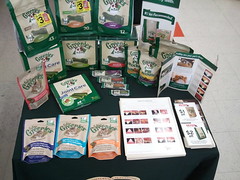
 are the way to go. They are little treats with a hole in the center to hide the pill in.
 . It comes in a “0” and “00” size, works well and is about $25-30.
 .
.
 which pop the pills into the back of the mouth. Many people prefer to rub the pills in butter before giving them so they slide down easier and have a pleasant taste.