Fibrosarcoma – how to treat with surgery and holistic medicine in cats and dogs
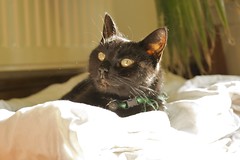
Sunday, June 30th, 2013 Lucy was a beautiful black cat, her full name being Lucy Furr. She wasn’t very old and had quite a bit of spunk. Most of her acupuncture treatment involved putting her in a small bathroom and trying my best to keep the needles in for at least 20 minutes as she bounced around. She didn’t mind the little pokes but she sure did mind me thinking she should stay still. I took over her care from my acupuncture teacher when she was about eight months out from having a fibrosarcoma removed from her shoulder. Her vets hadn’t hadn’t been able to get clean margins, which isn’t unusual for this type of cancer, so had told her human mom that 100% it would come back. Lucy wasn’t very old however and the recommendation of multiple radiation treatments did not sit well with her human mom so she had explored other options of trying to fight this cancer.
A little over a year later when Lucy reached the two year mark from her surgery, I said goodbye to her and her mom hoping I never had to see them again but with a promise to call me if anything did happen. The tumor had not returned and the likelihood it would at that point was very, very slim. Seven years later I have not heard from them.
As many of you may know, fibrosarcoma is a cancer we see mainly in cats and almost always it is induced by either a rabies or feline leukemia vaccination. These days most of these vaccinations are given down the leg, so if a tumor develops the whole leg can be removed which is most often curative although harsh. There was a recent study that looked at the idea of giving the vaccine in the end of the tail and if this comes into practice removing a tail is obviously better than a leg. Lucy had vaccinations before this practice was used by most vets so full removal of a limb was not an option. Fibrosarcomas are very locally aggressive and while they do not spread to other areas of the body quickly they do usually cause death if not addressed.
I should add that we do see fibrosarcoma in dogs and also in cats unrelated to vaccination.
So what are my recommendation for fibrosarcoma?

- If at all possible these tumors need to be removed. It is almost impossible to treat without bringing them down to a microscopic level. If they are at a microscopic level either herbal medicine or radiation becomes an option for treatment. If it is impossible to remove these tumors either because of health issues or because of location then herbal medicine can be used to slow down growth. At this point there is no way to have remission if the tumor is not surgically removed.
- Sanshedan Chuan Bei Ye seems to have a good result against these tumors – For Lucy we actually got this compounded into a transdermal that could be rubbed on her ear. In addition the apricot seed in SSD helps to enhance the effects of radiation if this treatments are used.
- Medical Mushrooms to include maitake, shiitake, reishi, turkey tail and/or cordyceps. – this is one place where strengthening the immune system really comes in, if you can make them part of the food all the better. I am able to add glycerin mushroom tincture to my homemade cat food, it generally tastes ok and cats tolerate it.
- Hoxsey like formula or Cancer Detox Formula can help to shrink down these tumors. This is an especially good formula if margins are not gotten from surgery or if surgery is not an option because of health or location. Hoxsey works especially well when tumors are very hot and inflamed.
- Artemisinin – can be used if there is no radiation treatments and can help to keep cancer from returned, slow down tumor growth and in some cases shrink the size of tumors.
- Acupuncture – this is a must to strengthen the immune system and is something cats tolerate well.
- Cancer Diet – yes, using food to fight cancer is very important and especially in cats who can get sick from too many supplements. See You are what you eat – a fighting cancer machine.
- Talk to an oncologist. This is one of those cancers that often occurs in young animals and because they have their whole life ahead of them I think it is very important to seek all the possible options. There are no machines for radiation treatments that combine a particle accelerator (what delivers the radiation) with a CAT scan machine. These machines are able to target radiation to the tumor disease much more accurately than our old machines could and are much safer to use. Radiation still requires anesthetic and often daily or multiple time a week treatments for between 2-4 weeks. The new machines are expensive but often you can get full remissions if most of the tumor can be removed first.
As with all articles on this site please check with your animal’s primary veterinarian before starting any supplements or herbs.
 I recently attended the ACVIM veterinary conference for internal medicine specialists. This is by far my favorite mainstream medicine conference because there are always many lectures on the new cutting edge medicine being developed.
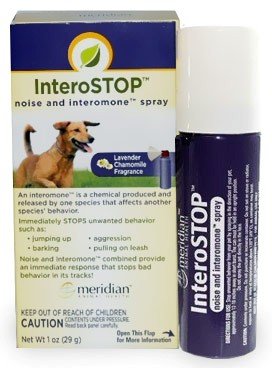
  caught my eye this year with its claim to help calm dogs and cats with a synthesized pig pheromone. I have long been a fan of Feliway and DAP that work in the same way but have found less success with DAP. The company that makes InteroSTOP happily gave me a free product to try.
 for both
  which I have not tried but I imagine would also be helpful. I will definitely be recommending InteroSTOP to clients.
  I have had so many questions about medical marijuana in animals lately, especially with it becoming legal in Washington state where I practice. This is probably one of the best articles out there about medical marijuana use in pets and the legal issues that come up with it. See