Archive for April, 2013

The greatest kindness is sometimes death

Sunday, April 28th, 2013
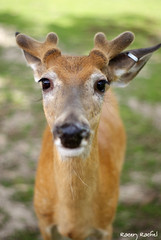
Driving back full of excitement because my son Martin’s band had just won the Peakfeast Battle of the Bands on Mercer Island. In the lights something running along the road but something is very wrong. Hard to tell at first, is it a dog? Some other animal? As we get closer I see it is a deer, running on her knees, hind legs broken, one hanging off almost severed. She hauls herself out of the road and on to the narrow walk along Island Crest Way but keeps on going, throwing her body down every step, in a panic.

We pull over flashers on, who to call? Animal Control doesn’t come out in the middle of the night. There is no one for this deer. Thinking, if nothing else she is a traffic hazard, dialing 911, feeling bad to bother them when maybe I shouldn’t but who else to call? The woman on the phone is very nice, says she will see if she can find someone for me but doesn’t know if she will be able to.

Another man pulls over to the side with his young daughter and dog in the car; he also doesn’t know what to do.

I get off the phone with the 911 operator, tell the man who pulled over I am a vet and I will see what I can do. The deer has stopped, lying panting, in shock, in pain. I call to my son to get the blanket we keep in the car for our dog.

If nothing else I can calm her by covering her eyes, remembering some of my wildlife training for smaller animals. I throw the blanket over her and she calms down, I bend down feeling her heart beating fast, she is so scared. Trying to send her calming thoughts. Hoping that her heart will just stop under my hand.

In my mind, this dear one needs to be put out of her misery, I have no drugs, just acupuncture needles, I say to the man helping me, I don’t do western medicine anymore, I don’t have drugs. I wish I did.

I think maybe we can get her to emergency, we try to lift her, I never realized how much a deer weighs, too much to lift and really am I going to be able to get her in the back seat of my little car. Feeling despair. Thinking is there a way I can kill her quickly with my hands, I have done that for smaller animals that are suffering, I hate doing it, it is brutal but humane and fast. This deer is too big, I can’t break her neck.

The man with me, we are both willing to do anything we can for her but we are mostly helpless. Yet neither of us or my son Martin is willing to leave her.

Here I am a vet, I am more trained in doing this than anyone and I have nothing to offer her but my comfort and that is not much considering how scared she is.
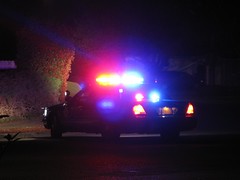
The lights of a police car showing up offer so much relief. They may be able to at least help get her to someone who can end her life quickly. He shakes his head, there is no one who will come out and help her, I can tell he is sad also. He tells me gently that he can shoot her. As sad as he is about this I feel so much relief, I did not know that he would be willing to do this. He can end her life quickly and stop her suffering. It is no small thing to offer to shoot another living being but it is the greatest kindness that he can offer. I tell him, I’m a vet, that is what she needs, I tell him how injured she is. Not the greatest surgeon could put this little one right again. I touch his shoulder and thank him, I’ve never touched a police officer before but it seems right. I know he is doing the right thing and it is out of kindness.

He looks at the man’s daughter looking out the window and my son standing by and tells us the best thing we can do is move on so we don’t have to witness what he has to do. Another great kindness, he offers us all.

We get in the car and leave, thinking about that poor deer, suffering on the side of the road. She will soon be part of the heavens and able to run free again.

It is a hard drive home.

A little after midnight I get a call from the police officer. He lets me know that the deer is gone and that he has found a native tribe will be coming to take her body, use the meat, honor her. He thanks me for all I did for her before he arrived. I don’t feel like I did much, how can you leave an animal to suffer alone? I thank him, he had the hard part. I so appreciate what he did, he didn’t have to do it, but he did. He gives us some closure with the call. I hope that it doesn’t take too big a piece of him to have to kill another animal, because in meeting his eyes I know he did it fully with kindness and respect for her. No one could have done more. He was truly her savior that evening. Sometimes death is the kindest thing we can offer.

Thank you to the very kind officer who came to the rescue, thank you to the man with his daughter and his dog who pulled over also, after seeing an animal who needed help, thank you to the 911 operator who did get someone out to help us, even though it was just for a deer. People in this world do care, none of us is alone.


How to use this book – guide for using Integrative and holistic methods for treating cancer in dogs and cats

Saturday, April 20th, 2013

See the book this article talks about, Integrative and Holistic methods for treating cancer in dogs and cats.

It takes a village to raise a dog and it takes a team to work with cancer. I cannot emphasize enough how important a good team is for working with a dog or cat with cancer. Not only to make sure your animal is getting the best care possible but also to offer you, the caregiver, support.

If you can find a holistic veterinarian to work with, you are going to have a much easier time. I often recommend acupuncture, which is something that cannot be done without an acupuncturist for animals as part of your team. Also because every dog and cat is different having someone who knows your dog or cat will be very helpful. While I have laid out what I normally use for certain cancers, I find in my own practice that this will change from animal to animal. This is because they all present slightly differently and sometimes they don’t follow typical patterns.

However I understand that some places there are no holistic vet, sometimes money is an issue, some animals cannot travel and sometimes the holistic vets in your area are not herbalists.

I have found through my practice that many western vets are open to holistic medicine especially herbs and especially for the diseases such as cancer that often do not have good western treatments. Bring this book to your vet and discuss the treatments with them.

I realize that there are some people that are going to use this information without a vet involved in the process. If you choose this course, make sure that you don’t use anything that makes your dog or cat sick. Add in one or two supplements or herbals at a time. If you dog or cat is under the care of a veterinarian let them know what you are doing. Make sure there are no interactions between the drugs you are giving and any supplements or herbs that you add.

Do not add multiple supplements to the protocol of an animal who is not eating. Get them eating first. If an animal has a very picky appetite consider giving the supplements or herbals separate from food. Talk to your vet about drugs that can boost appetite and get your dog or cat eating again.

If there is pain involved do not just rely on just herbals. Make sure you talk to your vet about pain control.

Remember eating, sleeping and stopping pain first. Comfort and quality of life are primary.

So that all being said – what do you do with the actual book

I cannot do phone or email consultations – I have a full practice and only see animals in the Seattle area. I am only one person. Even with animals that are local I am not able to see everyone. Find someone in your community to help! There are many others that do what I do. I don’t hold any miracles that others cannot access. There are also other ways of treating cancer that work well. This is just what I have found works the best.

May your path be gentle and filled with healing and support!

Types of cancer and their treatments

Saturday, April 20th, 2013

Hemangiosarcoma of the heart in dogs – holistic options

Thursday, April 18th, 2013

While I use a similar protocol for heart hemangiosarcoma to splenic hemangiosarcoma, there are some differences.

One is that surgery is not an option for hemangiosarcoma of the heart. Second is that we have a tumor that is pushing against one of the most vital organs in the body. While bleed out is a concern, animals with hemangiosarcoma of the heart are more likely to die from heart failure. Really with this cancer we are buying time and improving quality of life with treating holistically. This is one of the fastest moving cancers out there.

So we need a three fold approach, slow the cancer, support the heart and prevent bleeding.

Here is my modified protocol

  1. Acupuncture – every two weeks or more often. This keeps everything moving, helps with discomfort, slows down the cancer and boosts the immune system. Acupuncture can also support the heart and keep blood pressure regulated.
  2. A cancer diet – See Diets for cancer in cats and dogs
  3. Yunnan Baiyao – not only does it control bleeding but also seems to slow this cancer down.
  4. Xiao Chai Hu Tang This formula works well for cancers that cause there is be an excess in the front of the body. All these formulas are available from my etsy store Kingdom of Basil. If you get this formula from another source make sure that these formulas uses ginseng (Ren Shen) and not Dang Shen and that the Chai Hu is not over 25% of the formula.
  5. Xue Fu Zhu Yu Tang with E Zhu and San Leng – this formula not only helps fight cancer but also helps support the heart. Also available through Kingdom of Basil.
  6. High dose Vit A/D given orally. If you give this orally it decreases the chances of an allergic reaction. I use the injectible large animal version but use it orally. I dose once a week for four weeks and then once a month. Steve starts with a dose of twice a week. I use in the range of 250,000IU of Vit A and 37,500IU of Vit D per dose for an average sized dog. DO NOT USE THIS DOSE OF VITAMIN A/D WITHOUT VETERINARY SUPERVISION. Large amounts of Vit A are highly cytotoxic to cancer cells, that is great. The doses I use can potentially cause kidney failure, that is not so great. You must be working for a vet to use this high a dose. Chai Hu Jia Long Gu Mu Li Tang or Xiao Chai Hu Tang also help to protect the kidneys when using this high dose vitamin therapy.
  7. IP-6 Inositol Hexaphosphate – this supplement is important in stimulating the immune system’s natural killer cells to destroy cancer tissue. It is an antioxidant and has effects in inhibiting cancer cell growth and division. Not much research has been done in humans with this supplement but a lot of cancer studies have been done in animals.
    I dose dogs at 800-1600mg twice a day when I use this supplement.
  8. Coenzyme Q10– this supplement helps support heart tissue and has anti-cancer effects as well. I often add it to my protocol. I use a dose of 200mg a day for your average sized dog.
  9. This is not a cancer to take lightly, as it can progress very quickly. If at all possible find a holistic vet to work with.

    As with all advice offered on this website please check in with your animal’s primary veterinarian before using any of these herbals and supplements.

    Return to Integrative and Holistic Methods for Treating Cancer in Cats and Dogs

Questions to ask your vet when your animal companion has cancer

Tuesday, April 2nd, 2013

Cancer can be overwhelming. Often times the diagnosis comes suddenly and there is almost always an element of shock with it. The little lump that you were convinced was just a wart could be life threatening. The mild weakness was just discovered to be a belly full of tumors.

It can be hard to ask all the right questions especially when you are having strong emotions. So what do you need to ask and know before deciding on the best course of action to take for your animal companion?

One of the most important questions

  • What happens if we do nothing? It is easy to get so convinced that we need to treat that we forgot to ask with will happen if we don’t . In older animals with slow moving cancers, it is sometimes better to just treat supportively than to jump into aggressive treatments.

Comfort

  • What can we do right now to make my animal more comfortable? Another very important question. With cancer, comfort is very important. Even if your animal has very little time left here, it should be as happy and pain free as possible.
  • Is there drugs that can slow this cancer down without doing more aggressive treatments like chemo/radiation or surgery? Prednisone is often a good drug for this. This is also where herbals and acupuncture can come in.
  • Is there drugs that can help my animal eat better? Many animals with cancer are picky eaters. Sometimes appetite stimulants or anti-nausea drugs are helpful.
  • Do you know a good holistic vet I can work with?

Surgery

  • Is there a surgical option for this cancer? Usually cancers that are isolated to one area are treated with surgery. If a cancer has already spread, or is a blood born or lymphatic system cancer, surgery is usually not an option.
  • If there is, what is the prognosis that my animal will make it through the surgery? Some surgeries are relatively easy and some can be very difficult.
  • Do you recommend I see a surgeon? More difficult surgeries are best done by the experts, unless you are working with a vet who is very skilled at surgery.
  • If we can remove the whole tumor, what are the chances that it has already spread or will come back? What is the prognosis for after surgery? i.e. is there a reason to do the surgery? Will it give my animal a better and longer life?
  • Do you think my animals’ health is such that surgery is a good option? If not why? If you animal is very old, sick or has serious chronic disease, surgery may not be a good option, even if it is the best way to beat the cancer. Remember we are treating the animal not the cancer.
  • What kind of care will my animal need after surgery? Will there be long term complications or disability? This is especially important if you work full time or have a household of small children or if you have a dog you can not carry.

Chemotherapy and Radiation

  • Do you have experience doing chemotherapy? If the answer is no or a little consider seeing an oncologist at least for a second option.
  • Can you refer me to a good oncologist? Oncologists often have new treatment options that general practitioners don’t use.
  • What is the prognosis with this treatment? This is an important question. Is $4000 of chemo going to give you a good chance of getting a year or more, or only buy a month extra and come with side effects.
  • How long will my animal have to undergo treatment? How often? Is there an option to do part of a protocol and still get results? For animals with a lot of anxiety going to the vet, this can be an important consideration
  • How much will it cost?
  • Will my animal need to be sedated or anesthetized for the procedure? With radiation the answer is always yes, sometimes this is also necessary with chemotherapy.
  • Is there a chance at permanent remission?
  • What are the side effects? Does prognosis out weight the chance of serious side effects.
  • Do you have a plan to treat the side effects if they occur? Many oncologists use drugs to treat the side effects of these treatments.
  • Are you ok with me working with a holistic vet or with supplements/herbs? It is always easier to work with these therapies if you can be honest with your vet.
  • What kind of risk to me or other humans/animals in the household is there with this treatment? This can be extremely important if there are pregnant women or small children in the household.

End of Life

    • Have you had experience doing hospice care? Is there someone in the community who does hospice care?
    • Is there a good support group in the area or online?
    • When the end comes will you come to the house to perform euthanasia? Is there a house call vet who will?
    • What do I do if there is an emergency in the middle of the night, on the weekend or after office hours?

Do not be afraid to ask –

the question I often get. Most of us are animal lovers, we have seen a lot of animals go through treatments and often times have personal experience with our own animals.
If this was your dog/cat/rabbit what would you do?

I hope this is helpful. Please let me know if I have missed any important questions.

Back to Integrated and Holistic Methods for treating cancer